Will CA high-speed rail cost $126B or $231B? Read how two estimates can be so far apart
AI-generated summary reviewed by our newsroom.
- A $231B figure in a rail authority document has led lawmakers to blast the project.
- The agency said its current plan reduces that cost to $126B.
- The reduced cost is based on changes to previous design and delivery strategies.
California High-Speed Rail Authority officials are facing criticism from state lawmakers over conflicting cost estimates included in the embattled project’s 2026 business plan.
The rail authority, in its latest report, listed two cost projections for building the system beyond the Central Valley to Los Angeles and San Francisco.
One estimate, based on new calculation methods, pegs the cost of building the 500-mile bullet-train system as originally envisioned at $231.3 billion — a staggering increase from a 2024 estimate.
Another estimate — which assumes a slew of cost-saving measures, such as reducing the trackway to single tracks in the Central Valley — places the cost at $126.2 billion.
“The $231 billion figure does not reflect the Authority’s published plan,” the rail agency said in a statement. “It represents a high-end, unoptimized scenario based on legacy design and delivery assumptions that have since been reevaluated.”
High-speed rail officials have said costs will depend on whether the Legislature allows them to alter the system’s previous designs and delivery strategies to cut costs and accelerate construction timelines. The agency last year began pushing a list of changes incorporated in its 2026 plan — including Central Valley station relocations and track reductions — that it says will allow it to bring the $231.3 billion figure down to $126.2 billion.
“Through this work, the Authority identified roughly $105 billion in avoided costs by right-sizing infrastructure and prioritizing more efficient delivery,” the agency said in a statement.
California voters first approved $9.95 billion in bonds for a Los Angeles-to-San Francisco system initially projected to cost $45 billion. After years of court disputes, sluggish land acquisitions and expensive change orders, the rail authority is focused on completing a 171-mile Merced-to-Bakersfield route by 2033 at a projected cost $34.76 billion.

Where does $231B figure in CA High-Speed Rail’s 2026 plan come from?
The rail authority is required by law to produce a business plan for the Legislature every even-numbered year. The document updates lawmakers and is intended to help them make decisions about the project.
The agency’s 2024 plan estimated the Los Angeles-to-San Francisco segment, known as Phase I of the project, could cost between $89 billion and $128 billion to build. According to this year’s draft plan, the costs in the 2024 document were “based on prior parametric methods for capital cost.”
“Using current bottom-up methodology, costs of the 2024 Business Plan full Phase 1 scope are estimated to have increased to $231.3 billion,” the 2026 plan says.
The authority’s 2026 business plan assumes a different scope. Proposed changes in the Central Valley include relocating the planned Merced and Bakersfield stations and building a single-track system that can be expanded based on ridership demand.
The rail authority is also pursuing legislation that would grant it more power when dealing with local governments and utilities companies in its right-of-way. It says it needs increased jurisdictional powers to move the project along faster and avoid the change orders produced from delays.
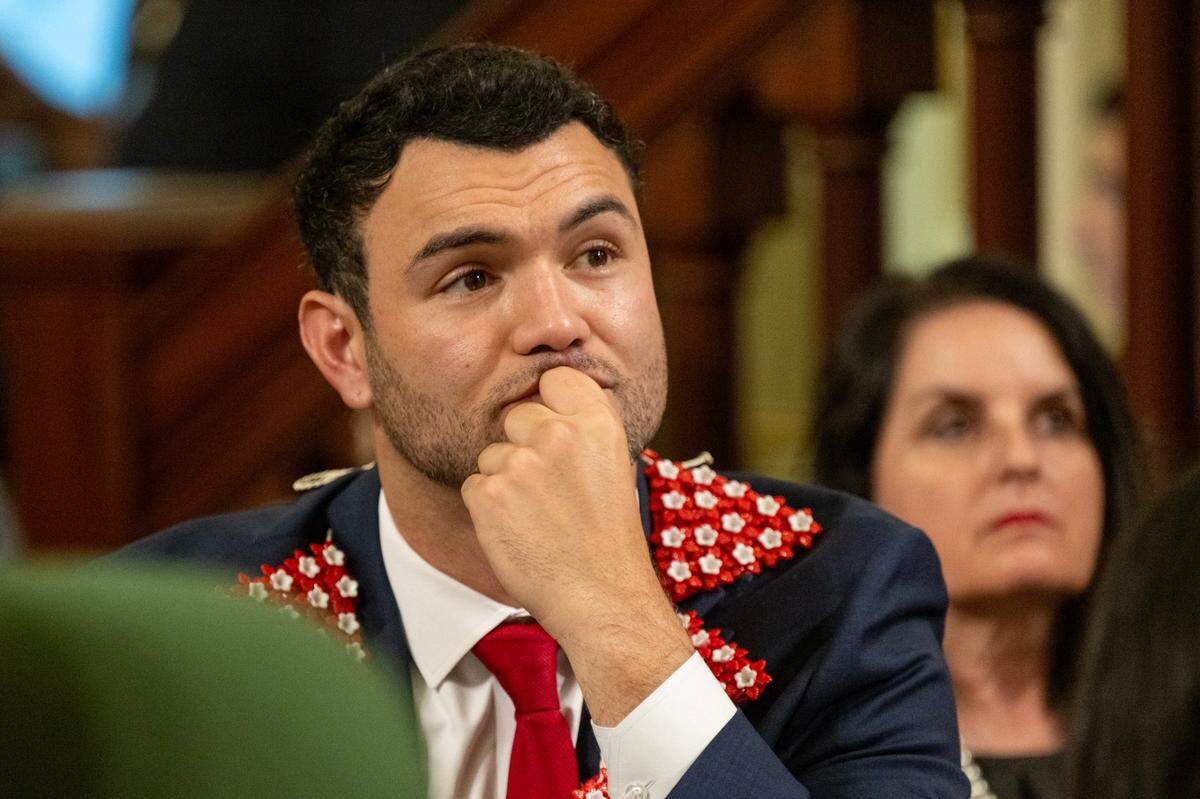
CA Republican lawmakers blast high-speed rail costs, noncompliant draft plan
State Sen. Tony Strickland, R-Huntington Beach, pointed out during Monday’s Senate Transportation Committee hearing that the $231 billion figure in the rail authority’s plan does not include the cost of borrowing. The agency has said it will have to borrow against its state funding — doled out on an annual basis — to put into the project faster and as needed.
“That’s more than the entire state budget was 10 years ago,” Strickland said, “and quite frankly, almost what the whole state budget is today.”
He told rail authority officials during the hearing that he is not confident the Legislature will approve all the changes the agency is seeking, particularly more power over utilities companies.
Assemblyman David Tangipa, R-Clovis, also blasted the rail authority’s 2026 plan for being out of compliance with AB 377, a law he introduced last year that requires the plan to address any potential funding gap for the Central Valley segment.
“It is over budget, it is misleading to the public, and its goals are simply unachievable,” Tangipa said in a statement.
A report from the rail authority’s Office of the Inspector General also pointed out that the rail authority’s draft plan excludes several pieces of information required by law.
Rail Authority CEO Ian Choudri said Monday that the final version of the plan will address the requirements not included in its draft. An agency spokesperson told The Bee that the rail authority is postponing its final approval of the plan to June 1 and will send it to the Legislature the same day.
This story was originally published May 2, 2026 at 1:22 PM.