
CA High-Speed Rail plan ‘lacks transparency’ on Central Valley station changes, LAO says
AI-generated summary reviewed by our newsroom.
- LAO report says HSRA plan omits details about proposed Central Valley station relocations.
- Rail Authority says station relocations are in the conversation stage and not final.
- CA senators split on the draft business plan.
A new analytical report prepared for state lawmakers has raised concerns that the California High-Speed Rail Authority omitted details about its intent to relocate its future Central Valley stations from the draft of its latest business plan, a document meant to help legislators make decisions about the project.
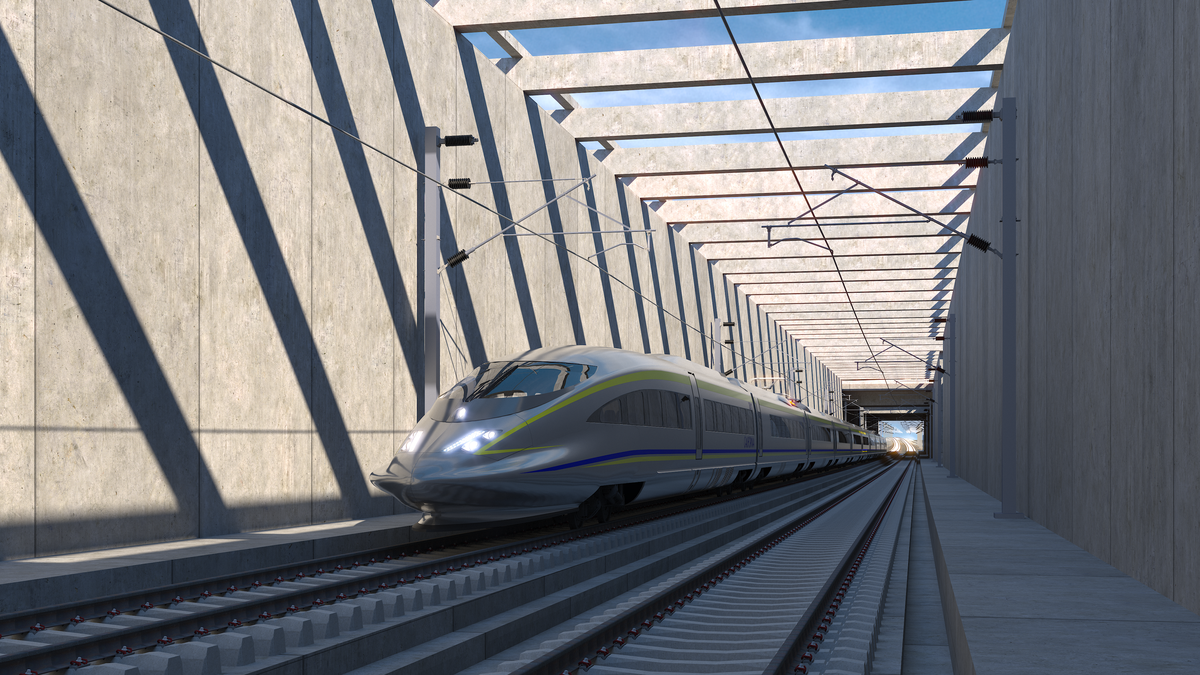
The draft plan, released in late February, spells out the rail authority’s path to the completion and operation of its initial 171-mile Merced-to-Bakersfield segment by 2033 with a potential cost of $34.76 billion.
But the report released Monday by the Legislative Analyst’s Office (LAO) says the rail authority’s plan “lacks transparency” and is less useful to lawmakers because it’s based on assumptions that the downtown Merced and Bakersfield station locations will change — though it doesn’t explicitly state those proposed changes or specify the costs they would carry.
“We think that’s a very substantive change to the program and the plan, and it should be called out so that folks really understand what’s happening,” Helen Kerstein, the LAO’s principal fiscal and policy analyst, told state senators during a transportation hearing Monday.
The rail authority has said the schedule and cost estimates it’s aiming for assume changes that will require cooperation from the state and local authorities. Mark Tollefson, the agency’s chief of staff, said during the hearing that the decision to change the location of the Bakersfield and Merced stations has technically not been made and is in the discussion still stage.
“We have been transparent in those communications with those communities,” he said.
The rail authority in January proposed changing the planned location of its Merced station from a downtown space to one several miles south on Highway 99 and just outside city limits. The agency proposed a new “Bakersfield interim station” to the city’s north in a less-publicized report following the release of its draft business plan. Both moves are expected to cut costs for the Merced-to-Bakersfield segment.
Still, Kerstein said she believes there could be a potential funding gap for the Merced-to-Bakersfield segment and criticized the rail authority for not including the cost of borrowing money against its state funding — which is doled out on annual basis — in its estimated cost for the Central Valley route.
Tollefson acknowledged that the rail authority will have to borrow, but he added that the agency is confident it has “a viable plan” to complete the segment on time and with the money it has available.
Are CA High-Speed Rail’s proposed changes consistent with state law?
Kerstein said the new proposed location for the Merced station is not in compliance with SB 198, a 2022 state law that established high-speed rail’s Central Valley focus and included specific descriptions of what the system should be.
The law defines the Merced-to-Bakersfield segment as “a 171-mile electrified dual-track segment that is usable for high-speed rail service in the Central Valley from Merced to Bakersfield, with a new combined station in downtown Merced, and connections to the Amtrak San Joaquins and the Altamont Corridor Express.”
Kerstein said the station relocations would cut miles from the route. The rail authority also now intends to make 144 miles of the system single-tracked, she said.
Tollefson said the single-track plan is part of the agency’s strategy to build only what it needs until ridership demand grows.
“As far as SB 198 is concerned, our intent is to still build out an electrified double-tracked system,” he said. “We are just sequencing it in a way that we believe makes the most sense.”
Rail Authority CEO Ian Choudri told The Fresno Bee last fall that he plans to seek changes to SB 198. Thus far, the only legislation introduced this year that would amend the law is focused on removing the $500 million spending cap it imposes on work outside the Central Valley.
CA Democrat senators split in reaction to LAO’s high-speed rail criticism
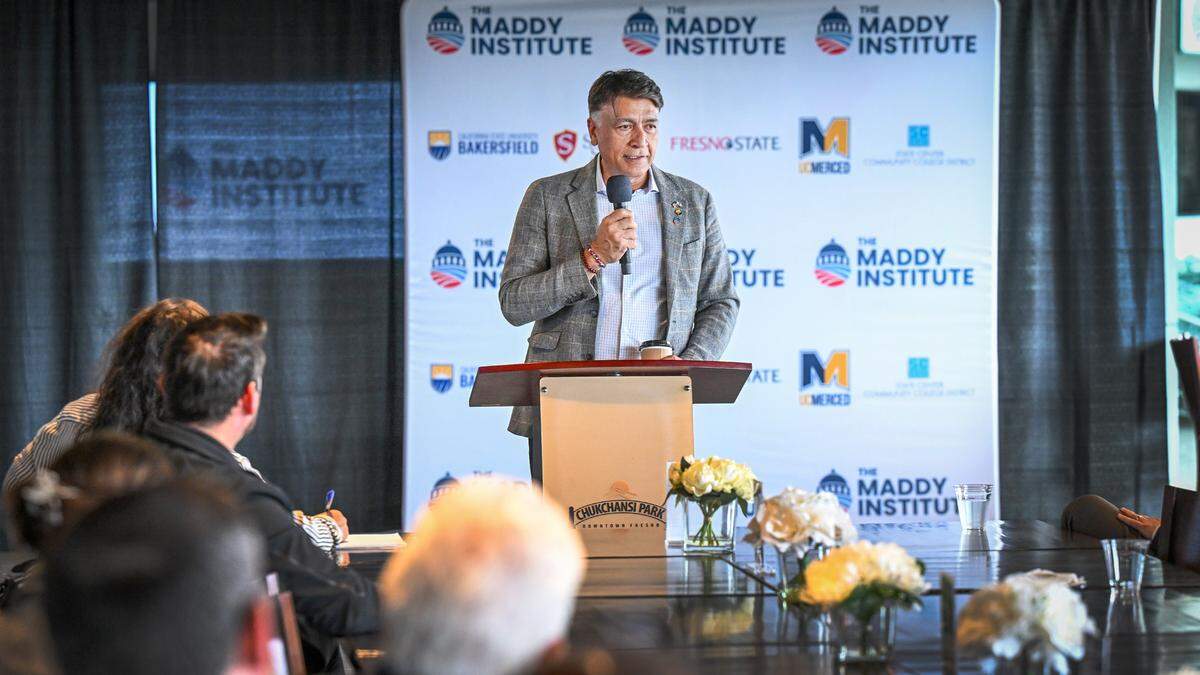
Sen. Catherine Blakespeare, D-Encinitas, lambasted the rail authority in her comments about its draft business plan, which she said “definitely appears deceptive” because it did not include station relocation details.
“I find myself feeling really angry about that,” Blakespear, who has been a supporter of the project, told Tollefson. “You should try to keep your champions.”
But the committee’s chair, Sen. David Cortese, D-San Jose, defended the business plan and the rail authority.
He pointed out that the agency has never said it is moving forward on station relocations without legislative approval. Cortese also questioned how the agency could include cost estimates attached to the relocations if those moves have not been decided yet.
“The CEO was here and said that those proposed station relocations are not under contract yet,” Cortese said. “He came here evidently to be transparent.”
This story was originally published April 28, 2026 at 6:00 PM.