
After controversies, will Fresno-area community college leader get a contract extension?
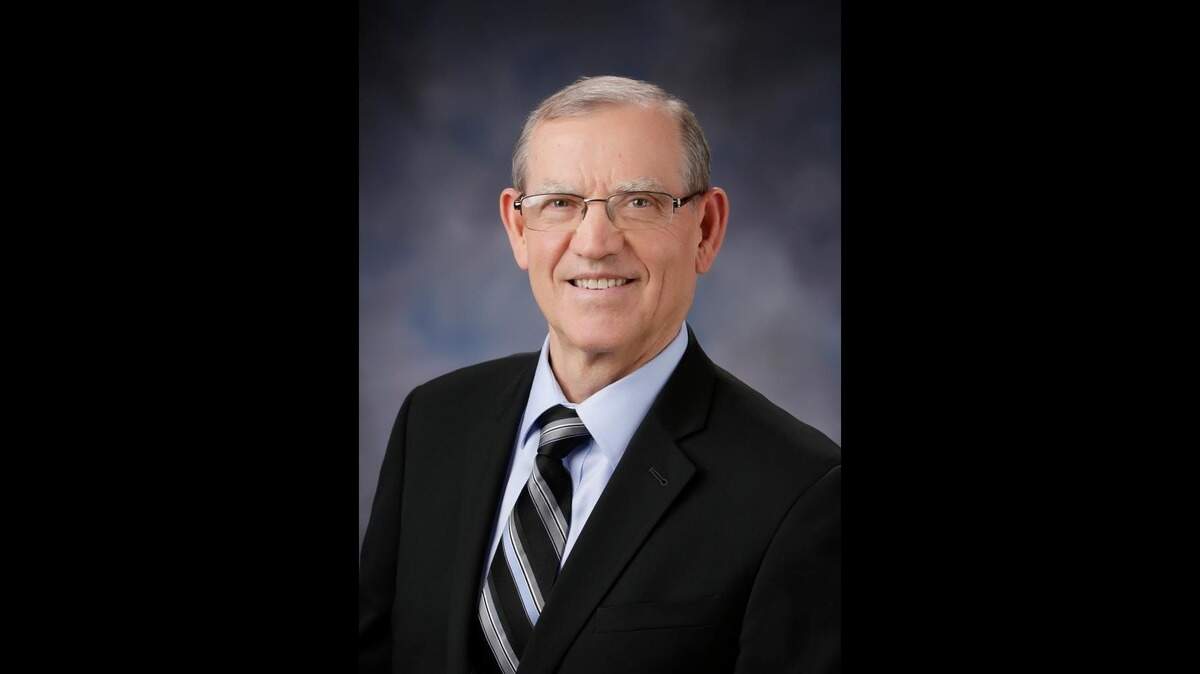
State Center Community College District trustees will be tasked with renewing Chancellor Paul Parnell’s contract on Tuesday, deciding whether to give the leader another year at the helm of the region’s largest community college district.
Parnell’s contract extension hinges on his successes and failures, and the board’s satisfaction with his job performance.
Although most trustees declined to speak about Parnell or did not respond to requests for comment ahead of the vote, Trustee Bobby Kahn said he believes the chancellor has done a great job guiding the district through the COVID-19 pandemic.
Parnell has led Fresno City College and Clovis, Madera, and Reedley community colleges since 2016, when he took over for then-interim Chancellor Bill Stewart.
Before this year’s evaluation from the board, Parnell had a chance to address recent challenges in a reflection he wrote to trustees that was obtained by The Bee. Separately, his leadership also was evaluated this summer by the district’s teachers union.
Parnell has a three-year rolling contract that runs until 2023, and trustees vote annually whether to extend it for another year.
Fresno chancellor receives low marks in staff survey
The State Center Federation of Teachers conducted a survey this summer about leadership roles.
Parnell earned a score of 51.4 out of 100.
The review was sent to the union’s 1,800 members, and 300 of them replied. Parnell rated slightly higher than all vice chancellors in his cabinet but much lower than all the district’s college presidents.
Some of the survey’s anonymous comments described Parnell as “extremely personable and caring,” “charismatic,” and “easy going.”
But others say that Parnell lacks communication and collaboration skills. One person called him “totally out of the loop in regard to the campus.”
“He is friendly and outgoing, a good spokesperson for the district,” one member said, “but he doesn’t actually seem to take control or lead.”
“(He) needs to better collaborate and encourage collaboration, with faculty,” another member said.
In his reflection, Parnell says his approach has been to “gather all the facts and hear all the points of view, analyze the data and give the Board the recommendations and actions that best serves students and keeps the District fiscally stable so we can continue to serve students with the empowering education we aspire to give them.”
But SCFT President Keith Ford said Parnell’s description of his own leadership isn’t accurate. Ford said the chancellor regularly makes decisions without consulting the people it would affect.
“There has been more than one decision in the last few months that has been made with very little consultation or no consultation at all,” Ford said.
FCC bookstore and software controversy
The chancellor makes a note of those criticisms in his own reflection, which he wrote to the board of trustees ahead of his yearly evaluation. A reoccurring lesson learned, he writes, is understanding how to better communicate and collaborate with others.
He lists several projects that met opposition from other leaders, especially those at Fresno City College, and points out how his decisions impacted people.
One of those decisions was to privatize every bookstore in the district. In the summer of 2019, the board voted 5-2 to let Follett take over, to compete with online retailer prices. The move came with a push from the chancellor.
But the rush to install Follett before the start of the fall semester was a “disaster,” Ford said. The vote faced strong opposition from Fresno City College, the California School Employees Association, and trustees Annalisa Perea and Magdelena Gomez.
Comments from Fresno City College Academic Senate President Karla Kirk from last year reflect that faculty was not happy, and students suffered as a result.
There were missing or incorrect books, no scantron test forms, and low-income students could not use their textbook vouchers because the correct technology had not been set up nearly two months into the semester, according to The Rampage. Some students could not take tests and suffered in their classes.
A 2,200 student survey at Fresno City College found 40% of those students experienced a problem with the bookstore.
Parnell said it was mostly Fresno City College that suffered glitches.
“The other District locations like Reedley College, Madera Community College, and Clovis Community College all resolved the issues and functioned well serving students and faculty with their book needs,” he wrote.
He noted that “maybe increased campus leadership and better communication and teamwork between the District Office and the campus could have helped resolve some of the issues in a more timely and effective way.”
He said the bookstore’s financial viability was another reason privatization was the answer. It was “hit and miss,” and the district sometimes had to make up for lost revenue.
Parnell still backs the privatization, he told The Bee. During a recent board meeting, the bookstore fund was closed out, putting about $5 million into reserves. He said the move is beneficial because the district will likely dip into its reserves during the 2020-2021 year and maybe beyond due to the pandemic.
Parnell also sparred with Fresno City College after faculty pushed to deviate from curriculum software the district used.
After the board approved Fresno City’s change to new software, the chancellor revoked its use. Parnell said in his reflection that the contract was not ready for board approval when it was voted on.
“There was miscommunication between FCC, the new (chief technology officer), and the contracting office,” he wrote. He said he learned a lesson that he should read contracts closer.
The contract “was inadvertently approved by the Board, but not executed since there was another contract to provide similar services,” according to district spokesperson Lucy Ruiz. “The Chancellor directed presidents and staff to meet and recommend next steps and the consensus was to work with the currently contracted vendor.”
Kirk, the academic senate president, said faculty had not been told why they could not use the system.
“FCC faculty did review, vet, and recommend what software we wanted to utilize for our curriculum, which is a faculty-driven decision,” she said. “It was approved by the board, and then recanted by the district, which said it was put on the board agenda in error. We believe this is not a genuine explanation.”
She said it’s part of a larger issue of faculty getting cut out of the decision-making process.
It’s “our district not adhering to our shared governance model as written,” she said.
FCC bus pass controversy
Parnell was the face of another controversial decision early in 2020 when the board scrambled to find funding to keep Fresno City College’s free bus pass program going. Board President John Leal said trustees only learned that the program was ending after students spoke up at a board meeting.
Parnell disputed that he was behind the cancellation.
“It’s been in the press and even students talking tonight, and even some of our trustees have said that the chancellor has canceled the bus pass,” Parnell said during a board meeting in March. “And that is not true. Never happened.”
Parnell has never explained how the move to end the program came about if his office never pushed for it.
Parnell said that even before the topic came before the board, administration and the Associated Student Government was talking about how to extend funding.
“In retrospect,” Parnell wrote in his reflection, “We could have done a better job informing the board of the issue and possible solutions in a timelier manner and facilitated a Board discussion on the fiscal issues and the impact to students.”
Although the board agreed in March to spend the nearly $200,000 to keep giving students free bus passes, if they have an ASB card, Parnell said the pandemic changed that plan for the fall.
He now believes only about 500 students will still need bus passes to get onto campus because there are fewer in-person classes.
“The District does have a limited number of bus passes for the few students who will be coming to campus and do not have transportation,” said Ruiz, the district spokesperson.
The district will not be charging for parking on any of its campuses.
“We’ll get as many passes as we can, but very few students need to come to campus,” Parnell said in an interview with The Bee, “So there’s not a need to pay money to the city for a few students that need it.”
Fresno chancellor’s successes
Before taking the helm of the biggest community college district in the region, Parnell was president of Norco College in Riverside County.
Parnell, who served 22 years in the Air Force, has a doctorate in education, psychology, and community college studies from Oregon State University; a master’s degree in counseling and psychology from Ball State University, and a bachelor’s degree in international affairs from the Air Force Academy.
He’s also had stints as vice president of academic affairs at Rio Hondo College and dean of social behavioral sciences at Chaffey College.
Parnell said the minute he started at State Center in April 2016, he got to work.
“The first question the board asked me after they hired me is, ‘Do you want to go out for a bond?’ And it was an easy decision. I said, ‘absolutely.’”
The $485 million Measure C bond was passed with nearly 65% voter approval in June 2016 and has spurred construction at almost all of the campuses in the past few years.
One of those projects is the West Fresno campus, which is expected to be completed in 2022 at Church and Walnut avenues. Parnell said he is probably most proud of that project, which includes the district’s Career and Technology Center.
He said the district started with some funds, but after added city funding, they managed to grow the project into something bigger.
“We worked with the Strategic Growth Council of the governor, and we were going to have a $10 million project in West Fresno,” he said. “And then that’s now blossomed into a project that’s about $85 million.”
Could the chancellor get a raise?
The district’s top administrators, including Parnell, are not up for any pay raises this year, according to Ruiz.
Although employees are still eligible for their step increases, which are based on the number of years they’ve been employed with the district, the new budget doesn’t call for any cost of living adjustments because the pandemic has strained funding from the state.
According to Parnell’s 2019 contract, he would be eligible for the same pay increase as any academic managers. Ruiz said academic managers are not up for a pay increase this year.
But a possible pay bump worried the State Center Federation of Teachers, which on Thursday, called on trustees to nix any contract tied to a pay increase.
Ford said that enrollment is down in the fall, which means part-time instructors will be the first to go if classes don’t fill up.
“We can absorb a 10% enrollment decrease without losing any full-time jobs, but we can’t do it without losing adjuncts,” he said.
Trustees did agree to bump Parnell’s pay in 2018, the same year out-of-state tuition costs were also raised. Parnell started in 2016 at $275,000 in salary and benefits, according to Bee archives. His contract last year states he is receiving a $302,220 in salary as of June 2019.
Ruiz said she could not release the new contracts to the public until they have been voted on by the board.
The district vs. FCC
The chancellor said he sees two distinct sides when it comes to decision making. He described administrators as having split views, primarily with Fresno City College on one side and the district and other colleges on the other. Fresno City is the largest college in the district.
He sees the board in a similar way. “The Board’s view has been split as well with several members supporting an FCC point of view and others the view of the other colleges and the District Office.”
Fresno City College President Carole Goldsmith declined to comment.
Parnell described discussions between himself and presidents as “robust and lively.”
“We always exchange ideas between all the presidents, whether it’s Reedley or Clovis or Madera or Fresno City, and what we try to do is be data-driven in the district,” he said. “Obviously, our number one priority is what’s going to serve our students best.”
Fresno chancellor has ‘no regrets’
Parnell refuted that he doesn’t consult with others.
A “fatalistic reality is that there is not necessarily a distinct right or wrong to these issues, but just reasonable minds differing on what action to take,” he wrote.
In his interview with The Bee, he compared his challenges to driving in different countries.
“It’s not a right or wrong,” he said, “whether you drive on the left-hand side of the road or you drive on the right-hand side of the road.”
Parnell said he is not ready to leave State Center. Thinking back, he would not do anything differently, he said.
“I don’t have any regrets. I feel like we’ve done a lot of good, and I’ll continue to do as much good as I can for as long as I can.”
The State Center board is scheduled to vote to extend Parnell’s contract, along with the vice chancellors and college presidents Tuesday during its monthly Zoom meeting at 4:30 p.m.
The Education Lab is a local journalism initiative that highlights education issues critical to the advancement of the San Joaquin Valley. It is funded by donors. Learn about The Bee’s Education Lab on our website.