
California’s newest community college is in the Valley. Here’s how it happened
Bill Mask, a history professor at California’s newest community college, grew up in Madera when teens had to leave their hometown if they wanted to attend college.
“We always wanted to know why you had to leave home for schooling, back in the day when we were just a small country farming town,” he said.
The Madera Community College Center got its start as a Reedley College satellite campus in 1985. It began in portables at Madera High School and Madison Elementary School, serving about 158 students its first year.
On Monday, it cut ties with Reedley and was appointed the 116th California Community College by the system’s Board of Governors, forever dropping the “center” from its title, and earning the freedom to create a “Madera-centric” brand for itself, according to its founding president, Angel Reyna.
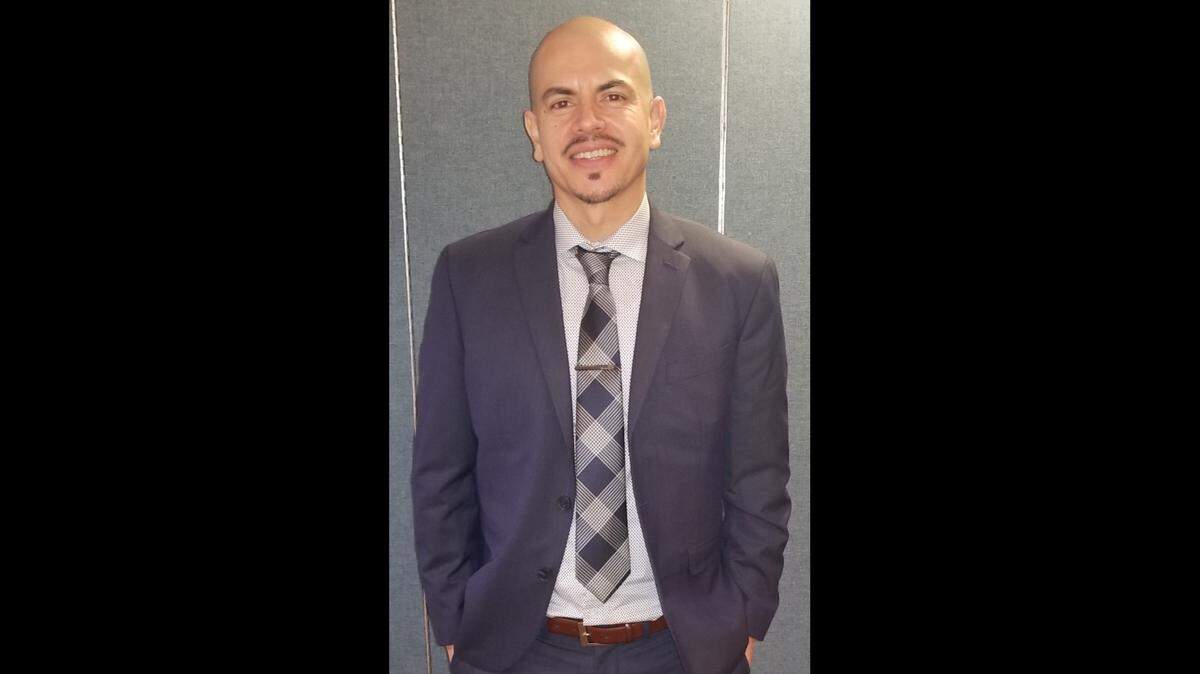
Mask, an alumnus who has taught Latin American and ancient history at the college for six years, said the journey from a satellite campus to an accredited college had been a long time coming for the tight-knit Madera Center community.
“Dating back to my days in high school, this is something that the town’s always clamored for,” he said. “This college was a dream of the school district, of the school board, of the city council, and it finally came to fruition.”
When the State Center Community College District released its latest master plan, it gave the Madera Center until 2025 to become its own accredited college. Clovis Community had just made the transition 2015 when the real work started, Mask said, although talks of separation had been happening for years.
But Madera didn’t need any extra time — and 10 years would have been much too long to wait, Mask said.
“Maybe that was a realistic schedule for most institutions, but no, we wanted it yesterday,” he said of faculty and staff. “We wanted to get there as fast as we could.”
The community was eager to establish its own identity, and that identity happens to be a 60% Hispanic student population that skews young, according to college data.
One of the first hirings was Reyna, who was born in Mexico but grew up in the Yakima Valley of Washington. He spent his earlier years as a migrant farmworker before earning a bachelor’s and master’s degree from Washington State University. He’s now working on his doctorate while leading the college.
Reyna has been in the Central Valley for a little over a year and said the similarities to where he grew up are striking. The migrant farmworker communities, the grapes, and other agriculture have all made him feel at home and part of the community, he said.
When he applied for the job, both Madera and Reedley had openings for president, and applicants could apply to both.
“But I only applied for Madera because I knew I wanted to be here,” he said. “I was at a point in my life where I knew that I wanted to work in a community where I represented the students that I serve.”
He said, especially with the social unrest that has overtaken the country, he wants to take on challenges that significantly affect students of color.
“We know that students that are of lower socioeconomic status have different challenges … and disproportionately those students that are of lower socioeconomic status happen to be students of color,” he said. “So we want to make sure that we have equitable outcomes for each of our students, but with a focus on students of color, because predominantly, that’s who we’re serving.”
The perks of being a college
Why is it so exciting to become a standalone college?
There’s a funding perk, for one.
“There’s basic funding when you have a status of a center, and then there’s basic funding when you’re funded as a college,” Reyna said, “and the difference between being funded as a center and college are a couple million dollars.”
It enables the college to build in more support for students and to start expanding services.
Another benefit is that now graduates will see “Madera Community College” stamped on their degrees.
Reyna said most graduates never step foot onto the Reedley campus, and there’s a disconnect students felt about holding degrees with a different name on it.
However, Reyna and others seem most excited about bringing sports to the college, which will likely draw student-athletes to the school. The Mountain Lions would have started with men’s and women’s soccer and cross country, but that’s on pause, for now, Reyna, said, until the COVID-19 pandemic passes.
Still, the college is looking into how it can offer unique programs and distinguish itself from other campuses. Along with Madera’s new designation as a college, it’s taking under its wing Oakhurst Community College Center, which was also a Reedley College satellite campus.
Madera Community wants to partner with local K-12 schools to find out what kind of degrees students want.
One of the ideas Reyna has for the Oakhurst Center is a hospitality program.
“With it being so close to Yosemite, there’s a lot of hospitality and tourism, pre-COVID, of course,” he said.
“You know Madera County is known for its wine as well, and so we’re looking at a viticulture and enology program, but utilizing existing facilities from some of our industry partners in developing those relationships.”
Faculty and administration are thinking big, Mask said. “We have to.”
They see a music auditorium, a sports complex, a new cafeteria, a bookstore, and a library in the future. As of now, construction will begin soon on classroom, office, and lab space called the Academic Village II, expected to be complete in fall 2022.
A history and sense of community
A move in 1996 pulled the Madera Center from the elementary school campus to its current site on Avenue 12, just outside Madera. Five landowners: Logoluso Farms, Pistoresi Farms, Inc., Richburg Properties, Inc., Roy Spomer, and Ted Takahashi, donated the 114 acres. About 1,500 students were served that year, according to the district.
Since then, the student population has boomed, especially in the past five years, to 5,600 students a year. The campus draws not just Madera residents, but students from north Fresno, Chowchilla, Kerman and Oakhurst.
The turning point in the college’s accreditation journey was when it received the green light from the Accrediting Commission for Community and Junior Colleges at the end of June.
“It was a mountain of changes and paperwork and process and government structures,” Mask said of the journey. “You had to create and document to prove you had the necessary infrastructure.”
Mask said having a college in his hometown is the reason he is educated now. It’s given the region a sense of community and pride.
“That was the number one reason that drew me back to college,” he said. “I already had a family and was married when I decided to go back to school and get my education, and it made it easier and accessible. Many of my professors are now my colleagues.”
Reyna told the board of governors Monday that he has a lot to be thankful for and much to look forward to.
“As you are probably aware, there is a lot of behind the scenes work that took place and is taking place. As you can see, it takes a village to get here.”
The Education Lab is a local journalism initiative that highlights education issues critical to the advancement of the San Joaquin Valley. It is funded by donors. Learn about The Bee’s Education Lab on our website.
This story was originally published July 21, 2020 at 9:37 AM.