
‘We need help.’ More Chukchansi members targeted for removal, have benefits suspended
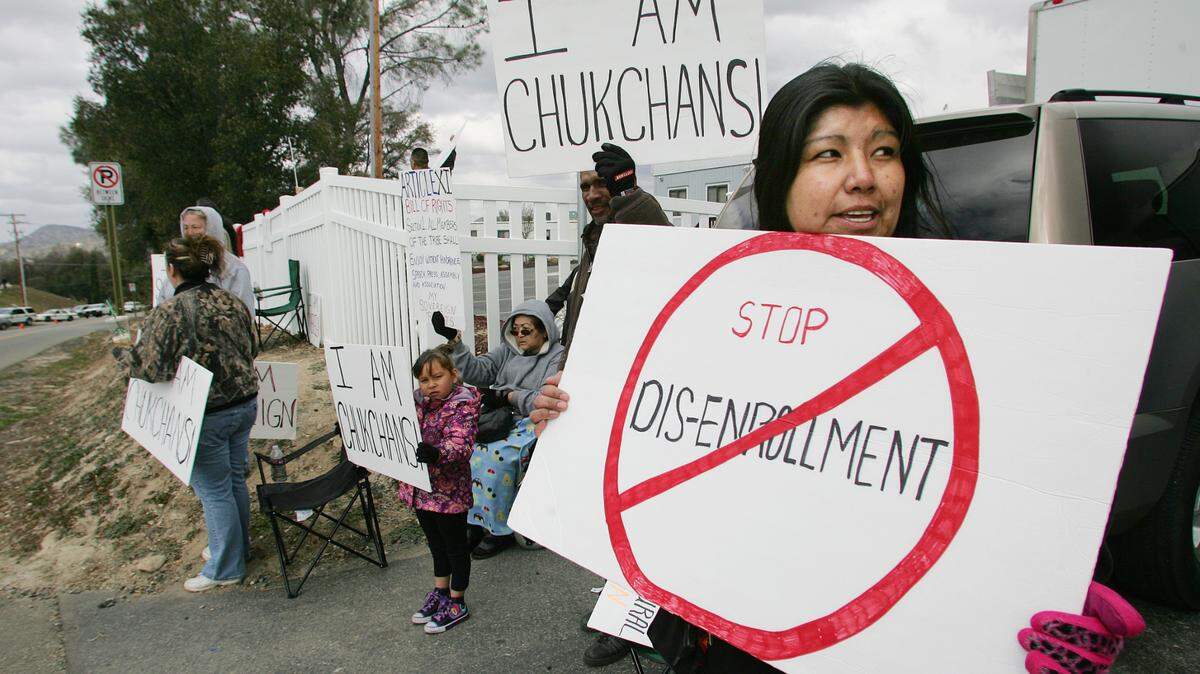
Another in a wave of disenrollments from the Picayune Rancheria of the Chukchansi Indians targets 49 members for removal, according to some of those affected.
Half a dozen people spoke with The Fresno Bee on condition of anonymity over fears of retribution. The group included members who are among the 49 being targeted for disenrollment in this latest round and members who believe they will be in the next wave.
Members who spoke with The Bee say the disenrollments are driven by greed and designed to significantly swell the monetary benefits for some tribal families. They say they are speaking out in hopes of bringing community pressure on leaders of the tribe, which owns the Chukchansi Gold Resort & Casino on Highway 41 north of Fresno.
Interviews and documents reviewed by The Bee show those affected are scheduled to have their disenrollment hearings on Feb. 3 and Feb. 4. Those affected had their benefits suspended in December — about a week after receiving their hearing notice — and include families with children and elders. The Bee was able to see some of those notices.
Around 60 to 70 members were targeted during the last round of disenrollments in the fall of 2022. Tribal members who spoke with The Bee say Chukchansi disenrollments are not going to stop. They estimate another 250 to up to 400 members will be next.
The hearing notices say the disenrollments are because the tribe found evidence that the targeted member or a parent “were recognized, enrolled or affiliated” with another tribe prior to enrolling with Chukchansi. The tribe’s constitution says no person should be enrolled in the tribe if “she/he is recognized” by another tribe.
Tribal disenrollments are not unique to California as they are taking place across the country. But Chukchansi members who spoke to The Bee say their tribal leaders have been leading the “heartless” effort in California, and they feel helpless because no agency, including the federal Bureau of Indian Affairs, wants to intervene.
“At what point is enough, enough?” one Chukchansi member told The Bee. “At what point do these agencies step in and say, ‘Enough is enough. Stop.’ Because it’s no longer about the people.”
Multiple inquiries by The Bee to Tribal Council members and chairwoman Janet K. Bill had not been returned. Bill is also on the board of the California Tribal Families Coalition.
Diane Vitols, attorney general for Chukchansi, said she was not authorized to speak on behalf of the tribe.
Chukchansi has had internal conflict for decades and its leadership has ousted hundreds of members under several waves of disenrollments, but the majority of purges have happened since the tribe’s Chukchansi Gold Resort & Casino near Coarsegold opened its doors in 2003.
Chukchansi, like other tribes, is self-governed; its council’s decisions, generally, are final.
Chukchansi’s former attorney Brendan Ludwick resigned in 2022 after telling tribal leaders that members were rightfully enrolled and cutting off payments to them likely violates laws and could trigger enforcement actions from the National Indian Gaming Commission.
In a lengthy memo to the tribal council, Ludwick explained that two motions the Tribal Council adopted March 17, 2022 to terminate benefits to tribal member petitioners and their descendants “likely violate the Tribe’s Constitution.”
“Under the plain language of the Tribe’s Constitution, the descendants of Petitioners are eligible for tribal membership,” he wrote. The constitution guarantees them “equal rights and equal protections under tribal law.”
It is estimated that over 1,000 Chukchansi people have been disenrolled since 2003. Enrollment in the tribe in the fall of 2021 was at around 1,719, and that was prior to last fall’s disenrollments.
“It’s just horrible. They don’t care about their people,” a Chukchansi elder, who fears being in the next wave of disenrollment, told The Bee. “All they are thinking is greed... We are losing our tribe and we don’t know what to do.”
In essence, a member said, people targeted for disenrollment are being stripped of their identity.
“Can the U.S. government tell you that you are no longer Caucasian, African American, Hispanic, Filipino? Do they have the right to do that to you?” the Chukchansi member asked. “No, they don’t, but this is what these tribes are doing.”
‘They are just making up their own rules.’ Ordinance changes, benefits suspension
Members who spoke to The Bee say not only the rules but the process has been unfair and in violation of their rights under the tribe’s constitution.
Chukchansi used to have a third-party independent enrollment committee, but now the Tribal Council selects members to sit on an in-house enrollment committee — allegedly stacking it with members who are in favor of disenrollment. The majority of the new Tribal Council, itself, is pro-disenrollment, members say. The new council was seated in December.
Disenrollments last year happened amid a tribal council election.
Newly affected members got their disenrollment hearing notice on Dec. 3, and about a week later, they received a letter addressed, “To Whom It May Concern,” letting them know their benefits were being suspended effective immediately. Those benefits include what is referred to as per capita payments, which are monthly checks from the tribe’s casino profits; a general welfare check; periodic bonuses; health care assistance; and funds that help pay for children’s needs.
They also were banned from attending the tribe’s annual Christmas party.
The suspension of benefits, members say, is illegal because it wasn’t called for in the tribe’s enrollment ordinance prior to Jan. 19, when the Tribal Council added an amendment addressing the subject. The new language had already been applied to the 49 members who had their benefits suspended in early December.
The Tribal Council made a few last-minute additional changes to the draft ordinance before approving it Jan. 19, according to the final copy that was passed. Among those changes: a recommendation to suspend a member’s benefits must be made based on “a preliminary written finding.” The word preliminary was added.
Another significant change that was made to the draft ordinance at the last minute is that now a two-thirds majority vote by the enrollment committee is required to enroll eligible members into the tribe, and the enrollment must be affirmed by a resolution. Under the previous ordinance, only a resolution was required.
“They are just making up their own rules that are going against the current constitution that is in place, and bylaws,” a member said.
Members say the benefits are being suspended without due process since members haven’t had their disenrollment hearings. They also questioned whether the suspension of benefits notice they received in the mail is legal since it doesn’t address them by name.
It’s a “generic letter for everybody,” a member said. “They can’t even treat you with respect. They can’t even address you properly.”
The suspension of benefits, the members say, also goes against the tribe’s own gaming revenue allocation ordinance, which was amended in July 2022. The ordinance allows for the suspension of benefits for certain reasons, such as a tribal member being incarcerated, being a minor, or being sanctioned, among other reasons. The tribal members say the affected members don’t fall under any of those categories.
The new enrollment ordinance also reduces various timeframes that are part of the disenrollment process. For example, members were able to file an appeal within 90 days, and it’s being changed to 60 days. Members were able to request two extensions for their hearing date; under the new ordinance, the enrollment committee shall approve one extension “based on excusable unforeseen circumstances,” and after that, it may deny additional requests.
“They do not want to give these people proper time to collect evidence or documents,” a member said. “They want to rush them through.”
Most troubling, members say, the ordinance includes significant language changes that require an amendment to the tribe’s constitution first, before the wording can be used in an ordinance. Otherwise, they say, the ordinance is in violation of their constitutional rights and the constitution itself. For example, according to the new ordinance, tribal members may not reapply for tribal membership after relinquishing their membership. Under the previous ordinance, tribal members who relinquished membership were able to reapply once.
Amendments to the tribe’s constitution require a vote by the tribe’s general membership.
“This is going to seal the fate of a lot of individuals coming up for disenrollment,” a member said. “They have manipulated the wording in the constitution in this ordinance, and they’re going against the constitution by what they are putting in the ordinance. They are changing the wording to fit for future disenrollments.”
‘We are asking the community to please step in’
The Tribal Council’s decisions are over money, members say, and are “destroying people and families.”
Members say those affected are all direct lineal descendants of tribal members who were allotted land by the federal government when they were pushed out of their lands. According to a copy of the tribe’s constitution, that would make them eligible members.
According to one of the hearing notices, the affected member is informed that eligibility for membership includes three categories: distributees, allottees and petitioners, as allowed under the tribe’s constitution. The notice also states that the constitution doesn’t allow dual enrollment, and that the enrollment committee found evidence that the affected member “or the parent through whom” they claim eligibility, “were recognized, enrolled, or affiliated with another ‘tribe, band, or Indian community’ before applying for enrollment with Chukchansi.”
A member who spoke with The Bee scoffed at the implication that someone can be 100% Chukchansi: “All these families are mixed.”
One Chukchansi elder who is among the 49 being targeted for disenrollment, and who had her benefits suspended in early December, said she’s hoping the public will help their cause, and will help prompt tribal leaders to “wake up.”
Another Chukchansi member said no one wants to touch the matter because of the tribe’s sovereignty.
“At this point, we feel like we need help,” the Chukchansi member said. “We are asking the community to please step in and call these individuals and tell them that they are not in support of it (disenrollment).”
The Bee reached out to Secretary of Interior Deb Haaland’s office for comment on tribal disenrollments. Haaland is the first Native American to serve as a cabinet secretary.
The response from her press office was only: “nothing from us on this.”
Mary Parker, a public affairs manager with the National Indian Gaming Commission, said the commission doesn’t regulate tribal enrollment in response to a question about whether actions from the Chukchansi Tribal Council may be in violation of any commission rules, and where the commission stands on the issue. Parker also referred The Bee to its previous statement.
The agency last year said it can only take enforcement actions related to revenue allocation plans in “limited scenarios,” including when per capita payments are made without an approved plan, or outside of what’s allowed by that plan.
The federal Bureau of Indian Affairs said this “topic is fairly sensitive” and the agency never responded with a comment.
The California Attorney General’s Office said the Governor’s Office is its client with regard to tribal compacts.
The state and the tribe first entered into a compact in 1999, which enabled the tribe to “improve the governance, environment, education, health, safety, and general welfare of its citizens, and to promote a strong tribal government, self-sufficiency, and to provide essential government services to its citizens” through revenues generated by its gaming operation, according to a copy of the compact.
The Bee reached out to the Governor’s Office for comment, asking whether the Chukchansi Tribal Council’s actions violate any rules under the extensive Tribal-State Compact between the state of California and Chukchansi. The Governor’s Office didn’t respond.
The Tribal Council, members who spoke to The Bee say, wants to get membership down to a number comparable to that of Table Mountain Rancheria. Online figures estimate Table Mountain has about 160 enrolled members.
“They are going to take us all out, and the only reason is for greed,” said the Chukchansi elder who fears being targeted next. “They are heartless. It’s wrong, and that’s why we just want to keep fighting.”
This story was originally published January 26, 2023 at 5:30 AM.
.jpg)