‘Used and abused.’ Chukchansi looks to oust members on election eve as casino profits soar
Dozens of Chukchansi people could be removed as members of their American Indian tribe in eastern Madera County just days before votes are tallied in an election that will steer the future of the tribe’s membership and who will receive profits from its lucrative casino.
Those affected include many children and grandchildren of original members of the Picayune Rancheria of the Chukchansi Indians.
“They’ve used and abused us” to form the tribe, get federal benefits, and establish a casino, one Chukchansi elder said, “and now they’re discarding us.”
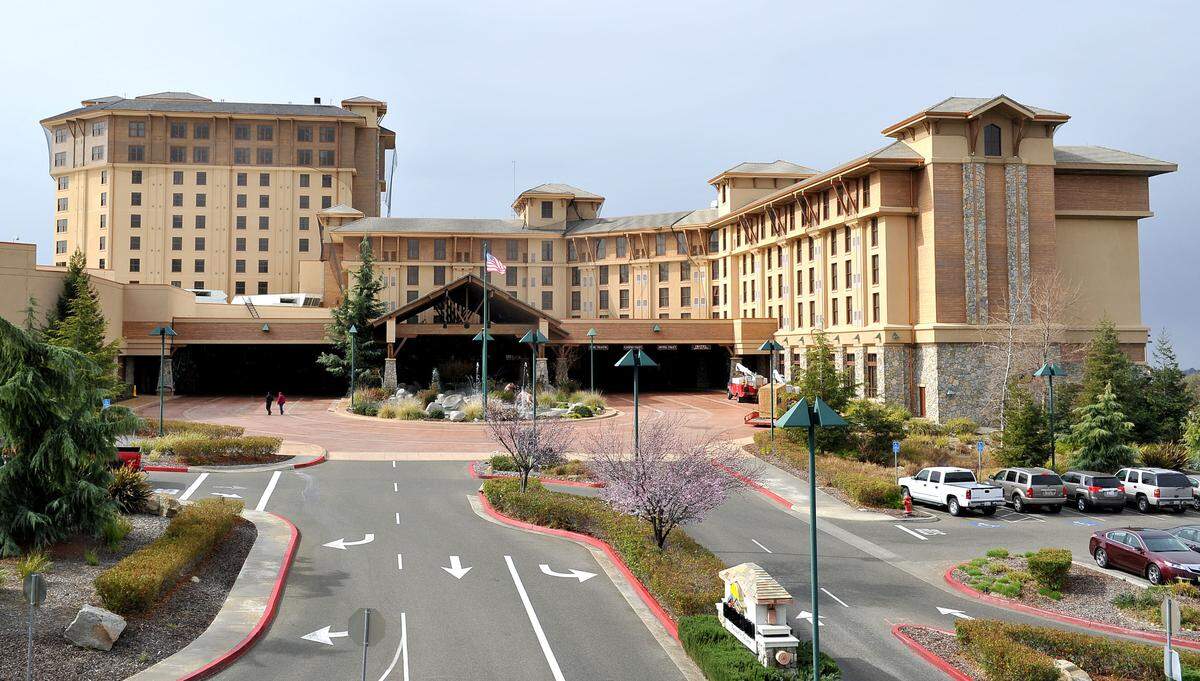
Chukchansi has been plagued by internal strife for decades, with its leaders kicking out hundreds of members in a slew of disenrollments over the years — the vast majority since Chukchansi Gold Resort and Casino opened in Coarsegold in 2003.
Disenrollment hearings that were scheduled to start this week come six months after those in question stopped receiving monthly checks from the tribe’s casino profits. Their checks ceased just as per capita payments rose substantially for other enrolled tribal members this spring — from about $200 to around $3,000 a month, tribal members said — because casino debt was paid off.
The tribe’s former attorney resigned earlier this year after telling Chukchansi leaders that members were rightfully enrolled and that cutting off payments to enrolled members likely violates laws and could trigger enforcement actions from the National Indian Gaming Commission.
Eleven Chukchansi people, and one of their spouses, from five families spoke with The Fresno Bee on condition of anonymity out of fear of retribution. They include past and present sources within the tribe’s administration.
One group dug through a large box full of official Chukchansi documents at a family member’s home, during one recent interview with The Bee. Framed black and white photos of great-great-grandparents from the Coarsegold area sat in honored positions around them, along with baskets woven by their ancestors and many other items proudly displaying their native heritage.
They are among around 60 Chukchansi members who could be ousted in this latest wave of disenrollment hearings, sources said, led by Chukchansi’s Enrollment Committee. One Chukchansi person who had a disenrollment hearing this week was told a decision should be made within 20 days. That individual came in-person to the hearing at tribal offices in Oakhurst while the Enrollment Committee attended virtually through a video conference call.
Many of those affected already voted in an election for three of seven Tribal Council seats. Ballots have to be in by Saturday, when in-person voting will also be available at the Picayune Rancheria in Coarsegold, sources said. If members are disenrolled, it’s unclear if their votes will be counted in October.
“That is playbook by tribal autocrats to disenroll amidst or on the eve of an election in order to disenfranchise their opponents and sustain their power by winning the election,” indigenous rights attorney Gabe Galanda said.
Chukchansi’s Tribal Council and its tribal administration office have not responded to The Bee’s questions.
“Basically, it all breaks down to the money and the greed,” one woman said of what’s behind the latest attempts to remove members. “They want more money.”
‘It’s genocide.’ Native Americans hurt by California tribe
Some estimates are that over 1,000 Chukchansi people in all have been disenrolled.
“It’s genocide. They’re going to kill us all,” one Chukchansi elder said about the disenrollments. “They don’t realize that this is what they’re doing.”
Tribal leaders and a Bureau of Indian Affairs spokesperson did not share the number of enrolled Chukchansi members. One federal document related to CARES Act funding listed 1,337 Chukchansi members in 2020.
Arguments over ousting members are no longer about whether people are Chukchansi. They focus on details concerning enrollment rules in the tribe’s constitution, along with tribal ordinances that have been amended many times.
The emotional toll of a disenrollment is often the hardest blow. Many talked about the sense of community they gained from being able to attend Chukchansi Christmas parties, powwows, and other gatherings, and how they want their children to grow up with that sense of community and indigenous identity, too.
“It’s comforting when you feel like you can go to them (the tribe),” one Chukchansi mother said. “You have some help there if you feel alone or whatever, you have your tribe.”
She said thinking about not being an enrolled member is an upsetting and “unnerving feeling in this world.”
Past disenrollments can appear haphazard and marked by bias from past quarrels. Examples include Chukchansi families where some were ousted from tribal membership while their siblings, parents, and/or children remain enrolled. One disenrollment in 2011 removed an 87-year-old original member who was one of the tribe’s last fluent Chukchansi speakers. The decisions have split families and caused immeasurable pain.
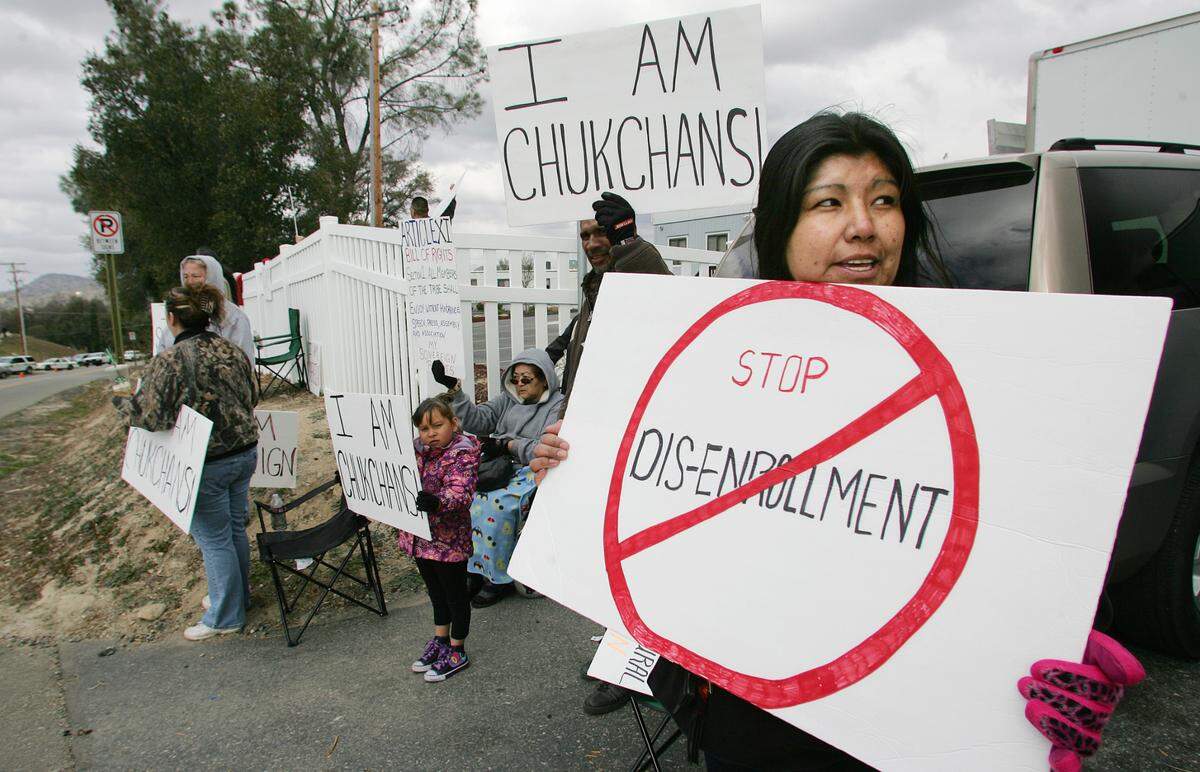
“It’s dividing my family,” one woman said. “It’s dividing my children. It’s dividing my grandchildren. It’s dividing me. ... I’m fed up. I’m tired. I don’t want to do this anymore.”
Chukchansi people also lose financial support from the tribe if they are removed as members, including payments from the profits of tribal businesses and its casino as shareholders, a general welfare check, benefits for elderly members, periodic bonuses, and funds that help pay for children’s clothing and sports supplies, in addition to small financial incentives for earning good grades in school. They additionally lose access to other resources available to federally recognized tribes, like assistance with housing, health care and education.
Some shared stories about Chukchansi leaders revoking college scholarships because of disenrollments. Others shared worries about not being able to afford needed medical procedures if they are removed from the tribe and their health insurance reduced.
Chukchansi businesses include a gas station and store, Sonic Drive-In fast food restaurant, and a marijuana dispensary. Tribal members said they don’t know how some of those profits and casino profits are shared with members.
Tribal Council voting to “terminate all benefits for all descendants” of one group of Chukchansi people, “effective immediately” without due process during a March business meeting went against the understanding that funds should be distributed equally to members.
One Chukchansi member said it’s ironic that tribal members once squabbled over $200 a month and now that the tribe has so much more to help its members, it still comes down to, “We want more money.”
Latest Chukchansi dispute is about enrolling descendants
The latest fight about tribal membership appears to center on whether or not the descendants of all enrolled Chukchansi members should remain in the tribe.
Descendants of those enrolled at the tribe’s founding by simply proving they are Chukchansi and have a special relationship to the tribe — often described as “petitioners” — have faced more difficulties than those admitted as descendants of two families who helped reorganize the tribe in the 1980s, known as “distributees,” or the descendants of Chukchansi people who received public land under the General Allotment Act of 1887, known as “allottees.” All three pathways to membership are provided for in the Chukchansi Constitution.
While many now in question are descendants of the first petitioners, at least one person facing a disenrollment is reportedly on the tribe’s original membership list, created during a two-year enrollment window after the Chukchansi Constitution was adopted in 1988.
The tribe’s former general counsel, Brendan Ludwick, affirmed that the descendants of “petitioners” are eligible for membership under the Chukchansi Constitution in a legal memo he wrote in April to the Tribal Council, Tribal Administrator Michael Wynn, and another attorney. The document was shared with The Bee by a Chukchansi member. Ludwick declined to comment for this story.
In the 13-page memo, he wrote that “under the plain language of the Tribe’s Constitution, the descendants of Petitioners are eligible for tribal membership,” and that the constitution states enrolled petitioners “shall be accepted as a tribal member with all rights and responsibilities of membership,” meaning they “shall be treated as Tribal Members with equal rights.”
“Thus, the Constitution’s guarantees of equal rights and equal protection to Petitioners require that Petitioners have the right to enroll their lineal descendants in the Tribe to the same extent that the lineal descendants of Distributees and Allottees are entitled tribal membership,” the memo states.
Ludwick wrote that it’s also easy to understand why the “direct lineal descendants” of distributees and allottees are explicitly mentioned within the Chukchansi Constitution when the historical context is considered. At the time it was ratified in 1988, it was unlikely any Chukchansi person was alive who first received an allotment under the General Allotment Act of 1887, and both of the distributees of the Picayune Rancheria, Maryan Ramirez and Gordon Wyatt, were dead.
The tribe’s amended enrollment ordinance from May states forced disenrollment should only occur under three circumstances: A member is enrolled in another tribe, a member was enrolled “based upon a mistake of fact due to erroneous or fraudulent documentation,” or a member’s eligibility was “based upon criteria not consistent with Article III of the Constitution” — which outlines the three pathways to Chukchansi membership. It states a “supermajority” of the Enrollment Committee, comprised of six Chukchansi members, is required for the committee to vote in favor of a disenrollment, without defining the term supermajority.
Petitioners have often been the target of disenrollments. One tribal member estimated they currently make up just 6% of around 1,800 enrolled member, the majority of them allottees.
Some petitioners facing disenrollments said their Chukchansi ancestors had allotment land in Coarsegold. Others had their membership revoked because their Chukchansi ancestor was said to have received land under the Indian Homestead Act of 1884 instead of the General Allotment Act of 1887 noted in the Chukchansi Constitution.
Critics of disenrollment say the burden of proof should fall on tribal leaders, not tribal members, since many of the tribe’s enrollment records have been lost or destroyed during past Chukchansi upheavals, previously requiring many to resubmit paperwork. An armed clash between Chukchansi factions in 2014 led to the closure of its casino for 14 months. The tribal offices have since been relocated away from the Coarsegold casino, to the neighboring town of Oakhurst.
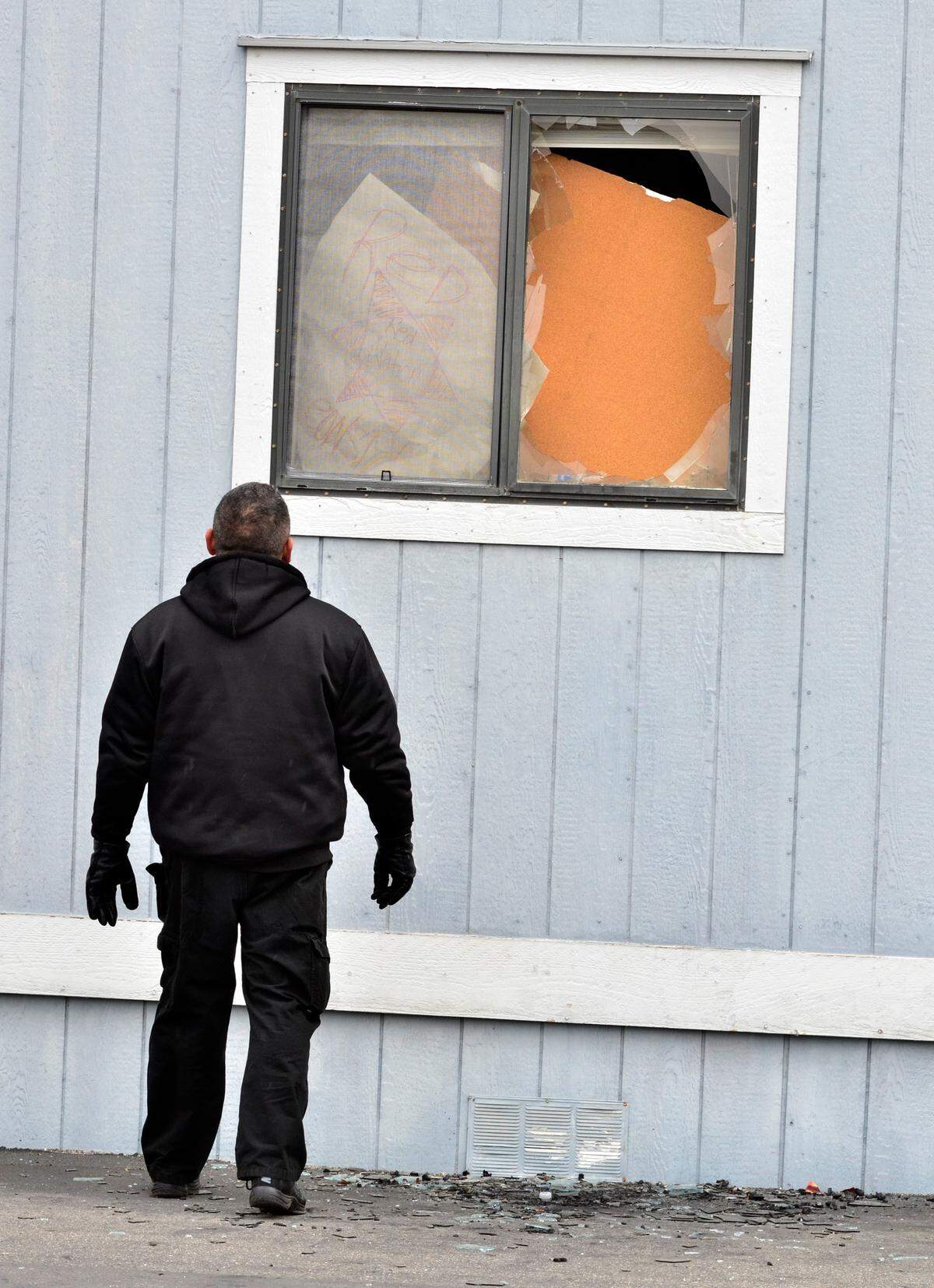
During another dispute in 2012, regarding some Chukchansi leaders not accepting their defeat in a Tribal Council election, the tribe’s offices were occupied overnight by protesters who urged them to step down. The opposing side tried to force them out of the building with bear mace and by throwing bricks and a burning log through smashed windows. People were injured in a fight outside the office that included a stabbing.
At least some people now facing disenrollments were also dissenrolled once before, then reenrolled, and the Chukchansi Constitution states that the tribe shall not “subject any person for the same offense to be twice put in jeopardy.”
In addition to past disenrollments, tribal benefits and resources for many have also intermittently been suspended as different Chukchansi leaders came in and out of power. The tribe’s former chairperson, Claudia Gonzales, described as someone who voted against disenrollments, was removed from her post by fellow Tribal Council members within the past year.
“That was very obviously a harbinger of what we’re now talking about, disenrollment. Let’s remove the chairwoman on whose watch there was no disenrollment,” attorney Galanda said of what transpired. “The chairwoman who put the tribe back together again after all that horrendous stuff in Coarsegold with the casino and the default and everything else, all the insurrection. Let’s remove her and then proceed, as they now are, with disenrollment, and I understand some form of constitutional reform. And the estimates are that 600 to 700 people will be terminated so that you’ll have a tribe of roughly 600 and some, that will share in what will be newfound per capita proceeds from the casino.”
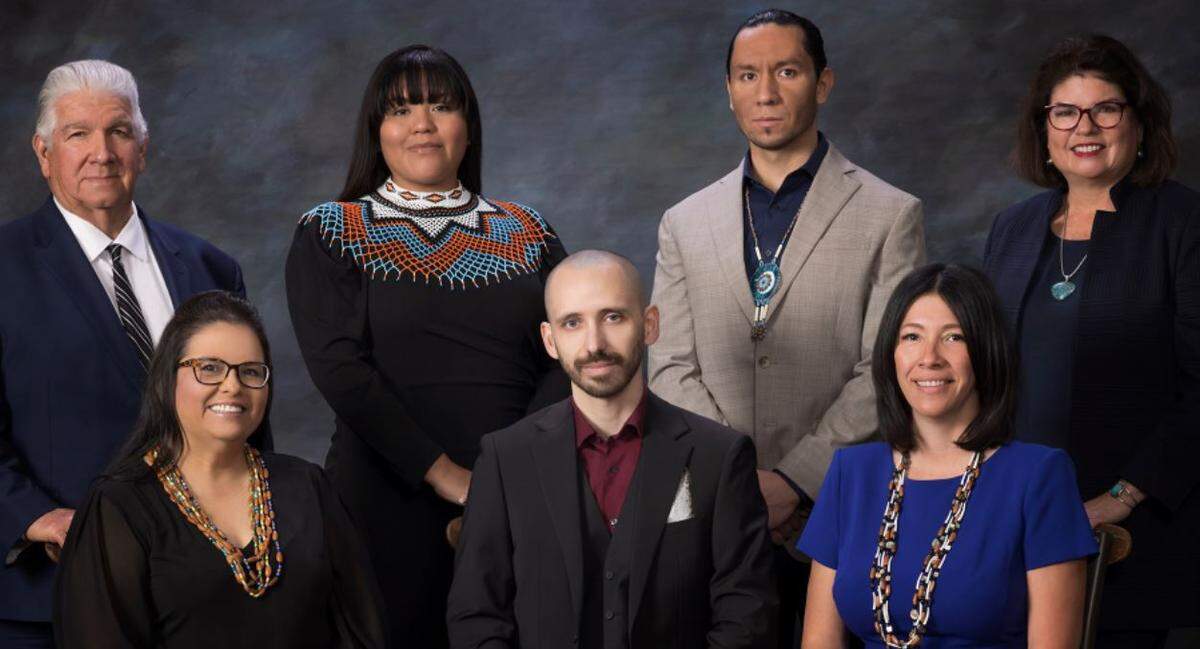
Some others think one group of Chukchansi members, connected to the “distributees,” want the tribe to be far smaller than that.
Galanda has represented many American Indian people facing disenrollments through his Seattle-based law firm, Galanda Broadman, and has advised some tribal members facing these issues at Chukchansi.
Some facing disenrollments say that in addition to historical records, they can clearly see their Chukchansi heritage through DNA testing services like 23andme.com and ancestry.com, and that they are related to the tribe’s founders. A Chukchansi enrollment ordinance from May states the Enrollment Committee can require DNA in specific circumstances. Some now in question say they will gladly provide it if wanted. They are confident about who they come from.
“No matter what, I have Chukchansi blood running through my veins,” one woman said. “So no matter if they say I’m in the tribe or not, I am Chukchansi and that is my tribe.”
Some ousted in years past have been regarded as more closely related to Miwuk, Mono or Table Mountain tribes. While many Native American people are related to multiple tribes, they can generally only officially enroll in, and receive benefits from, one tribe. Chukchansi leaders in the past have also talked about trying to whittle the tribe’s membership down to those living in the Coarsegold area, what some think remains a prevailing philosophy. Some facing disenrollments live in the central San Joaquin Valley.
Many feel enrollment rules also punish the descendants of Chukchansi people who had to move away from rural Coarsegold to find work, and Chukchansi people who purchased their own properties during a time when the government was pushing Native Americans to assimilate and abandon their indigenous culture.
The Chukchansi people have previously attempted to make some political changes on their own, allowed for in the Chukchansi Constitution by assembling a quorum of members, but past attempts to overrule Tribal Council have either been ignored by tribal leaders, fallen short of an attempted goal, or resulted in turmoil.
Tribal civil rights help lacking from the courts, BIA or NIGC
A period of relative peace and economic growth, including increasing Chukchansi’s land base, ensued for the Picayune Rancheria following the casino’s reopening at the start of 2016. The casino was closed for over a year after an armed Chukchansi raid to seize documents related to missed audits threatened public safety. The tribe met the terms of its settlement agreement on Feb. 25, 2019 regarding the casino closure, said Mavis Harris, a National Indian Gaming Commission spokesperson.
Ludwick’s legal memo said terminating per capita payments to some enrolled members earlier this year violated Chukchansi’s Gaming Revenue Allocation Ordinance that states payments must be distributed equally, along with the Indian Gaming Regulatory Act, and that enforcement actions from the NIGC could follow. The Indian Civil Rights Act was also noted. The memo adds that the tribe’s past violations might increase the likelihood of the NIGC getting involved.
Harris told The Bee that the agency can only take enforcement actions related to revenue allocation plans in “limited scenarios,” including when per capita payments are made without an approved plan, or outside of what’s allowed by that plan.
The Bureau of Indian Affairs now takes a more hands-off approach with tribes. BIA provided no details about the Picayune Rancheria in response to questions from The Bee this week, but talked about the federal agency in general. In an initial response, Robyn Broyles, a BIA spokesperson, said to respect government-to-government relationships, “BIA is not involved in tribal enrollment or disenrollment activities or have tribal enrollment data, which belongs to the Tribal government.”
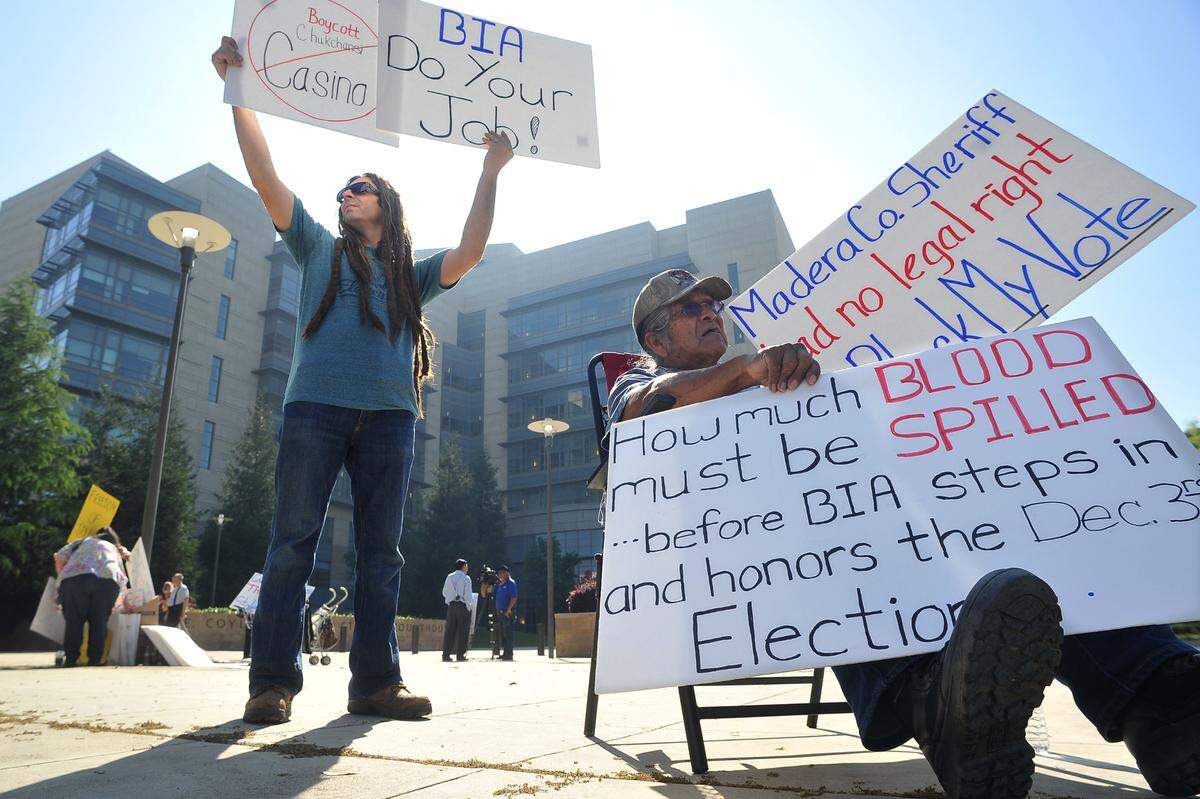
When asked to clarify what BIA means by saying it does not have tribal enrollment data — since presumably some of this data would be needed to administer federal assistance, including who the agency recognizes as a tribe’s leaders — Broyles said tribes are not required to report enrollment data to BIA, and that “the number of tribal members does not affect or drive the amount of funding the Tribe may receive under their 638 contract.”
Public Law 93-638, the Indian Self-Determination and Education Assistance Act, established a contracting framework with federally recognized tribes for programs, functions, services and activities, called PFSAs.
Still, Chukchansi leaders have used membership rolls to secure financial assistance for the tribe and construct its casino, stressing that the funds would benefit many tribal members. The Picayune Rancheria is one of 63 tribes operating casinos in California.
BIA has gotten involved in past Chukchansi leadership disputes. Broyles said the courts have held that BIA can’t determine tribal leadership until a federal action is provided to the agency for it to act on.
“Therefore, BIA does not get involved in internal tribal disputes until the Tribe provides a request for Federal Action,” Broyles continued. “This includes such things as initiating a new 638 contract, bringing land into trust, or when approval is required of governing documents.”
In summary, she said BIA’s mission is “to support Tribes in their inherent right to self determination and supports their ability to resolve their conflicts internally, exercising and clarifying their governing documents.”
Attorney Galanda said BIA and the Interior Department could be doing more to help indigenous people.
“They have plenary power, according to Congress, to do something,” Galanda said. “For example, ask for the rolls, or ensure that there is due process of law in a place where there’s no law and order or court to speak of.”
He said disenrollment is not a traditional indigenous practice. The U.S. government created every component of disenrollment as a colonial or federal exercise, Galanda said, and now “they are essentially letting tribal politicians finish what settlers could not, which is eradicating indigenous peoples.”
Sources interviewed said they are not aware of a tribal court in existence at the Picayune Rancheria today. During a 2013 Chukchansi leadership dispute, dueling tribal councils both reported creating tribal courts that they used to wage claims against the other side.
Galanda said a disenrollment case where he had some success representing indigenous people from Oregon was before independently-appointed Court of Appeals judges who were law professors from around the country, “not beholden to whatever paycheck they were receiving for their service.”
“They did what was correct,” Galanda said. “But barring that type of dynamic, it’s difficult to impossible to prevent disenrollment.”
The Tribal Council rules supreme at Chukchansi, without checks or balances to its power. Its Enrollment Committee is made up of Chukchansi members, including past leaders who voted for disenrollments, and Chukchansi people who were removed by the tribe and later reenrolled.
“There are no civil rights at Chukchansi, period,” Galanda said. “That’s whether you’re a visitor at the casino or you’re a member of the tribe. And I don’t care what MOU they have with Madera County Sheriff. The fact of the matter is, nobody should feel safe at Chukchansi. Not a patron, not an employee, not a citizen, because there is no law and order.”
He’s worried about the survival of Native American people in the United States.
“I’ve very recently come to the conclusion there’s little to no hope, because fundamentally, America doesn’t care about indigenous humanity. Our country just doesn’t,” Galanda said of fighting disenrollments. “And I don’t know why I’m even surprised by that. That’s our history. ...
“When it’s government to government, that’s very comfortable. When it’s economic, that’s comfortable. When it’s gaming compacts, that’s comfortable. When it’s taking land into trust, that’s comfortable. But when it comes right down to it, and the question is existence, indigenous human existence, nobody cares.”
This story was originally published September 30, 2022 at 8:12 AM.