
‘We exist:’ Census 2020 provides more visibility to Indigenous Mexicans in Central Valley
This story is part of the Central Valley News Collaborative — a bilingual, community journalism project funded by the Central Valley Community Foundation and with technology and training support from Microsoft Corp. The collaboration includes The Fresno Bee, Valley Public Radio, Vida en el Valle, Radio Bilingüe and the Institute for Media & Public Trust at Fresno State.
READ MORE
2020 Census Data & California Population Changes
See maps, charts and more: Full coverage of the impacts and data in the 2020 U.S. Census.
Expand All
Margarita Santiago Vázquez was born in Coatecas Altas, a small town in Oaxaca, Mexico, and moved to Madera 18 years ago. Today, she identifies more as Zapotec, an Indigenous community from Mexico’s southern highlands that speaks not Spanish but its own language, and has unique cultural customs, food and celebrations.
But up until 2020, she had never been able to make that distinction clear in the U.S. census.
“We exist,” she said in Spanish. “We speak our own language and have our own culture that we value. That’s why this year’s census was important— it’s the first step for people to become more aware of our presence and the varieties of Indigenous communities here in the Central Valley.”
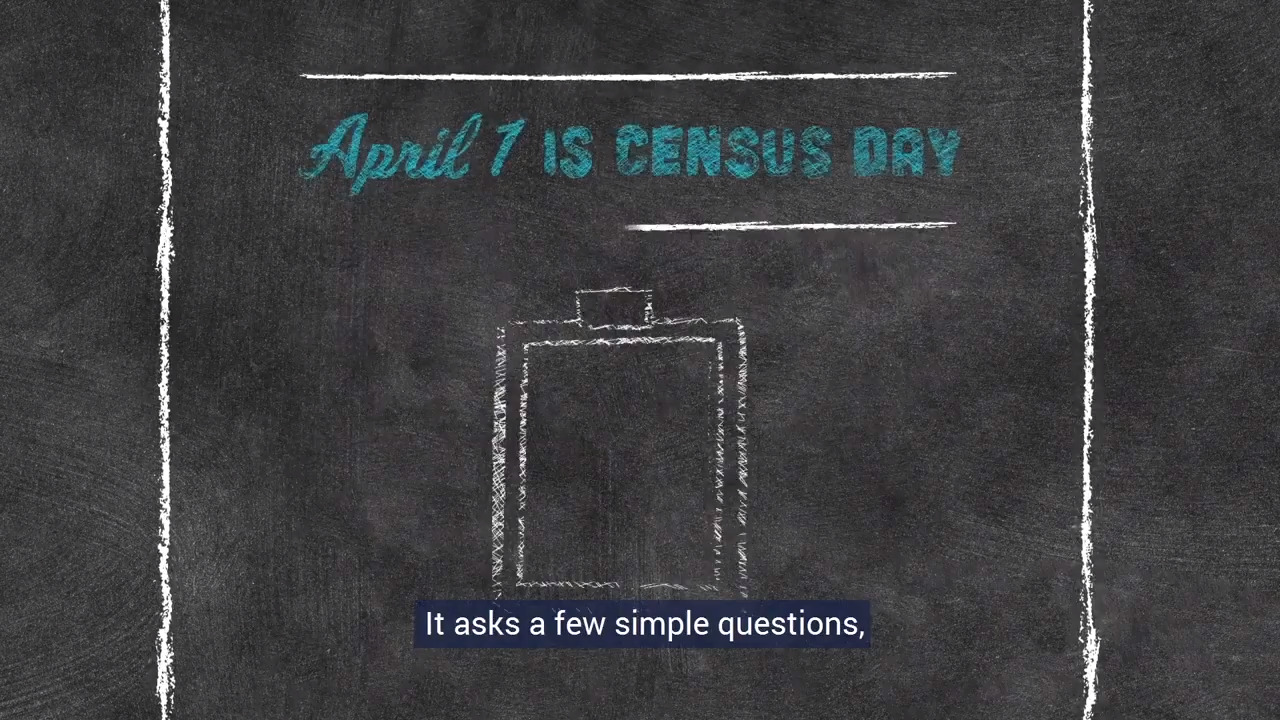
In previous years, Latinos of various ethnic backgrounds didn’t have many options when selecting their identity on the census. Many were forced to choose between two different races or didn’t see their ethnic group listed as an option on the decennial questionnaire. But the 2020 Census gave many people like Vázquez an opportunity to choose more than one race or write in how they identified — a move U.S. Census Bureau officials made to better capture the racial and ethnic diversity of the American population.
Though it may seem like a small detail for some, for others it’s a major change they hope will bring greater visibility to their communities, said Oralia Maceda, program director of the Fresno-based Centro Binacional para el Desarrollo Indígena Oaxaqueño, which advocates for Indigenous migrant communities from Oaxaca.
“We’ve been here, we’ve been present and we want that to be acknowledged,” Maceda said in Spanish. “California is a multicultural and multilingual state and we contribute to that.”
California is home to about 350,000 Indigenous Oaxacans, who are primarily concentrated in the Central Valley and the southern portion of the state, a study conducted in 2016 by the University of Southern California and the Mexican research institute El Colegio de la Frontera Norte shows. These Indigenous peoples include Mixtecs, Zapotecs and Purépechas.
While Spanish is the dominant language in Mexico, the Mexican government’s Tourism Secretary reports that there are approximately 68 official Indigenous languages across the country with more than 350 variants and dialects. Many people who speak Indigenous languages have little to no understanding of Spanish.
But until recently, it was nearly impossible to determine how many immigrants from Mexico and Central America living in the United States speak Indigenous languages. And that’s made it challenging for organizations like Centro Binacional to advocate for improved language access for members of the Indigenous community.
A lot of crucial information is not available in Indigenous languages, Maceda said, which has created challenges for those seeking information about COVID-19 and available vaccines during the pandemic. Language assistance, translation and interpretation services are also particularly important for community members when accessing public services, interacting with government agencies, or communicating in a hospital, school or court setting, she added.
The more detailed count could help ensure that the Indigenous community, which is largely impoverished and employed by the agricultural sector, will no longer be “invisible,” she said. While recently released census data provides information about racial groups, a more detailed breakdown of how multiracial people identified is not yet available.
“Everyone assumes that because we come from Mexico we all speak Spanish,” she said. “We are Mexican, but we also have our own identity, we have our own language and we want our existence to be recorded. We have to make our presence known so that we are not erased and so that our rights are upheld.”
Full participation in the census is also important for the greater region because the data determines how many political representatives it will have in the House of Representatives and how public dollars will be allocated to fund programs on health, housing, safety, schools, infrastructure, among other areas.
Outreach to Indigenous community focused on raising awareness, education
Convincing community members to identify as Indigenous in the 2020 Census was no easy feat, Maceda said.
The organization also had to overcome another challenge. Former President Donald Trump’s attempt to put a citizenship question on the census instilled fear within the community, the majority of whom are undocumented, she said.
In response, Centro Binacional developed a robust campaign encouraging the migrant community to answer the questionnaire.
When the census form became available in mid-March of last year, the organization made thousands of phone calls and distributed informational flyers in languages including Mixtec, Triqui, Zapotec and Spanish. They created various social media posts with frequently asked questions, produced short informational videos and provided guidance for those having trouble filling out their census form online or by mail.
The goal was to dispel any misinformation or rumors about the census and produce the highest possible turnout.
“We wanted to raise awareness and educate people ... because politically, socially, and economically, the census gives us more representation and power,” Maceda said.
Central Valley sees increase in people identifying as biracial, multiracial
The Valley’s Indigenous community members weren’t alone in choosing to identify as biracial or multiracial.
Multiracial identification on the 2020 Census soared over the past decade, increasing from less than 3% to more than 10% of the U.S. population from 2010 and 2020, recent data shows. The number of people, including Latinos, who identified as multiracial increased from 9 million in 2010 to 33.8 million in 2020.
Latinos can be of any race since they are classified as an ethnicity. The U.S. Office of Management and Budget defines “Hispanic or Latino” as a “person of Cuban, Mexican, Puerto Rican, South or Central American, or other Spanish culture or origin regardless of race.”
Population growth in the San Joaquin Valley and California mirrored national trends. But the most dramatic demographic shift in every Valley county was among residents who identified as two or more races. In 2010, the multiracial segment of the population in each Valley county was less than 5%, but those numbers tripled or more in most counties in the 2020 Census.
Eric McGhee, a senior policy fellow at the nonpartisan Public Policy Institute of California, said several factors contributed to the uptick in biracial and multiracial representation.
The Census Bureau’s decision to make it easier for people to identify as biracial or multiracial played a significant role, he said. In addition, census officials improved software that processes responses to better capture diversity. Examples of racial origins under each category were also added. The box marked as “white,” for example, included Lebanese, German, English, Italian or Irish as examples.
“The census gave better prompts to people about the possible multiracial identifications that they could have and it coded more of the responses,” he said. “So a lot more of the kind of richness of how people identified got captured that way.”
Census shows ‘so many different races’ exist in Fresno area
For Vázquez, being able to identify as both a Mexican and Indigenous person on the census was important not only for her community, but also because her biracial status reflects her cultural pride.
Unlike other Mexicans, Vázquez does not call herself a mestiza, a term used to describe someone who is of mixed race with Spanish and indigenous heritage. Instead, Vázquez has always referred to herself by her Indigenous roots — as an indigena de las Americas.
Her identity continues to be a source of pride and reminds her of home.
In Oaxaca, women wear traditional dresses known as enaguas, stitched together from colorful textiles and embroidered with velvet and silk flowers. During large celebrations, her family would sing and dance to jarabes, lively music that is accompanied by a traditional dance, she recalled. On Dia de los Muertos, a pot of mole negro — a pre-Hispanic sweet and sticky sauce made with an array of spices, herbs, chiles and chocolate — would be stewing while they set up altars honoring the dead.
“I have so many beautiful memories that remind me of where I come from,” she said. “For the first time, people will see there are so many different races that exist here.”
This story was originally published August 27, 2021 at 5:00 AM.
.jpg)
.jpg)