
Lightning fires shut Mt. Whitney access. Will Fresno County side of Sierra get hit next?
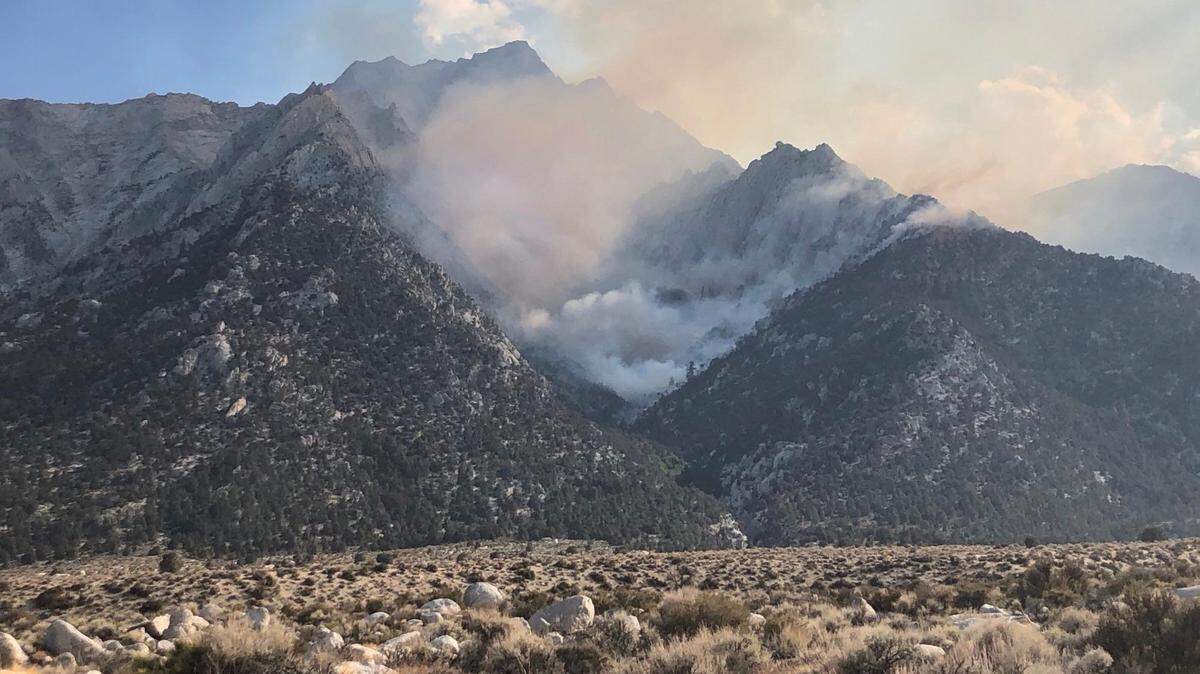
Days after a lightning-caused wildfire shut down access to Mt. Whitney in the Inyo National Forest, a second fire is causing additional evacuations in the area.
And the National Weather Service is now warning of dry thunderstorms in the western Sierra Nevada in Fresno and Madera counties.
On Friday, evacuations were called for residents of Granite View and Horseshoe, and campers in the Alabama Hills. That fire burned nearly 600 acres. It is now 100% contained and those evacuation orders have been lifted.
But a second fire, dubbed the Inyo Creek Fire, is now burning near Lone Pine Peak, southeast of Whitney Portal. On Monday mandatory evacuation orders were issued for Olivas Ranch, Portal Preserve, and all residences on Whitney Portal Road, north of Horseshoe Meadows Road, along with the Whitney Portal area, Whitney Portal Campground and Lone Pine Campground.
Whitney Portal Road is closed at the Horseshoe Meadow Road intersection. Hikers who had planned to exit at Mt. Whitney Trailhead should use a different exit point such as Cottonwood Lakes Trailhead or Onion Valley.
The fire had grown to 410 acres Tuesday morning. The sheriff’s office was going to let people into the area on Tuesday to retrieve their cars from Whitney Portal, but that has been canceled because of unsafe conditions.
Fresno County-area dry thunderstorms forecast
Areas of the western Sierra Nevada could see similar fire conditions this week.
The National Weather Service says subtropical moisture moving north into the area could cause thunderstorms on Wednesday and Thursday. But if that moisture is limited, the storms could produce conditions for dry lightning. In that case, fire weather conditions would become critical, the weather service says.
“Dry thunderstorms can cause wildfire starts in the mountains, especially in the dry conditions due to the drought.”
On Tuesday, the National Interagency Fire Center, the U.S. support center for wildland firefighting, elevated the national preparedness level to 4. It’s just the fourth time in 20 years that the organization has declared such a designation in the month of June (the other times were 2002, 2008, and 2012).
The decision was made due to the significant increase in fire activity in multiple geographic areas, as well as increased competition for shared resources, according to the center.
This story was originally published June 22, 2021 at 9:35 AM.