
War breaks our veterans. Psychedelic drugs can ease their pain — yet they remain illegal
Something outside was calling to Jose Martinez. So he answered.
He burst through the front door of his rural San Bernardino County home and stared at the searing Mojave Desert sun, imploring our galaxy’s life force to grant him a fresh start. As tears streamed down his face, Martinez brokered a deal for his life, and swore to “wake my ass up (everyday) no matter what … but you’ve got to promise me one thing,” he pleaded. “No more hurting, no more hospitals — nothing.
“And I promise you, I’ll show the world how to live to the fullest.”
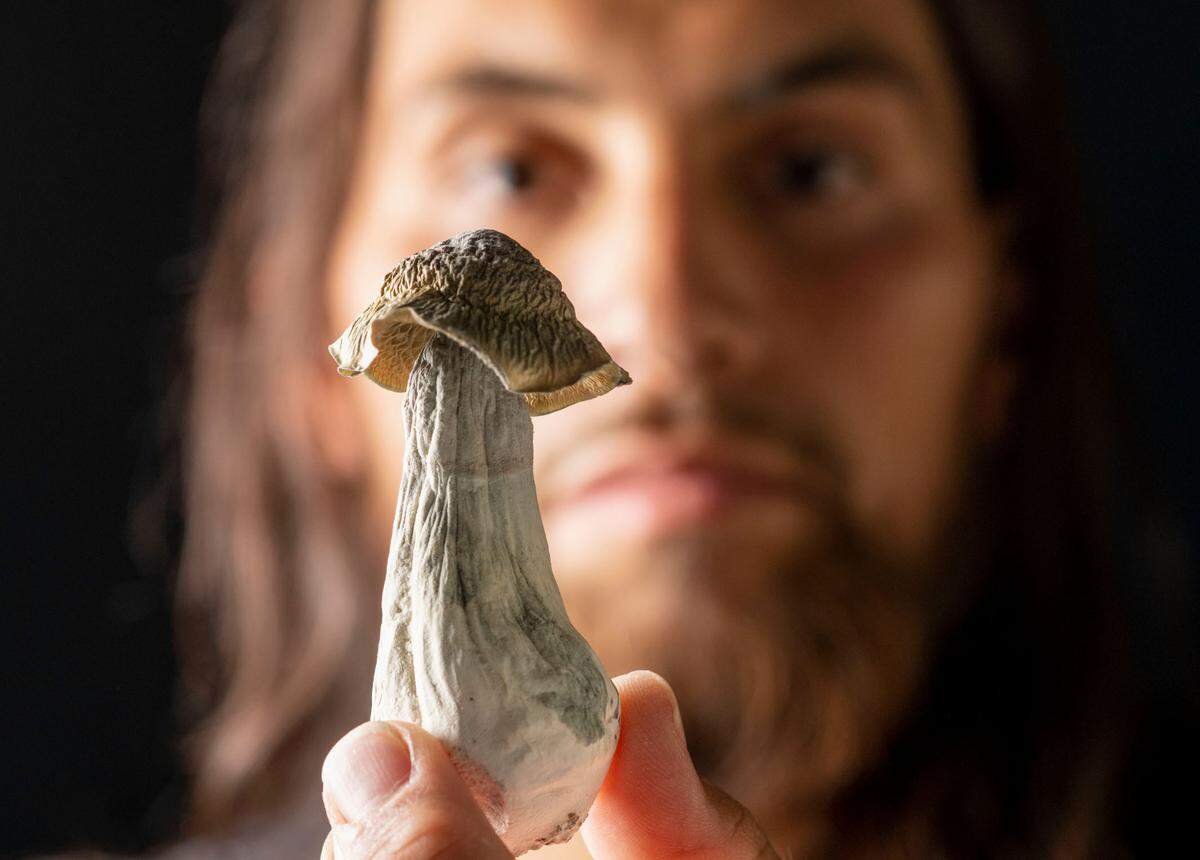
In this moment, six years ago, he was high on psilocybin mushrooms, and in the midst of a dramatic period of self-discovery, transformation and healing. He had begun using psychedelic drugs.
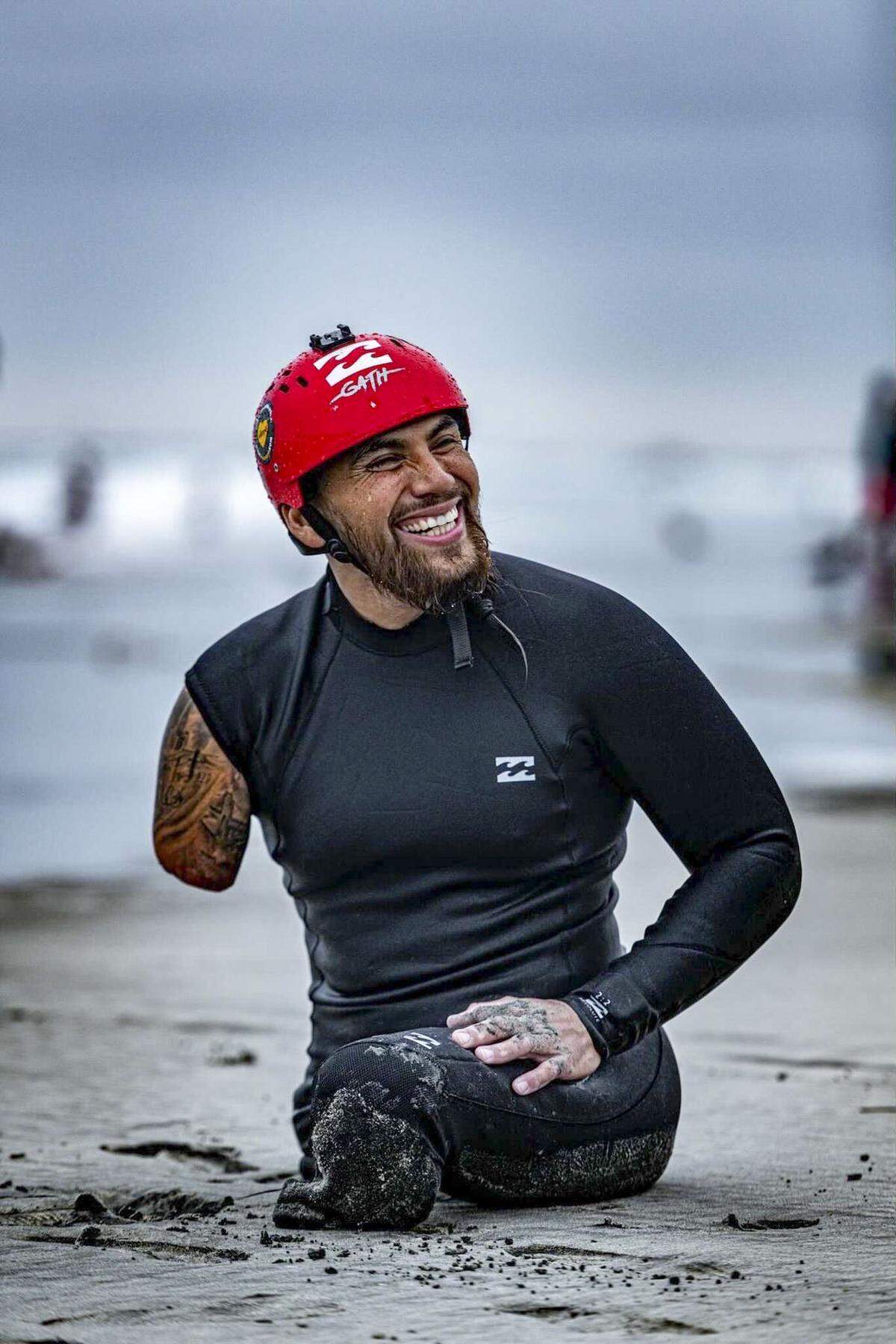
Martinez is 34, an Army veteran, Compton native and triple amputee. He spent two years confined to a hospital while he recovered from the loss of both legs and his right arm to an improvised explosive device in Afghanistan in March 2012. He received the Purple Heart.
Martinez became addicted to a souped-up painkiller known as hydromorphone, which doctors legally prescribed him. He occasionally compounded his prescription opioid use with alcohol.
Suicide was a daily rumination.
Martinez underwent 19 surgeries, including a colostomy reversal that led to complications, forcing his then-girlfriend to inject him with nutrients for three months while he couldn’t eat. One of the most dramatic surgeries was a grisly removal of his shattered right femur.
Sometimes Matinez’s nervous system was so overwhelmed from all the procedures and medication that he needed two hours to urinate.
In the two years after Martinez nearly died, he often fantasized about when and how he would commit suicide.
“I knew I wanted to end my life the minute they let me go (from the hospital),” Martinez said. A few months after he was sent home, he tried. Martinez swallowed a mound of Oxycontin pills and woke up three days later — back in a hospital.
The marvels of modern medicine spared Martinez from joining the roughly 7,000 American soldiers who died in post-9/11 conflicts. But the life that was saved was marred by newfound physical and psychological pain. Martinez risked everything for this country, sacrificing his body as a casualty of a misguided 20-year war.
He came home and returned to a society incapable of living up to its patriotic mantra of supporting the troops.
Instead, because of ingrained stigmas, biases and generations of ignorant lawmakers, far too many veterans like Martinez face a difficult choice: break the laws of the country you bled for by using effective but illegal drugs, or follow antiquated rules and one-size-fits-all treatments and risk death. Psilocybin and other hallucinogens are considered Schedule I drugs under the Controlled Substances Act, with state penalties as severe as 1-4 years in prison.
Martinez refused to succumb to his trauma and depression and sought out psychedelic drugs. Not only did he survive but he kept his promise to the sun.
‘I was holding on to a lot of anger’
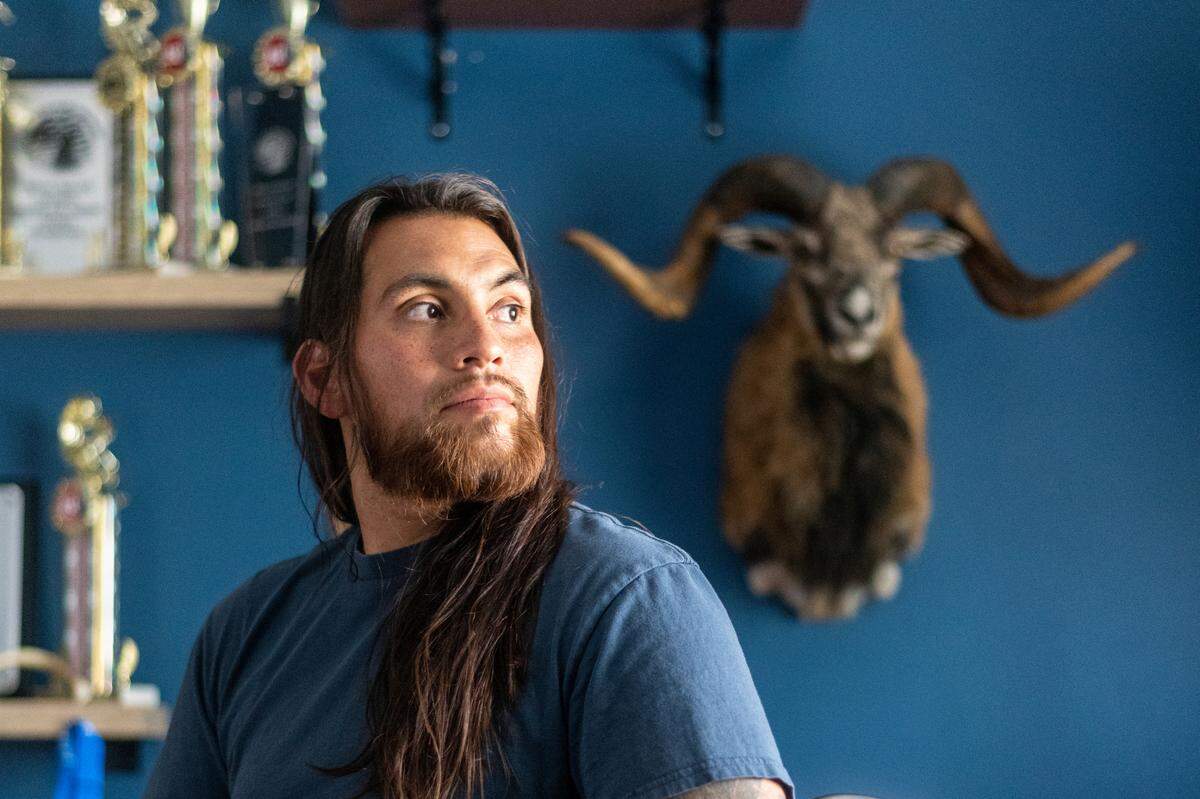
Martinez has a certain gravity to him, and a tendency to beam when he’s excited. He has long dark hair, an unusually red-colored beard and tattoos all over his body. He effortlessly shares his most enlightened thoughts with the cadence of a Southern California telemarketer, maintaining a monotone through his profundity.
“I live a little bit away from society because — in groups — people are the worst,” he says.
He is out there. His Apple Valley home is a blossoming oasis and sits on a roughly two-acre desert plot, which he amusingly compares to Afghanistan, particularly because of its sunrise, sunset and dark sky panoramas.
During one of our first calls, I could barely hear Martinez speak over the deafening chirps of springtime hatchlings nesting in his fruit trees. He and his wife Liseth could supply a farmer’s market, growing apricots, cherries, peaches, apples, nectarines, tomatoes, cucumbers and a variety of chiles in their garden.
As an avid hunter, Martinez is well on his way to achieving self-sufficiency.
“If we’re trying to build on this beautiful land and take care of it, the only way we’re going to do it is if we keep adding nutrients to the soil,” Martinez says. “I’m trying to plant as many trees as possible and have as much life as possible.”
Martinez said he grew up in a broken home in the San Fernando Valley in the early 1990s, a source of deeply rooted trauma and anguish that he uncovered during his most introspective mushroom trips. His older brother died more than a decade ago, making him the unlikely eldest of three children of El Salvadoran immigrants.
His mother worked tirelessly as a maid to pay the bills and feed her children. Martinez would sometimes join her, hoping to score some fast food if they finished early.
He said his father was an abusive alcoholic and his parents split when he was barely 5 years old. Decades later, Martinez reflected on the protective instincts he developed for his mother, and the destructive home atmosphere under his father that fostered feelings of immense rage buried deep within his psyche.
Remarkably, stepping on a bomb in Afghanistan had little to do with his depression.
“It wasn’t the war that was affecting me,” Martinez said of an especially important psilocybin breakthrough. “It was my childhood. I was holding on to a lot of anger.”
Martinez enlisted in the Army in 2010 as an 11 Bravo infantryman and thrived under a military regimen. He developed a habit of talking to himself on daily 15-mile runs, and would try to understand his physical and mental limits — a practice that would come in handy years later when he used psychedelics.
With the U.S. at the midpoint of its two-decade occupation of Afghanistan, Martinez was deployed to Kandahar about a year after he enlisted. At the time, the country’s second-largest city was “a big red dot,” Martinez said. “Everybody was dying there.”
March 3, 2012, was supposed to be an easy day — some “get in, get out” work guarding civilian construction workers who were building new roads but were being targeted by violent extremists. The night before, someone was spotted digging near the project site, which infuriatingly gave none of his commanding officers any pause.
During his shift the next day, Martinez stepped on a fateful patch. A 60-pound homemade bomb was waiting, filled with plastic explosives, nails, glass, screws and anything that could inflict ungodly harm.
The blast — strong enough to destroy a vehicle — put him in a 10-day coma and rendered him a triple amputee barely five months into his deployment.
It’s a miracle he’s alive.
“I had screws coming out of me a year after my surgeries,” Martinez said.
Psychedelics as revolutionary treatment
If we’re being honest, the notion that America supports its troops is a fallacy, a self-styled affirmation of backward values defined by extravagant symbolism and minimal substance. Most people (myself included) are too comfortable — or too overburdened — to lift a finger for our military members.
We repay their service with retail discounts, priority airplane seating (after first class) and performative gestures on holidays synonymous with star-spangled beer cans.
The agency we tasked with looking after them, the U.S. Department of Veterans Affairs, is notoriously unhelpful. The department’s inspector general recently said the VA is still misleading the public eight years after a scandal over the agency’s attempts to cover up extreme wait times in its health care system, resulting in dozens of needless deaths and the resignation of its secretary.
Post-traumatic stress disorder has been directly linked to excess mortality for combat veterans, a 2019 VA study found. The authors, including researchers from Dartmouth and the University of Michigan, suggested that “future studies should focus on developing and testing targeted interventions to address these risk factors.”
That’s because many veterans are in bad shape. The most recent VA report on mental health noted that suicide rates increased 36% in the two decades after the U.S. invasion of Iraq, affecting veterans in the 18-34 age group the most. In 2019, more than 17 veterans died each day.
Even though veteran homelessness has declined over the last decade, they remain disproportionately represented, accounting for about 11% of America’s unhoused population.
Soldiers looking to tame the side effects of their service have been handed an inadequate system operating with one arm tied behind its back. To quell the terror, the anxiety, the voices in their head, the suicidal thoughts, their best hope — under the law — is some combination of counseling and prescription medication.
Unfortunately, that doesn’t work for everyone.
Psychedelic drugs have emerged as a revolutionary treatment, yet many policymakers and much of the public are still beholden to stigmas and drug war stereotypes. They picture hippies at Grateful Dead shows and ravers at nightclubs. They hear former California Gov. Ronald Reagan calling people who take LSD “plain fools” and First Lady Nancy Reagan’s “just say no” campaign. They see psychedelics included in the list of drugs seized by law enforcement nationwide on an almost daily basis.
What we don’t see are the pain-stricken veterans so desperate for relief that they’re willing to ingest hallucinogens. We don’t hear the whispers between service members about how they treated their PTSD at the root level, rather than its symptoms. We don’t encounter retired soldiers who embark on risky trips abroad to overcome trauma or addiction.
Solving problems with drugs
After wrestling with PTSD, depression and substance abuse when he returned to civilian life in Florida, Heroic Hearts Project founder Jesse Gould, a former Army Ranger, found purpose through psychedelic salvation.
As he slogged through a corporate finance job in Tampa, Gould noticed the classic signs of dependency: drinking a beer before work to ease a hangover is a telltale sign something is wrong.
He contacted the VA and explained the trauma symptoms, anxiety and self-destructive behavior but was uncomfortable with prescription medication, Gould said. Because that broke with the department’s mental health treatment protocols, the best the VA could offer was four counseling sessions and group therapy. In a 30-minute interview, he was diagnosed with PTSD after what felt like a “check the box sort of thing,” Gould recalled.
“It was this combination of, one, they clearly don’t understand what’s going on, and two, there’s really no viable means (to help people),” he said. “You can see it with veterans. Medication helps some, but for the most part, it’s a maintenance program. You’re not getting over anything.”
Six years ago, an episode of the “Joe Rogan Experience” podcast ginned up some curiosity about the healing power of ayahuasca, an entheogenic drink used by indigenous tribes in South America. Gould was skeptical, but a burst of intuition drove him to quit his job and book a one-way ticket to Peru.
“I never heard of drugs solving any problems,” said Gould, who was deployed three times to Afghanistan. “But there’s a parallel between when I joined the military and this, where fortunately I just had strong intuitions at certain points in my life. They guided me even when it didn’t make any sense.”
By plane, boat and car, Gould arrived at a retreat deep in the Peruvian jungle with a group of foreign travelers also seeking indigenous shamans. The first two ayahuasca ceremonies were “all out war” with the mind and body, he said.
Spelled by extensive vomiting and confrontations with some of his deepest fears, Gould experienced “images going through my head at an uncontrolled rate.”
But on the third night, a hand pulled him from “a hellish landscape into instantly this serene landscape,” he said. A day later, after his fourth drink that week, Gould realized this was his own doing. The nightmarish episodes taught him a technique to control the self-sabotaging nature of his mind, which was constantly undermining his mental health.
“It was these muscles I didn’t know I had, essentially showing me, ‘Hey, you are putting yourself in this pain and allowing it to overwhelm you.’“ Gould said. “The voice in my head, the what-if kept sending me back.”
Through those trips, he developed a script to calm his anxiety, a strategy that helped him navigate his emotions before they consumed him. Gould allowed himself to appreciate his accomplishments and identified what sort of career would bring satisfaction. And he confronted some unresolved conflicts affecting his relationships with his family.
“It really did feel like the first time that my brain was functioning as one single unit that was built to help me out and not to kill me or harm me or drag me down,” he said.
In the months that followed, Gould spent time in Colombia and met his future bride. He began connecting other veterans struggling with mental illnesses or addiction disorders to retreats he vetted himself, creating a network of care in Latin America that became the foundation of his nonprofit.
Five years later, Heroic Hearts facilitates a limited number of psychedelic retreats abroad for veterans who meet stringent requirements. The demand is growing, Gould said, with a significant backlog and roughly 1,000 applicants last year alone.
The nonprofit is also advocating for legislative action around psychedelics and partnering with universities to determine what type of treatments could heal traumatized combat veterans and their loved ones. One study with the University of Texas is investigating the effects of psilocybin on Gold Star recipients whose loved ones died in service.
Laws trailing the science
Gould and Heroic Hearts co-sponsored a rather simple California bill that would have decriminalized the possession and use of psychedelic drugs and launched a committee to determine what sort of policies would help the state prepare for future regulatory changes.
The proposal, Senate Bill 519, authored by state Sen. Scott Wiener, was unexpectedly gutted by an opaque Assembly committee despite facing no organized opposition and garnering bipartisan support in the Senate, where it passed last year.
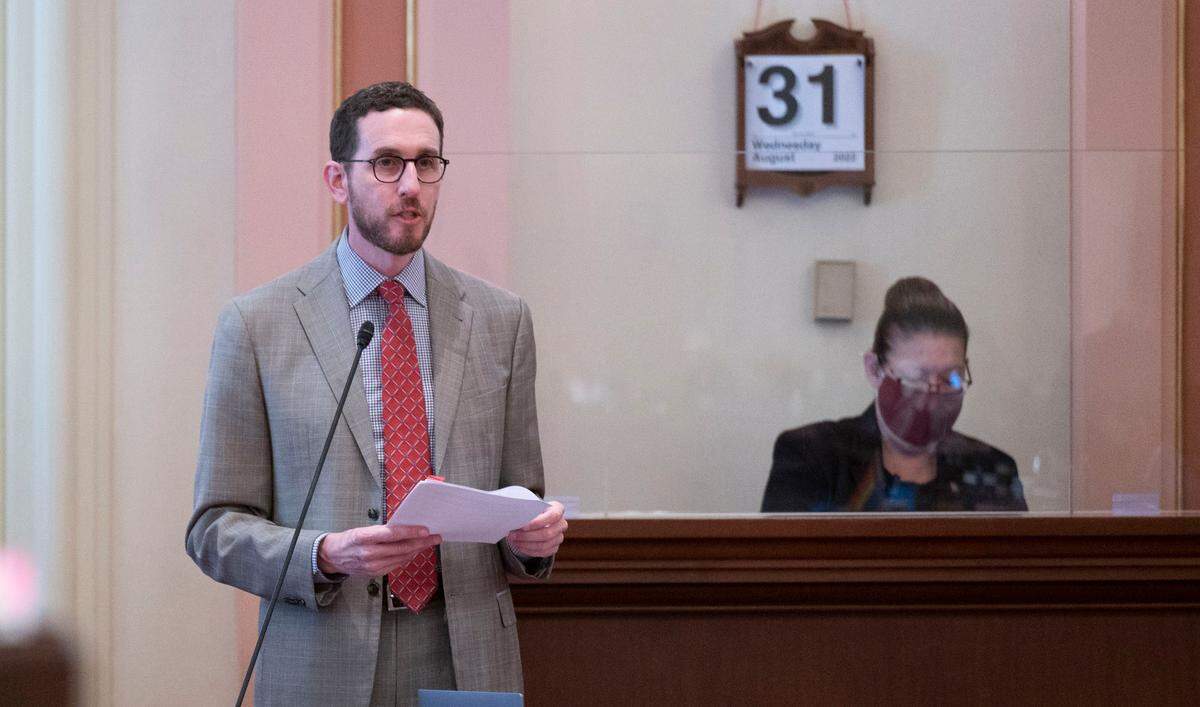
Wiener chose to let the watered-down bill die and vowed to reintroduce it next year. His home city of San Francisco on Wednesday became the third California city to decriminalize psychedelics, joining Oakland and Santa Cruz.
The letdown in the Legislature was a major setback for the nascent movement to decriminalize psychedelics so veterans and people with mental illnesses can test proven methods without breaking the law.
And yes, it is proven.
The most pivotal research was a double-blind, placebo-controlled study by the Multidisciplinary Association of Psychedelic Studies (MAPS), which last year found that 67% of people who received MDMA-assisted therapy “no longer met the diagnostic criteria for PTSD” just two months after treatment.
A groundbreaking 2020 study by Johns Hopkins University found that as few as two doses of psilocybin mushrooms can treat major depression — and about four times more effectively than traditional antidepressants. At the time, Dr. Alan Davis, one of the researchers, described it as a “game changer” given that “most other depression treatments take weeks or months to work and may have undesirable effects.”
New data on psilocybin treatment from an even larger trial by Compass Pathways last year reaffirmed Johns Hopkins’ findings. A recent NYU study found that 83% of people with alcohol dependence reduced their heavy drinking days within eight months after two mushroom trips, and nearly half quit altogether.
This wave of landmark research in recent years has led the White House to begin preparation for psilocybin and MDMA, commonly known as ecstasy, to receive Food and Drug Administration approval for therapeutic use within the next two years.
Until that happens, more veterans are going to die. Some will break the law to survive.
Keeping his promise to the sun
Martinez was able to kick the prescription opioid addiction cold turkey, and turned to cannabis for pain relief “because I’m from California,” he says. “To me, smoking marijuana is normal.” It helped Martinez for about four years before “I hit rock bottom again,” he continued. “I was making sure that my physical pain was going away, but at the same time, I was trying to kid myself and masked the mental pain.”
Cannabis is much more effective at relieving physical pain, but it doesn’t cause the level of neuroplasticity that unlocks the brain the way psychedelics can. Still, the physical hurt was bad — and still is. On the worst days, his wife Liseth would feel so helpless that she would cry with him, consumed by her frustration that relief seemed so elusive.
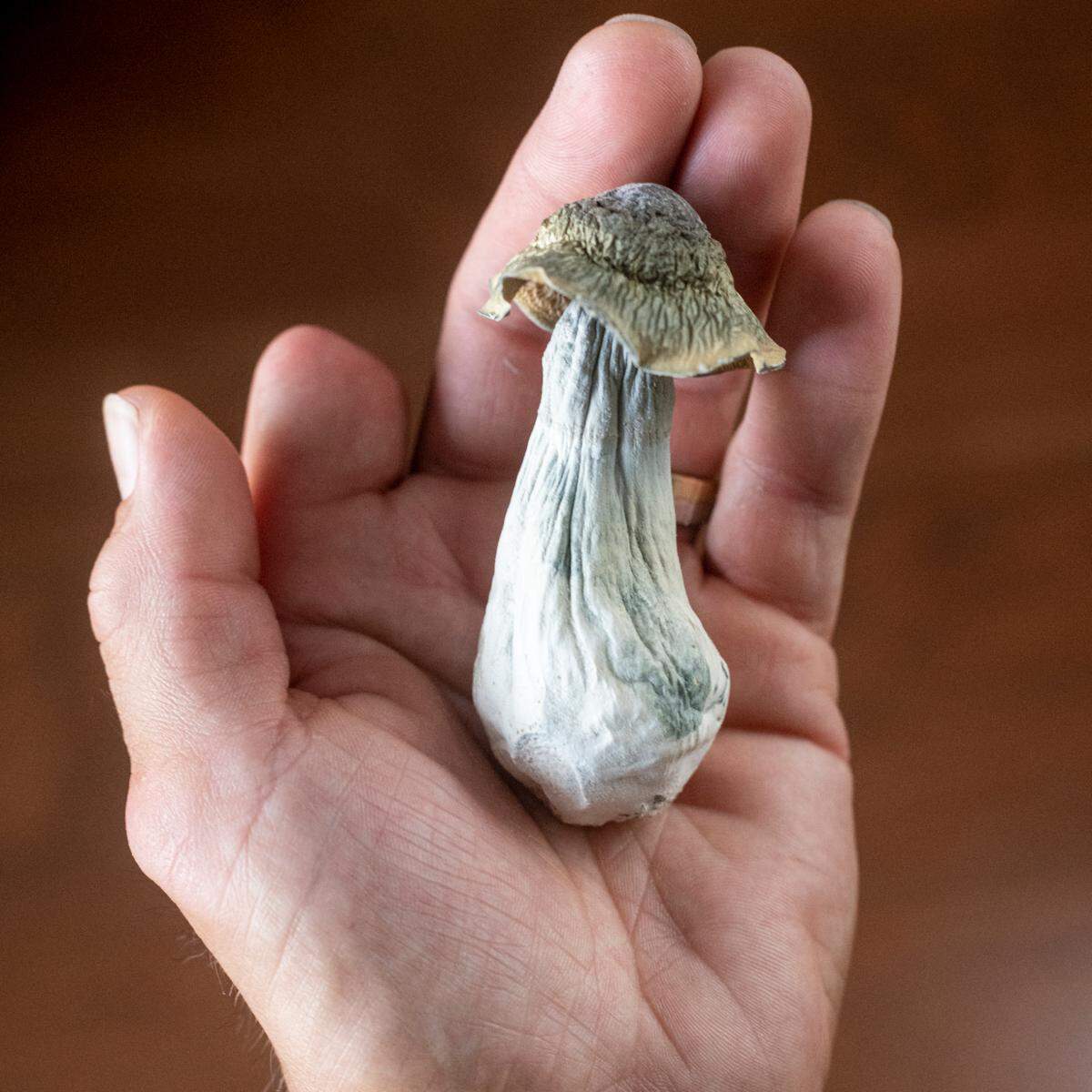
With her blessing, Martinez turned a hopeful curiosity about psychedelic mushrooms into a full-blown regimen. He credited a man named “Jet Fuel” for initially supplying him with a chocolate form of psilocybin. Over time, Martinez increased the dosage, at one point taking as much as six grams per day (which is a lot). Eventually he began growing his own mushrooms, reducing them to powder and converting them to pill form, allowing him to microdose psilocybin as a sleep aid and pain reliever.
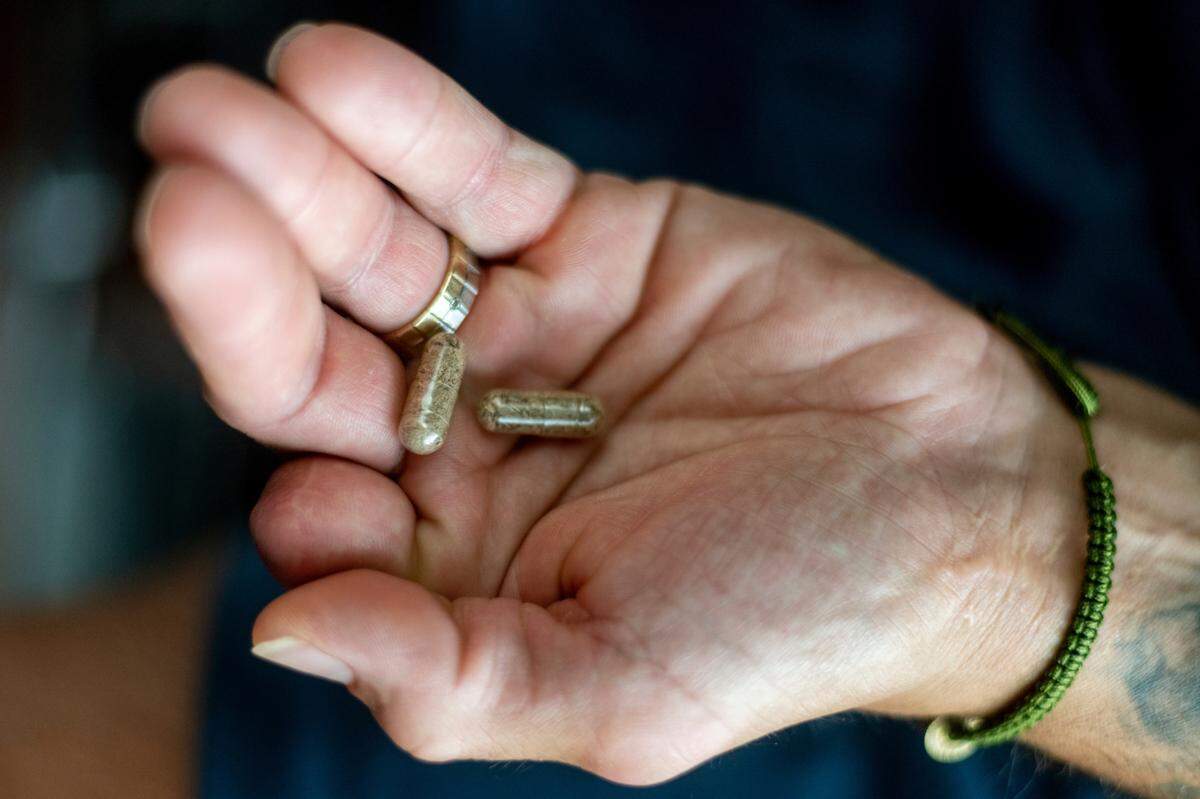
Psychedelics “allowed me to release mental struggles that I didn’t really know or understand that I had,” Martinez says. “That’s what kept me in my (mental) cellblock, that kept me wanting to be in a comfort zone. Now everyday I want to be uncomfortable and see how worthy I am of living everyday to my fullest (potential).”
Martinez has undergone a remarkable transformation. He credits Liseth’s unwavering support, and a persistent military trainer who pushed him to try swimming while he was living in the hospital and still had a colostomy bag.
The first time he got in the water, swimming 50 meters took Martinez three hours. But he kept at it — “I’ve always been a competitor,” he says — and once his timing and movement improved, he tried surfing.
“I didn’t understand how much surfing was going to change my life,” Martinez said.
Over the last five years he has emerged as one of the most prolific para surfers in the world and an inspirational figure in the sport. Martinez earned gold medalist honors at the ISA World Parasurfing competition, and this year won a national title at the USA Surfing Championship. This month, he’ll contend for a world title at the ISA World Surfing Games in Huntington Beach, and has his sights set on the 2028 Summer Paralympics in Los Angeles.
Martinez lies in a prone position on his board, relying on an assistant to pull him to the waves during competition. From there, they detach and Martinez performs — to a world class level that’s landed him sponsorships, custom gear and a full-time salary.
On the beach, Martinez seems his most comfortable. He’s magnetic, dubbed the “people’s champion” at the World Parasurfing competition because he cheered for every single competitor, no matter their nationality. That weekend, a dozen of his army teammates cheered him on as he secured a gold medal.
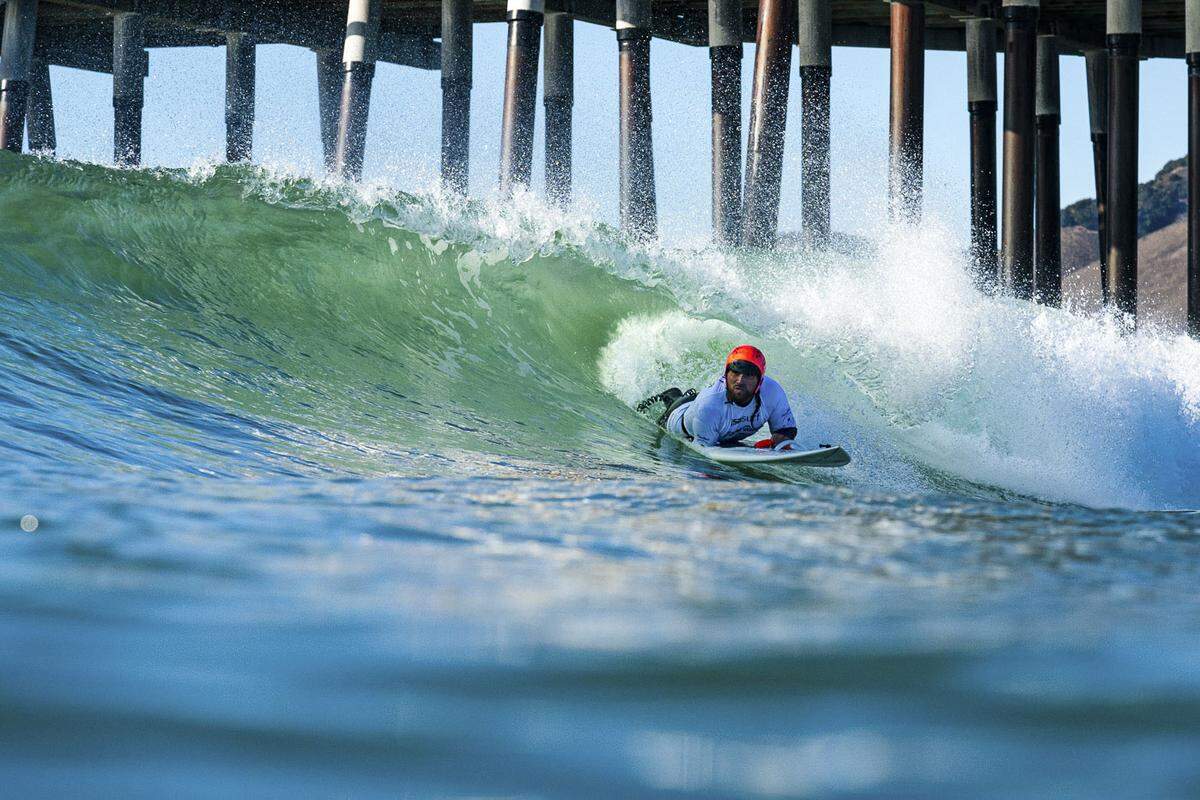
“I just want to continue to show the rest of the generations that are going to come after that they have the ability to do something,” Martinez says.
The USA Surfing athlete has been reluctant to talk about psychedelics in the past, but I’m grateful for how much he opened up. As the U.S. undergoes a major cultural shift around the healing power of hallucinogenic drugs, Martinez has been a bit more bullish about confronting stigmas.
There’s still much to overcome. The rhetoric from the war on drugs era has calcified in the minds of millions of Americans who grew up hearing those messages. To consider psychedelic drugs as tools for healing remains a preposterous notion to many.
But our consciousness is changing, partly because of undeniable clinical research but also out of necessity.
“The only reason I really want this to be (decriminalized) is because I don’t want to be getting in trouble for giving this to my brothers and sisters and trying to help them out,” Martinez said. “I hope (lawmakers) realize how much this will actually help before we lose any more veterans.”
This story was originally published September 9, 2022 at 5:00 AM with the headline "War breaks our veterans. Psychedelic drugs can ease their pain — yet they remain illegal."