
What’s in store for California crypto? A company exec eyes our virtual commerce future

READ MORE
Cryptocurrency in California
Click the arrow below for more coverage of cryptocurrency and blockchain in California.
Expand All

California residents can soon donate cryptocurrency to state and local campaigns
What’s in store for California crypto? A company exec eyes our virtual commerce future

Crypto, NFTs and stablecoins: A guide to understanding cryptocurrency terms
California wants to be the country’s crypto capital. But will consumers be left behind?

‘The blockchain decade’: Experts explain a technology Californians use without knowing it
Brian Foote is the CEO of San Diego-based technology firm Humbl. The Southern California company offers a litany of blockchain services in the digital economy — from mobile pay, non-fungible tokens and mobile wallets to credentials for government agencies — and Foote has become something of an evangelist for and educator about the new technology.
“It’s important to get educated,” he said in a recent interview with San Diego’s KUSI-TV. “Start playing around with it. Go to an app, start to learn about how you can send these tokenized pieces of information between you and other people. Start to learn about decentralized blockchain technology through a Google search. It’s really important to get educated.”
Foote said the 2030s will be the “blockchain decade where a lot of things we do will have blockchain behind them,” from home mortgages and auto purchases to how we store and carry banking, driver’s license and insurance information.
Today, Foote said, consumers are “tenants of their data on the web. You rely on brokers, brokerages, middlemen to perform simple functions in your daily life.”
Web3 technologies, he said, decentralize those functions, allowing consumers to conduct business directly.
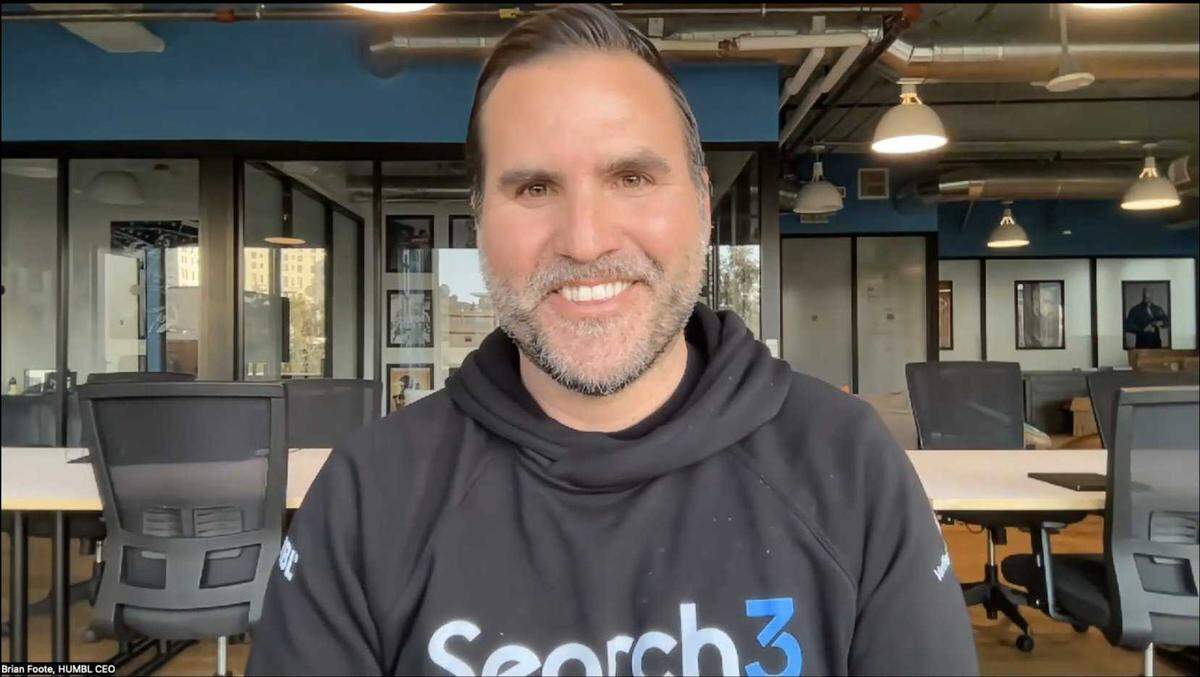
Foote recently talked with The Sacramento Bee about the emerging technologies and how the pandemic may be changing how we think about them; how consumers could soon benefit and what Gov. Newsom’s recent executive order calling on California to move quickly to establish itself as a blockchain hub could mean for consumers and businesses. The interview and responses were edited for clarity.
Q: You have said consumers tend to conflate cryptocurrency like Bitcoin with blockchain and Web3 technology. You’ve described the differences in language that laypeople can easily understand. Bitcoin, for example, is a virtual currency. Blockchain is the technology that underpins those currencies. ‘Blocks’ of blockchain can be perceived in the same way as, say, cell phone minutes, or megabytes of data that contain a user’s information. The technology allows users to trade, track and pay without having to rely on third-parties such as banks, brokerage firms or government.
Talk about some of the practical applications of blockchain technology for consumers.
A: I bang the drum of consumers disaggregating crypto and blockchain and Web3. Bitcoin is one virtual currency, but there are multiple ways blockchain is going to be useful to the community — blocks, stablecoins — they’re reflections of fiat-issued currencies like dollars. With blockchain, there are a number of ways we can improve upon payment and commerce so there’s less reliance on intermediaries. The technology is still in the dial-up stage.
There’s still a big gap in converting crypto into hard currency. There’s a church-and-state divide between tokens and the fiat currency of money (but) you will see all manner of money going into the blockchain.
(Foote added there is the potential of faster, cheaper financial transactions than traditional customer-to-bank transactions and said improved technologies for consumers and fewer middlemen are also potential positives even as issues with regulation, compliance and security remain.)
Q: The COVID-19 pandemic, shelter-at-home orders and the work-from-home environment that grew out of that has changed the workplace and our habits as consumers. How has that affected our thinking about crypto and associated technologies?
A: We pivoted away from merchant-facing (businesses) to scaleable software and a tokenized economy. Customers have started thinking about virtual environments — that has accelerated five to 10 years in my mind.
Q: Blockchain doesn’t have to be scary. Some Asian and Latin American countries are more readily incorporating blockchain into their economies, but you have said consumers here in the States lag behind, urging “We need to educate ourselves instead of being threatened by new technology.”
A: Blockchain has long been adapted on the margins of society and in a lot of different (economies). We see its uses in emerging markets — crypto assets can be life or death when inflation hits or access (to currency) is denied.
The tech establishment has been more than willing to allow the U.S. market to misunderstand what blockchain can mean. For too long, we’ve allowed aging narratives to dominate the media landscape over blockchain. It frustrates me that the U.S. allows these narratives to slow the adoption of blockchain.
Q: (California) Gov. Newsom signed an executive order that could speed along consumers’ and business’ embrace of this technology. The order establishes a framework to regulate companies — like Humbl — that do business in blockchain, ensure consumer protections and encourage more investment in blockchain-based businesses; research and job creation. What are your thoughts on the governor’s order and what it could mean for the industry and consumers?
A: It’s exciting as someone who has wanted to help shape regulation in this category. What the governor is doing is fantastic — it’s the positioning of California. We’ve been home to tech for decades in Web 1 and Web 2 (technology). There’s no way we’re going to accomplish that without sensible blockchain regulation.
If the governor can give us a clear regulatory framework for California companies to begin building a tokenized economy in blockchain, California can be a real leader for another cycle. The order was thoughtful — consumer protections and a regulatory framework to make for transparent growth.
The positions of his order were spot-on: Consumer protections, a sensible regulatory framework, a place to do business — it’s all we need to get going. It’s a really exciting time.
This story was originally published June 21, 2022 at 5:00 AM with the headline "What’s in store for California crypto? A company exec eyes our virtual commerce future."
.JPG)