
Did California Gov. Gavin Newsom do anything wrong? Here’s what led to the recall election
TJ Bruce owns nine bars, including the gay dance club Badlands in midtown Sacramento. Last year, Gov. Gavin Newsom issued COVID-19 restrictions to slow the coronavirus’ spread, and Bruce had to shut his doors.
For months, Bruce fell into debt as the bars stood vacant. The equipment inside them — ice machines, HVAC systems, refrigerators — sat idle and started to break down.
An effort to recall Newsom was launched in February 2020. As it gathered signatures and enthusiasm, Bruce watched while other businesses shuttered. The government’s failure to help homeless people who camped out in storefronts, putting further strain on already struggling business districts, appalled him.
“It’s so discouraging to not only be experiencing a hard time with your business, but to see the state with a surplus not helping get people off the street,” he said. “I would rather they help the homeless than me.”
Newsom’s Democratic allies have heaped praise on the governor for his handling of COVID-19, pointing out he’s been dealt perhaps the toughest hand of any governor in history. He’s led the state through a pandemic, economic turmoil, drought and record-breaking fires.
Yet Bruce’s dissatisfaction reflects a sentiment shared by many recall proponents — that Newsom has fallen short in governing California — and illustrates how the pandemic has affected the governor’s political fortunes.
“It really took off due to frustration with the handling of the pandemic,” said Rose Kapolczynski, a Democratic political strategist, who sees the recall as an attempt by the GOP to challenge the governor in a special election where turnout will be low and Republicans more likely to vote.
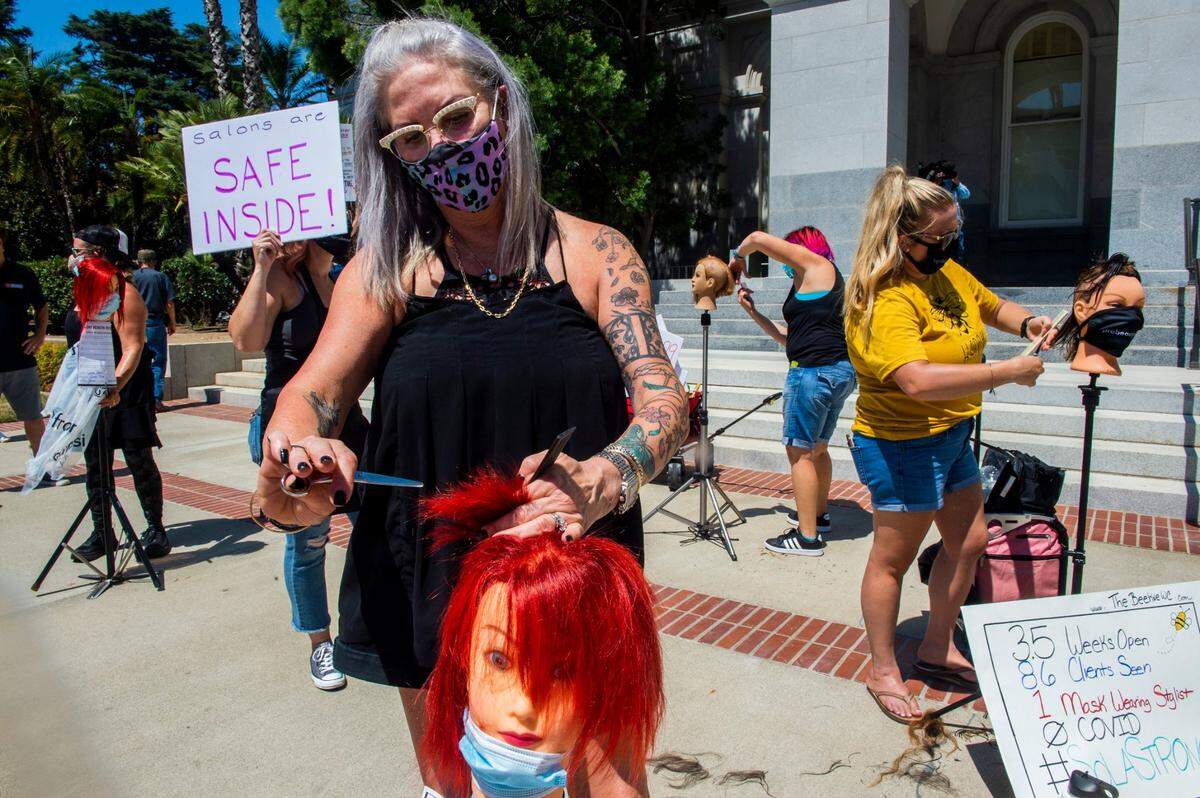
Still, she said some of Newsom’s actions propelled it.
“There were some missteps, the French Laundry being the most obvious one, and the missteps were fuel on a tiny campfire that turned into a wildfire.”
The result has turned a recall election once considered a long shot into a major political challenge for Newsom. He’s on the ballot on Sept. 14, more than a year before he was supposed to face reelection. Mail ballots will start going out on Aug. 16.
Newsom is still a Democratic governor in a very blue state, yet polling that supporters acknowledge is a little too close for comfort affirms that he does need to make the case to voters to ensure that he survives. A lineup of Republicans are vying to replace him, led by conservative radio talk-show host Larry Elder, a Donald Trump supporter with nearly 1 million Twitter followers who opposes mask and vaccine mandates.
Yet Newsom’s own performance is at the center of the campaign. He’s running against COVID fatigue, economic pain caused by pandemic shutdowns, housing costs and persistent homelessness. He’s dogged by a view that he sees himself as above his own rules, as illustrated by his infamous dinner at the wine country French Laundry restaurant.
Newsom is proud of his record.
To date, California has had fewer per capita deaths than the U.S. as a whole due to COVID, according to data from the Kaiser Family Foundation.
Economists for the Anderson Forecast say California’s economic recovery will similarly outpace the nation’s.
Newsom created many programs during the pandemic to help both the homeless and small businesses. He launched two programs — Project Roomkey and Project Homekey — that housed thousands of homeless people in hotels and provided funds for communities to purchase other housing for them. He persuaded state lawmakers to fast-track grants of up to $25,000 for small businesses.
But homeless encampments still proliferate in Sacramento and across the state. Many businesses, including Bruce’s, didn’t get the state grants they applied for. Bruce says he’s not sure how he’ll vote in the upcoming recall election in September.
Unemployment in California
Ed, identified only by his first name because he fears his comments might affect his job search, was laid off in May from his job as a resort worker as part of “COVID restructuring.” Ed, who lives in Tuolumne County, quickly filed for unemployment benefits.
He quickly joined hundreds of thousands of Californians whose unemployment claims sat in a backlog.
Desperate to pay his mortgage and avoid losing his house, Ed called the Employment Development Department repeatedly. Over and over, he sat on hold and listened to a recorded message touting the office’s expanded capacity to handle calls. He thought about the irony of the message, and of the billions of dollars in fraudulent claims the department had paid to criminals, while he waited for his checks to arrive.
“I literally called for 10 days in a row,” Ed said. “I would spend about three hours on average, sometimes a little less because I got frustrated, sometimes a little more because I got stubborn.”
He finally started receiving his unemployment checks in July 2021 with the help of his local assemblyman’s office, but he said the experience changed his political views.
Ed is a registered Democrat who supported Newsom. After his experience with the state’s unemployment program, which Newsom oversees, he’s disappointed with the governor who promised to fix the system a year ago.
Newsom has pointed out that he inherited California’s faulty unemployment system, one plagued by technology problems for more than a decade before he took office. He nevertheless pledged to be accountable for fixing the system and announced a strike team in July 2020 to address the problem.
For Ed, his view of Newsom soured as he sat on hold. He hasn’t decided how he’ll vote.
“For whatever reason, he doesn’t understand the struggle of people going through unemployment,” Ed said. “I’m disenchanted with the governor.”
How the recall election qualified
Orrin Heatlie decided he wanted to recall Newsom in the summer of 2019, when the governor publicly encouraged immigrants living in the state illegally not to open the door for federal immigration agents.
Heatlie, a retired Yolo County sheriff’s sergeant, started the ultimately successful recall petition drive in February 2020. The way he saw it, California had been going downhill for a long time thanks to the Democrats who have controlled state government for more than a decade.
“I don’t credit everything to Gavin Newsom, but I do credit everything to this single-party death grip that the other party has had on California for so long,” Heatlie said when reached by phone in July. “California has been in decline, but Gavin Newsom has driven the state off the cliff.”
Heatlie, like many conservatives, wanted to recall the governor even before the pandemic for a long list of reasons.
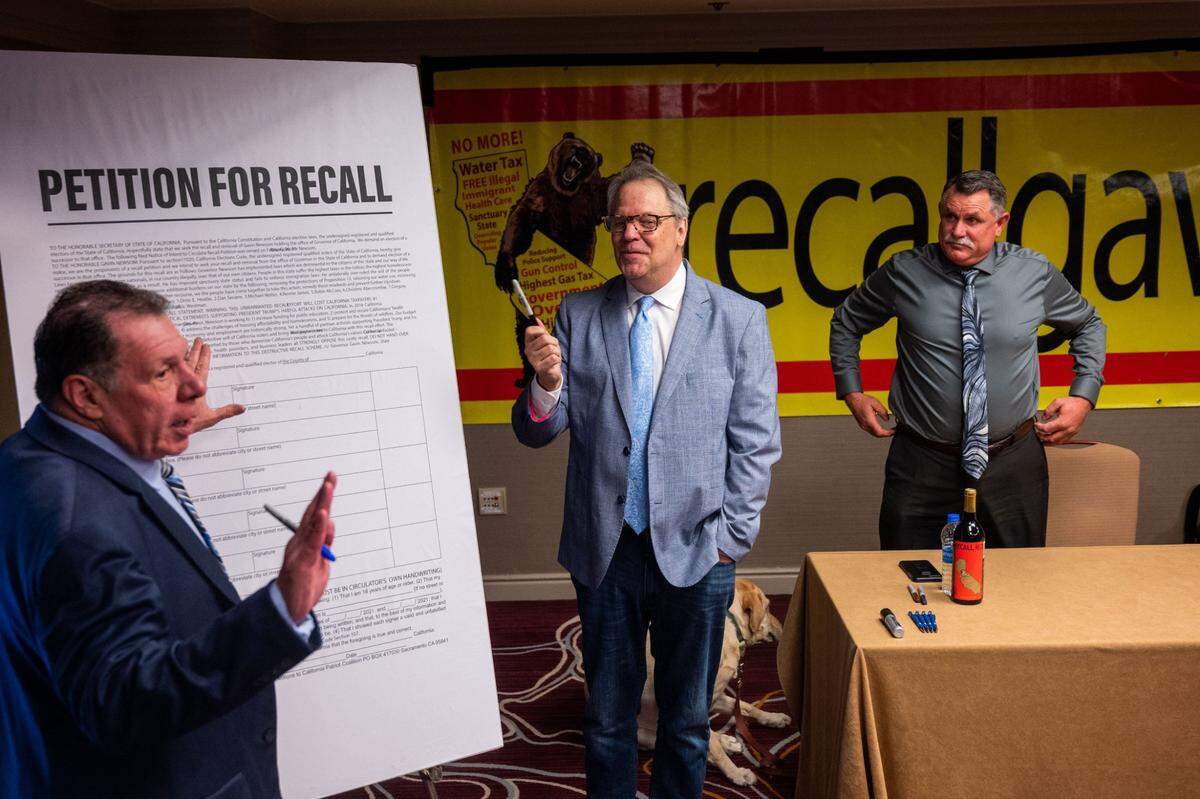
“Originally, it was gas prices, car fees, cost of living issues, not doing what he said he was going to do or overstating things,” said Anne Dunsmore, campaign manager for one of the leading recall groups, Rescue California.
Now, she and other recall supporters point to so many more issues, including the state’s drought, fires, high housing prices, rising food costs and the unemployment fraud scandal.
“It’s a fire hydrant of issues,” she said.
Newsom is working on all of them, with varying degrees of success.
He’s behind schedule on building 3.5 million new housing units by 2025 to address California’s affordability crisis, which he called an “audacious goal” from the beginning. His latest budget will spend $12 billion to combat on homelessness, an amount he notes is “unprecedented in American history.” He’s taken many steps to protect the state from wildfire damage, but fires continue to burn.
COVID pandemic shutdowns
Across the state last year, frustration over the shutdowns grew. Newsom seemed to change rules about beach closures and business restrictions without clear reason or strategy, Republican consultant Mike Madrid said.
“There were a lot of unclear lines of communication,” Madrid said. “A lot of Californians felt that no one knew what was going on.”
Newsom has acknowledged he made mistakes early in the pandemic. Like other governors, he was dealing with an unprecedented crisis. He was also coordinating with a federal administration unfriendly to California’s approach.
COVID was confusing, as were some of his administration’s early responses. His initial shutdown order lasted about seven weeks, followed by multiple changes that left many Californians confused about business closures in their region and why restrictions varied from place to place.
“We were communicating with counties and businesses and sectors and industries, not with the public, what that modification meant and what it didn’t mean,” he told The Associated Press in an interview. “And in hindsight, clearly, we could have done a much better job by informing the public what those modifications meant.”
In August 2020, he announced a new color-coded tier system aimed at making the restrictions more transparent. But complaints from different business sectors continued to mount. Theme parks argued the restrictions on them were unfair. Disney Chairman Bob Iger quit the governor’s economic task force amid the dispute. Gyms argued the state should let them open with fewer restrictions, as did breweries.
Newsom ended the tier system on June 11 this year. As California reopened, he boasted that the Golden State led the country in job growth. The state created 38% of the nation’s jobs in April, for example, although it has only 12% of the U.S. population.
“The states that focused on public health, not ideology, had better economic outcomes, not just better health outcomes,” Newsom said in June. “This is just not getting the attention I think it deserves ... California is a tent pole of the American economy in terms of job creation.”
French Laundry fallout
Newsom’s own behavior drew plenty of attention, helping cement the impression that he was an out-of-touch elite.
On Nov. 11, with Thanksgiving approaching, state Health and Human Services Secretary Dr. Mark Ghaly urged Californians to wear their masks and avoid gatherings with people outside their household. In particular, he recommended against activities in which it would be necessary to remove masks, including eating and drinking with others.
Yet on Nov. 6, Newsom and his wife had visited the French Laundry for a lobbyist friend’s birthday. A restaurant patron photographed Newsom at a table with multiple people, none of whom were wearing masks.
.JPG "SAC_PK_RECALL_0461 (1).JPG")
“I made a bad mistake,” the governor acknowledged.
The signature-gathering effort for the recall wouldn’t have succeeded, however, if a judge hadn’t granted proponents extra time. The decision came down the same month as the French Laundry dinner.
Nathan Click, spokesman for the anti-recall campaign, noted that multiple previous attempts to recall the governor had failed.
“The difference between this one and all of the other ones is that a judge granted the petitioners double the amount of time they had to collect signatures,” Click said. “Otherwise this recall would have gone the way of all the others and not qualified for the ballot.”
The optics of the dinner gave recall supporters plenty of ammunition to use in their extra time. National conservatives like Newt Gingrich and Mike Huckabee joined the fray.
Add raw emotions driven by the pandemic and his self-inflicted wound, Newsom said in a meeting with McClatchy’s California editorial boards, “and it’s a toxic mess.”
Newsom’s children returned to in-person class at their private school while most public school students stayed home, leading to online outrage that the governor thought he was above the rules. It didn’t help that Newsom promised to take a 10% pay cut like the rest of the state workforce but didn’t act until The Sacramento Bee noticed he had failed to do so.
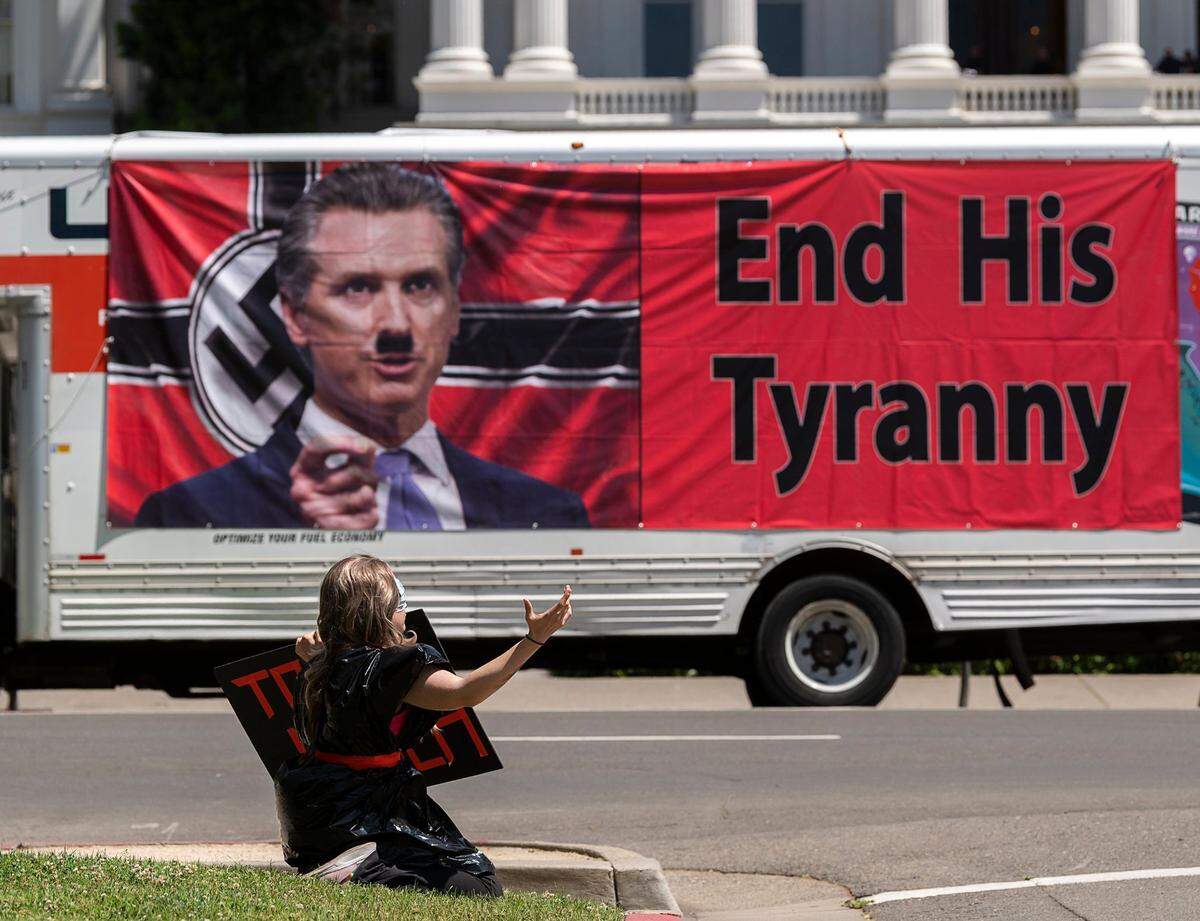
Just last week, Newsom faced criticism for sending two of his children to a day camp that didn’t enforce the state’s mask rules. His office said the camp had informed parents via email that it wouldn’t enforce masking, but that the Newsoms missed it. They immediately pulled their children from the camp.
“It starts out with the small group of recall proponents offended by the way Newsom had been responding to undocumented immigrants, and from there it spun into different issues — taxation, mismanagement of the vaccination program, and a slew of other concerns,” said San Jose State political science Professor Emeritus Larry Gerston. “Layered over that, was the sense they had that Newsom operated with his own entitlement, that he was above the needs of regular Californians.”
Democrats outnumber Republicans
In the end, political experts say California’s politics put Newsom in position to prevail in the recall. Democrats outnumber Republicans nearly two-to-one in California, and polling shows they overwhelmingly back Newsom.
Whether all of those supporters will cast ballots is another question. Now, the delta variant is prompting Newsom to reimpose some coronavirus restrictions.
Last week he instituted a new requirement that state workers either be vaccinated or submit to weekly testing. His Department of Public Health is now recommending even vaccinated people wear masks again indoors. The mood in California is shifting from hopeful to worried again.
For Newsom to lose, Democrats like Ed, the former resort worker who waited on hold for hours to get his unemployment checks, would need to vote against him or not turn out at all.
Ed said he has applied to more than 100 jobs. He and his wife put their house on the market for fear it might be foreclosed on if he can’t find a good-paying job soon.
He’s still contemplating how he will vote in the recall.
“I don’t know yet,” he said. “I’m undecided.”
This story was originally published August 1, 2021 at 5:00 AM with the headline "Did California Gov. Gavin Newsom do anything wrong? Here’s what led to the recall election."