Cal Poly student Kristin Smart went missing 25 years ago. Here’s what’s happened since
Update to this story >> >> Human blood found in soil under Ruben Flores’ home, unsealed Kristin Smart records show
Kristin Smart, a 19-year-old Cal Poly freshman from Stockton, disappeared early on the Saturday morning of Memorial Day weekend in 1996, after leaving a house party just off campus. She would have turned 44 years old in 2021.
Though the case has long remained unsolved, a podcast series hosted by Orcutt resident Chris Lambert has sparked renewed interest in the community — as well as calls to search the Arroyo Grande property of Susan and Ruben Flores, parents of the only suspect in Smart’s disappearance.
Paul Flores, who was also a Cal Poly student in 1996 and now resides in San Pedro, was the last person seen with Kristin Smart, who was officially declared deceased in 2002.
Here’s a detailed timeline of Smart’s disappearance and the investigation into her missing person case.
Timeline of Kristin Smart missing person case
May 25, 1996: Kristin Smart is last seen around 2 a.m. walking with students Paul Flores and Cheryl Anderson from a party at 135 Crandall Way near the Cal Poly campus in San Luis Obispo. Anderson separates from Smart and Flores at the intersection of Perimeter Road and Grand Avenue.
May 27, 1996: Student Jennifer Phipps calls Cal Poly police to report Smart missing. A report is not started at that time.
May 28, 1996: Phipps calls the San Luis Obispo Police Department to report Smart missing. A report is started and Phipps is referred to the Cal Poly Univerity Police Department. Cal Poly police take a missing person report, which is the first time Smart’s parents, Stan and Denise, learn anything is amiss. Paul Flores is interviewed for the first time. He tells a campus officer that he and Smart separated near the Santa Lucia Hall, and that he hasn’t seen her since.
May 30, 1996: Campus investigators Ray Barrett and Mike Kennedy interview Flores at their office. Meanwhile, the first of several searches for the missing student is conducted on campus.
May 31, 1996: Campus police follow up on several alleged sightings of Smart, a 6-foot 1-inch blonde woman. San Luis Obispo County District Attorney’s office investigators Bill Hanley and Larry Hobson interview Flores at the Cal Poly Police Department.
June 5, 1996: Cal Poly Police Det. Mike Kennedy searches Smart’s dormitory room for evidence and seizes the room’s contents for safekeeping.
June 10, 1996: Campus investigator Kennedy secures Flores’ dorm room at Santa Lucia Hall after he and his roommate have moved out. None of Flores’ property is found in his room.
June 19, 1996: District Attorney’s investigators Hanley and Hobson interview Flores at the Arroyo Grande Police Department. During the videotaped interview, Flores tells investigators that he lied when he previously stated he received a black eye playing basketball. He says he actually received the injury while working on his truck. Flores abruptly walks out of the interview before it concludes and says he won’t answer any more questions.
June 26, 1996: Amid a flurry of criticism from the Smart family and friends, University Police Chief Tom Mitchell asks San Luis Obispo County Sheriff Ed Williams to assist in the investigation. Williams obliges and the Sheriff’s Office takes over the case.
June 29-30, 1996: Nearly 400 volunteers turn out for a massive campus search. Cold Canyon Landfill in rural San Luis Obispo is also searched at an expense to the university of $16,000. Dogs trained to search for human remains are brought in to search for clues. Four dogs independently react to Flores’ dorm room at Santa Lucia Hall. Dogs also react to his stripped mattress.
July 17, 1996: Sheriff’s Office investigators search Flores’ Arroyo Grande home. The search doesn’t yield any clues to Smart’s whereabouts.
July 19, 1996: Employees with San Luis Obispo’s Lininger Construction install a billboard on Highway 101, a daily reminder of Smart’s disappearance.
Oct. 15, 1996: In a rare move, prosecutors subpoena people to testify before the county grand jury in the case of the missing Cal Poly student. Among those called are Flores and his parents, Ruben and Susan Flores.
Nov. 26, 1996: Stan and Denise Smart file a $40 million wrongful death lawsuit against Paul Flores. The lawsuit — which remains ongoing — alleges that Flores murdered their daughter at Cal Poly. The Smarts later add Cal Poly as a defendant, alleging campus officials failed to keep their daughter safe. A San Luis Obispo Superior Court judge initially dismisses the university from the complaint, but gave the Smarts a second chance to prove their case. The university appealed and is awaiting the judge’s final decision.
Jan. 24, 1997: The Smarts’ Arroyo Grande attorney, James Murphy, begins interviewing potential witnesses in the civil suit. Ultimately, no substantial revelations come out of the depositions. The Smarts subpoena all law enforcement reports and files in the case of their missing daughter. The named agencies — Cal Poly University Police, the Sheriff’s Office, and the District Attorney’s Office — continue to fight the request in court in a hearing each year, due to the ongoing and criminal nature of the missing persons investigation.
Feb. 21, 1997: California Gov. Pete Wilson offers a $50,000 reward for any information leading to an arrest and conviction in the case of Kristin Smart. The offer boosts the total reward to $75,000.
March 4, 1997: Murphy, the Smarts’ attorney, initiates a search of an Arroyo Grande rental property owned by Flores’ parents. The search fails to turn up any new leads in the case.
April 13, 1997: A fundraiser to help with the Smarts’ legal bills draws roughly 200 people in Arroyo Grande.
May 23, 1997: Sheriff Williams states “There are no other suspects” in the case besides Paul Flores.
May 8, 1999: San Luis Obispo County Sheriff Pat Hedges asks for the FBI’s assistance in the investigation. Sheriff’s deputies sift through dirt around Paul Flores’ old Santa Lucia Hall dorm. Hedges announced that no new evidence had been found at the site. FBI agents interview hundreds of Cal Poly students and staff.
Aug. 12, 1998: Gov. Wilson signs the Kristin Smart Campus Safety Act of 1998 into law. The law requires universities to contact law enforcement when violent crimes occur on campus.
May 25, 2002: Kristin Smart is declared legally dead.
May 24, 2016: On the 20th anniversary of Kristin Smart’s disappearance, the Smart family issues a statement saying: “She was a girl with dreams and visions for the future. We plan to find a way for them to live on.”
Sept. 6, 2016: San Luis Obispo County Sheriff Ian Parkinson announces that a new lead “strongly suggests” Smart’s remains may be buried on a hillside on the Cal Poly campus near the Cal Poly “P” that had been searched by about 400 volunteers in June 1996. A joint Sheriff’s Office-FBI excavation takes place over five days. The agencies sift through approximately 20,000 cubic feet of dirt, taking away bones and a possible “item of interest” to a facility out of the county for analysis. The bones are later revealed to be animal bones.
May 28, 2017: The Smart family creates a website, kristinsmart.org, where people, businesses and other organizations can donate to a nonprofit, tax-exempt scholarship fund for women seeking degrees in law enforcement, forensic science or architecture.
Sept. 6, 2017: A year after the Cal Poly excavation, the Sheriff’s Office calls the effort “beneficial,” but hasn’t released any further information since.
Sept. 25, 2019: Santa Maria resident Chris Lambert launches Your Own Backyard, a podcast devoted to Kristin Smart’s disappearance. The podcast generates massive public interest in and outside San Luis Obispo County.
Nov. 17, 2019: A large crowd gathers for a public candlelight vigil in Arroyo Grande.
Jan. 18, 2020: The Stockton Record publishes an article based on a reported interview with Denise Smart, who told a reporter she was told by “the FBI” that a new development in the case was imminent and to “be ready.” The story goes viral.
Jan. 22, 2020: Following an inundation of public and media requests for more information, a spokesman hired by the Smart family clarifies that the information shared with The Stockton Record came from a “former FBI agent,” and not someone associated with the investigation. The family says that no new developments are expected to be announced in the near future, but that the Sheriff’s Office, not the FBI, would be making any such announcement.
Jan. 29, 2020: The Sheriff’s Office announces that, since 2011, it has served 18 search warrants, conducted physical evidence searches at nine locations, submitted 37 evidence items from the early days of the case for modern DNA testing, recovered 140 new items of evidence, including two trucks that belonged to members of the Flores family in 1996. In addition, the agency says it has conducted 91 in-person interviews, written 364 supplemental reports related to the case and spent approximately $62,000 in investigative expenses during this time.
Feb. 5, 2020: Sheriff’s officials and FBI agents search the home of Susan Flores in Arroyo Grande and the home of Paul Flores in San Pedro. One additional property in San Luis Obispo County and another in Washington State are also searched. Officials do not say why they searched the properties.
Feb. 11, 2021: Paul Flores is arrested in Los Angeles on suspicion of being a felon in possession of a firearm. The San Luis Obispo Sheriff’s Office says the arrest was “a result of information obtained during our search warrants last year at the home of Paul Flores as part of the Kristin Smart investigation.”
March 15, 2021: The Sheriff’s Office serves a search warrant at the Arroyo Grande home of Ruben Flores, the father of Paul Flores. “The Sheriff’s Office has been authorized to utilize cadaver dogs and ground-penetrating radar during the course of the search,” which could take up to two days to complete,” the agency says.
March 16, 2021: The Sheriff’s Office concludes its search of Ruben Flores’s house. No details are announced about what was found.
April 13, 2021: Paul Flores is taken into custody in San Pedro while Ruben Flores is taken into custody in San Luis Obispo County. The Sheriff’s Office conducts another search of Ruben Flores’ Arroyo Grande property, and announces an afternoon news conference on the Cal Poly campus to release information about “major developments” in the case.
April 14, 2021: San Luis Obispo County District Attorney Dan Dow announces at a news conference that his office filed a charge of murder against Paul Flores and a felony charge of criminal accessory against Ruben Flores, whom Dow said assisted his son in hiding Smart’s body.
Dow also reveals for the first time that Paul Flores is alleged to have killed Smart during a rape or attempted rape.
April 15, 2021: Paul and Ruben Flores appear in a San Luis Obispo Superior Court arraignment via video conference from County Jail. They enter no plea and the hearing is continued.
Superior Court Judge Craig van Rooyen approves a motion by Paul Flores’ attorney, Robert Sanger, to impose a gag order preventing any of the parties from publicly commenting on the case outside of the courtroom.
April 19, 2021: Paul and Ruben Flores plead not guilty to their charges. Following arguments by deputy district attorney Christopher Peuvrelle, and defense attorneys Robert Sanger (representing Paul Flores) and Harold Mesick (representing Ruben Flores), Superior Court Judge van Rooyen denies bail for Paul Flores, finding him a public safety risk. Van Rooyen indicates that he will lower bail for Ruben Flores and schedules a bail reduction hearing for Ruben Flores.
A county probation report submitted to the court in opposition to bail for either defendant, obtained by The Tribune, reveals for the first time that prosecutors say “dozens of women have recounted Paul Flores’ sexual assaults and predatory behavior that document his 25 years as a serial rapist.”
The documents also quotes Peuvrelle, who wrote: “The excavation below (Ruben Flores’) deck at 710 White Court showed damning evidence that a body had been buried in that location and then recently moved.”
April 21, 2021: Citing a California Supreme Court ruling, Judge van Rooyen lowers Ruben Flores’ bail from $250,000 to $50,000. Ruben Flores is released from County Jail after posting bond.
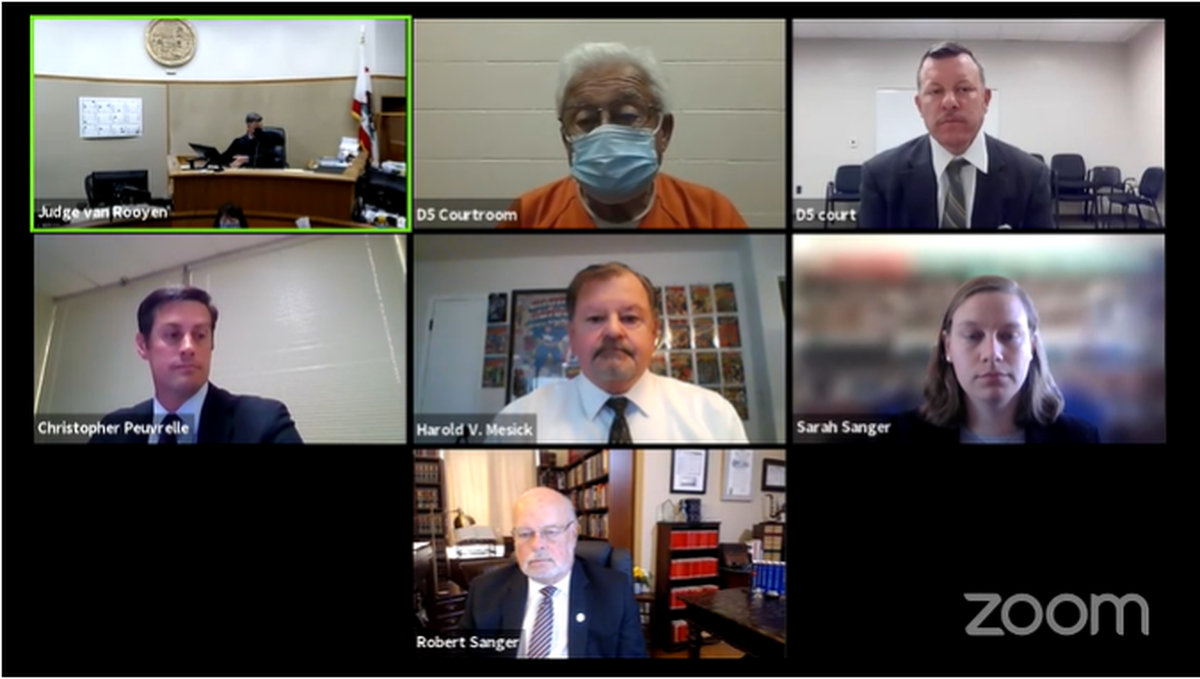
April 22, 2021: Smart family attorney James Murphy files a civil lawsuit against Ruben Flores, alleging he intentionally caused emotional distress to the Smart family by concealing Smart’s body for 25 years.
Murphy alleges a witness revealed that Ruben Flores had the help of Susan Flores and her boyfriend Mike McConville, who “under cover of darkness” dispersed her remains at one or more other locations. Susan Flores and McConville are later added to the lawsuit.
April 27, 2021: A Los Angeles Times report reveals details about Paul Flores’ criminal history, including that Paul Flores was the subject of two ongoing sexual assault investigations by the Los Angeles Police Department, and had been linked by DNA evidence to an alleged 2007 rape investigated by the Redondo Police Department. No charges were filed in the latter case due to a lack of evidence, the newspaper reported.
May 17, 2021: Paul and Ruben Flores appear remotely in court, where a 12-day preliminary hearing is set to begin July 6.
June 21, 2021: Superior Court Judge Craig van Rooyen sets media restrictions for the preliminary hearing.
June 30, 2021: After attorney Sanger tells the judge that the prosecution had yet to provide all discovery (evidence) in the case, the preliminary hearing is delayed by a week.
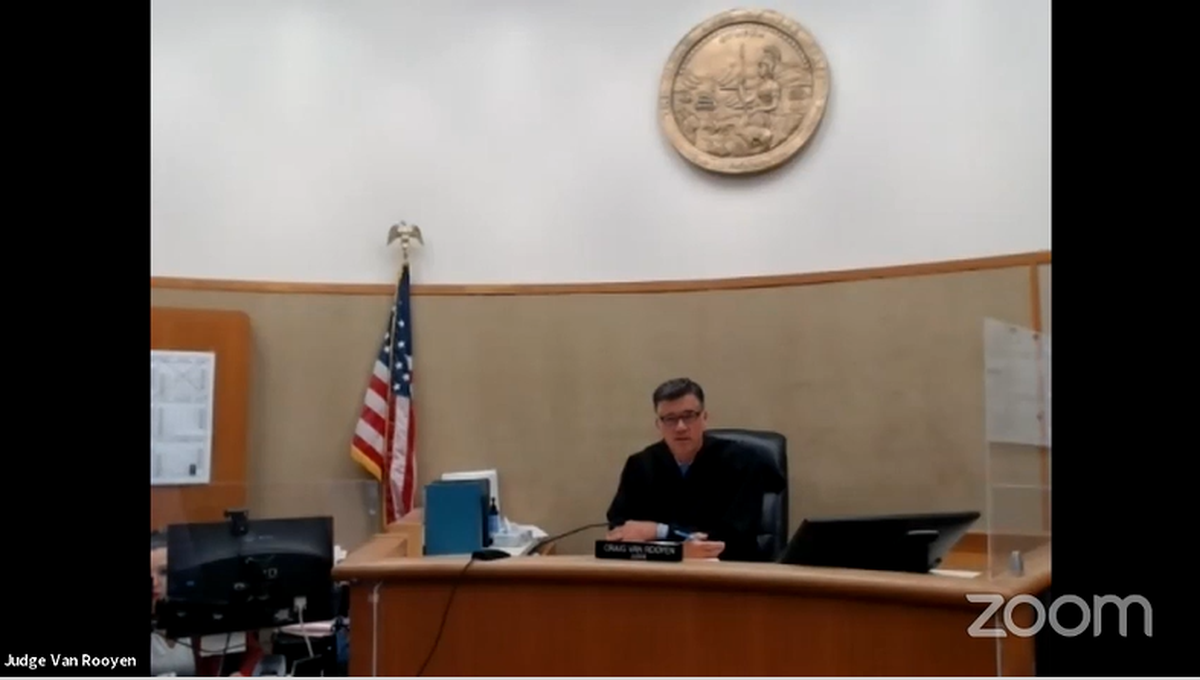
July 6, 2021: The preliminary hearing is again rescheduled to July 20. Deputy District Attorney Christopher Peuvrelle says he intends to file a motion to add criminal charges in the case.
July 12, 2021: At another court hearing, van Rooyen confirms the preliminary hearing date set for July 20. He orders two subpoenaed witnesses in the case, who were not publicly identified, to be on-call to testify during the preliminary hearing.
July 14, 2021: At the first in-person courtroom hearing in the case, Paul and Ruben Flores appear in court, with Susan Flores seated in the audience behind Paul. Susan Flores appeared in order to oppose a subpoena to testify in the preliminary hearing; that issue was continued to Aug. 2.
About a dozen members of Smart’s family, including Denise and Stan Smart, are in the audience.
Van Rooyen hears arguments by all parties over a prosecution motion to amend its criminal complaint to add two charges of rape of an intoxicated person against Paul Flores, based on two alleged rapes that occurred in Los Angeles County.
Peuvrelle reveals for the first time in court that rape pornography was found at Flores’ San Pedro home, including homemade videos allegedly showing Flores raping incapacitated women.
Peuvrelle says investigators also found two “date rape” drugs that could be used to render women unable to consent to sex.
Dozens of women will attest to Flores’ longstanding sexually predatory behavior.
“Paul Flores is a defendant who likes to rape and drug intoxicated women,” Peuvrelle said. “That’s who he is.”
Van Rooyen denies the motion, however, saying that to join the separate rape cases — which the Los Angeles County District Attorney’s Office said in a letter it welcomed San Luis Obispo County officials to prosecute — to bolster the “thin” evidence of rape in the Smart case was to “invite error” in the murder case.
“There’s no evidence of a sex crime in the charged crime (the murder case) itself,” van Rooyen said. “Proof of the LA charges can’t act as a substitute ... for the SLO case.”
The judge also denies a motion by Robert Sanger to close proceedings to the public, but grants a subsequent defense motion to unseal court filings related to the prosecution’s motion to include rape charges, so that the public may evaluate the information in light of the gag order imposed on the case.
Van Rooyen unseals more than 80 pages related to the motion.
He also once again postpones the preliminary hearing to Aug. 2, in response to a defense request.
July 15, 2021: Media reports that the unsealed records lay out the prosecution’s case against Paul and Ruben Flores, and contains information never before made public. Among the revelations:
- Traces of human blood and fibers possibly from clothing was found in samples taken from a roughly 4-by-6-foot patch of disturbed soil under the back deck at Ruben Flores’ White Court property. An archeologist said it was likely a body had been buried at the location, removed, and the whole refilled.
- Numerous “fetishized rape fantasy porn” videos and similar Google searches were found on his home computer. Investigators also found the two date rape drugs and homemade videos allegedly taken by Flores that show him allegedly raping unconscious or incapacitated women, some of whom are seen with ball gags in their mouths.
- 29 women accuse Paul Flores of a host of sexual misconduct incidents dating back to his high school days. The offenses range from being generally creepy and aggressive to outright rape. Most incidents involving sexual assault include allegations by women that Flores drugged them at Los Angeles area bars.
- In January, as the criminal investigation intensified, Susan Flores was heard on a wire tap telling Paul Flores on the phone: “The other thing I need you to do is to start listening to the podcast. I need you to listen to everything they say so we can punch holes in it. Um, wherever we can punch holes. Maybe we can’t. You, you’re the one that can tell me ...” Paul didn’t respond to the statement.
Aug. 2, 2021: A preliminary evidentiary hearing for Paul and Ruben Flores begins in San Luis Obispo Superior Court. After the hearing concludes, van Rooyen will rule whether prosecutors established probable cause — a lesser standard of proof than guilt beyond a reasonable doubt — to proceed the case toward trial.
Sept. 20, 2021: The preliminary hearing for Paul and Ruben Flores ends after nearly two months. Van Rooyen heard testimony from three dozen prosecution witnesses — including several investigators, forensic specialists, cadaver dog handlers, attendees of a house party attended by Smart, former Cal Poly students and Paul Flores’ former girlfriend. The defense did not call any witnesses.
In closing arguments, the prosecution says Flores repeatedly lied to investigators to “cover up” Smart’s killing. But defense attorneys say there’s “no evidence” that Flores or anyone else committed a crime.
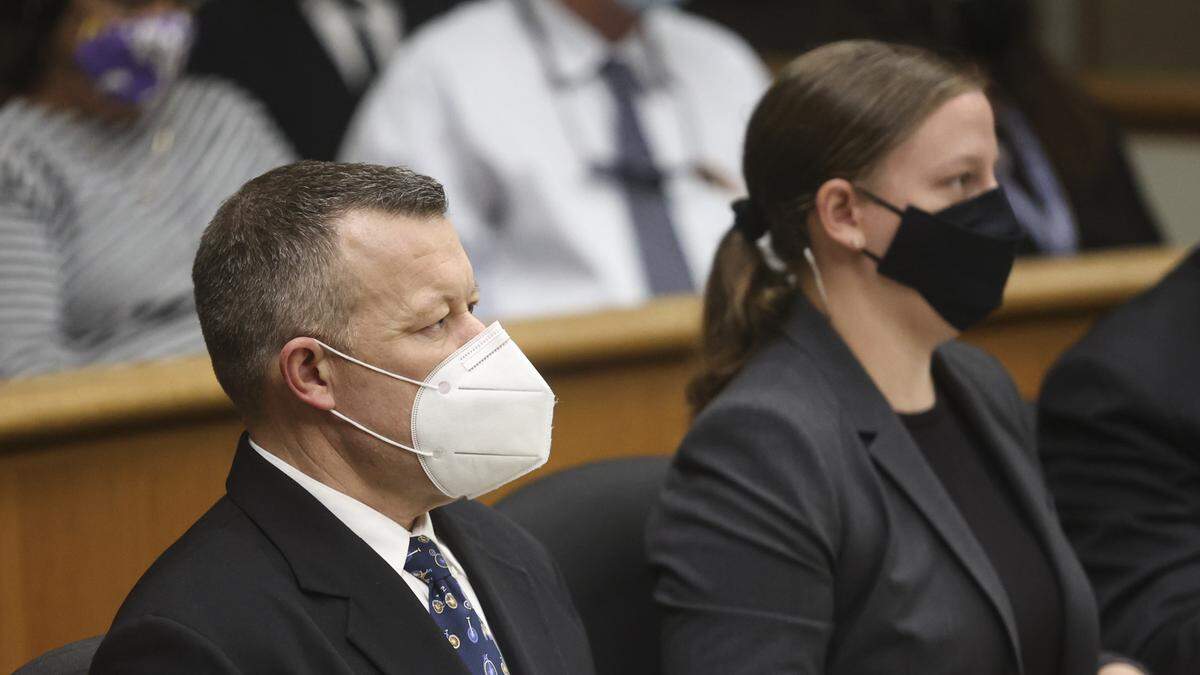
Sept. 22, 2021: Van Rooyen rules that the prosecution presented sufficient evidence to proceed the case against Paul and Ruben Flores toward trial.
The two co-defendants will now proceed to the pretrial phase, with an in-person arraignment scheduled for Oct. 20.
This story was originally published February 5, 2020 at 3:51 PM with the headline "Cal Poly student Kristin Smart went missing 25 years ago. Here’s what’s happened since."