Visalia farmers market posted signs denouncing racism. Then the complaints came in
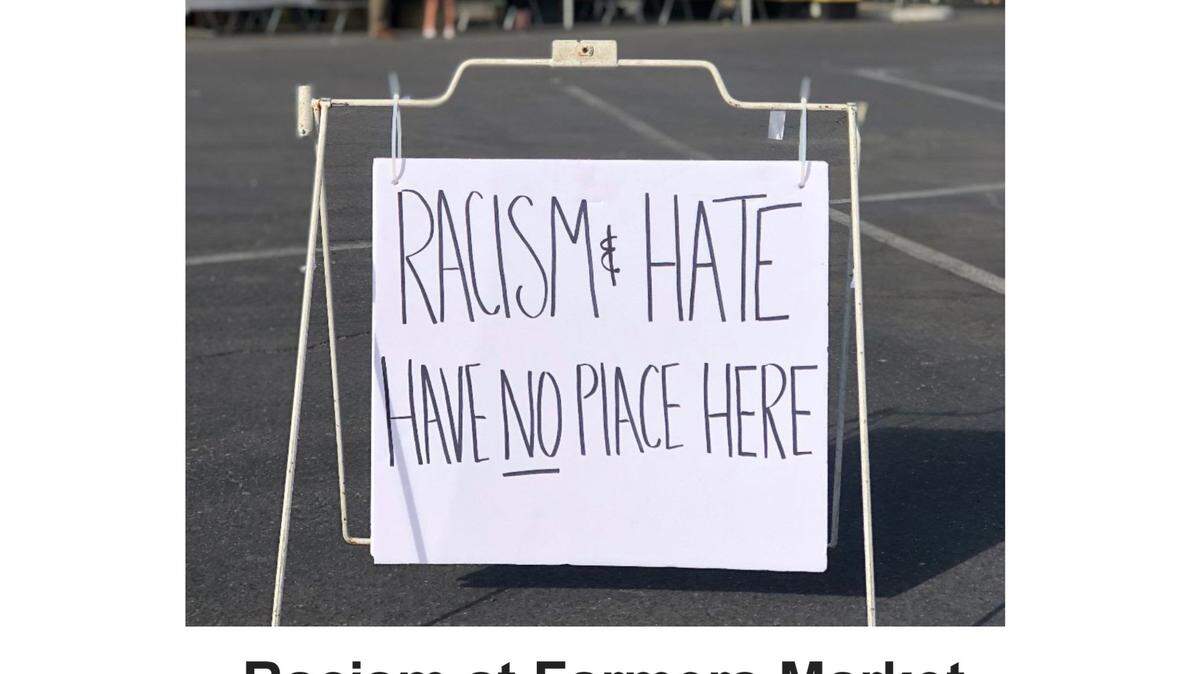
The Visalia Farmers Market posted a sign at its entrance last Saturday that said “Racism & hate have no place here.”
A few other signs with similar messages were posted as well.
Manager of the twice-weekly 41-year-old market at Caldwell Avenue and Mooney Boulevard, Angie Warkentin, said she didn’t expect any pushback.
But she got it.
“Pretty quick we had a gentleman storm over to our manager booth and ask to speak to the manager and … he said, ‘Your sign personally offends me. You don’t get to preach at me, those signs shouldn’t be here.’”
A handful of other white men complained, some quietly saying they agreed with the sentiments, but that the signs didn’t have a place at the market.
One woman left a long voice mail threatening to try to get the market’s government grant funding revoked.
A Facebook post with an image of the main sign got heated, though many people have since deleted their comments, Warkentin said.
Said one Facebook commenter: “When have we ever had racism and hate at our local farmers market? Take your political garbage elsewhere.”
Racism at the market
But racism is what inspired Warkentin to post the signs.
The N-word has been used in casual conversation, she said.
The market has new rules to limit the spread of coronavirus, like having customers not touch produce. Instead, customers point to what they want, with the farmers handling the bagging.
Warkentin said she saw customers accept the rules when dealing with a white farmer, but fight them with dealing with an Asian or Hispanic farmer.
“Then I heard a conversation at market about white supremacists, and how, ‘You know, they really don’t cause any issues in this country,’” she said. “This conversation was said in front of many different types of people of all different colors.”
The conversation was between a farmer and customer.
When a customer told Warkentin they were considering not coming back to the market because of what they’d witnessed, Warkentin decided she needed to do something.
“I don’t want to police conversations,” she said. “I don’t want to censor what people are saying, but at the same time, there is a moral issue here as to what is OK and isn’t OK for our community.”
She made the signs herself with a Sharpie, late the night before the market.
Other signs included sayings like “Tolerating racism is racism” and “Be the change you wish to see in the world.”
‘Happy place’
The signs started a conversation about race, said Warkentin, who is white. She shared her own take on it in an email and social media posts online.
A farmers market is often described by customers as their “happy place.” It’s not the first place people think of when they think about race issues.
But they had been creeping in.
Warkentin said several people told her they hadn’t seen racism at the market. “I said, ‘Well, you’re white, so that makes sense. Or, ‘Is possible you weren’t aware of it?’”
The market is near the same corner where numerous protests were held after the death of George Floyd happened in Minneapolis. Flolyd died after a police officer put a knee on the back of his neck for nearly nine minutes.
For the last three Saturdays, the market had to shut down a half hour early to make way for the protests.
Some farmers had worried about protesters, Warkentin said.
A group of “agitators,” white men on dirt bikes, drove through the market once, nearly hitting one of the farmers, she said.
In addition to the signs, the farmers market board of directors is drafting new rules relating to racism, and talking about adding disciplinary action if it becomes a problem.
The furor over the signs has mostly died down. The market has received lots of positive comments about the signs too.
The woman who threatened to get the market’s funding revoked? Warkentin called her and they talked, with the woman eventually apologizing and saying the market was right to post the anti-racism messages.
She even came back to the market and introduced herself.
“We didn’t hug because of COVID-19. We did our air hug with masks on,” Warkentin said. “It’s brought about some good conversation.”