Fresno renters face mold, no heat and broken windows. Code enforcement is failing them
READ MORE
Follow Fresnoland’s reporting
Fresnoland, a team of journalists reporting on housing, water and neighborhood inequality at The Fresno Bee, is reporting on the city’s failure to protect renters from unhealthy conditions in low-income housing. Read the stories and follow this investigation here.
Expand All
Fresno official takes aim at ‘wildly unacceptable’ apartment complex after investigation
Living in unsafe Fresno rental housing? Have issues that aren’t fixed? How to get help
Fresno officers find ‘substantial substandard housing conditions’ at Manchester Arms
Fresno renters face mold, no heat and broken windows. Code enforcement is failing them
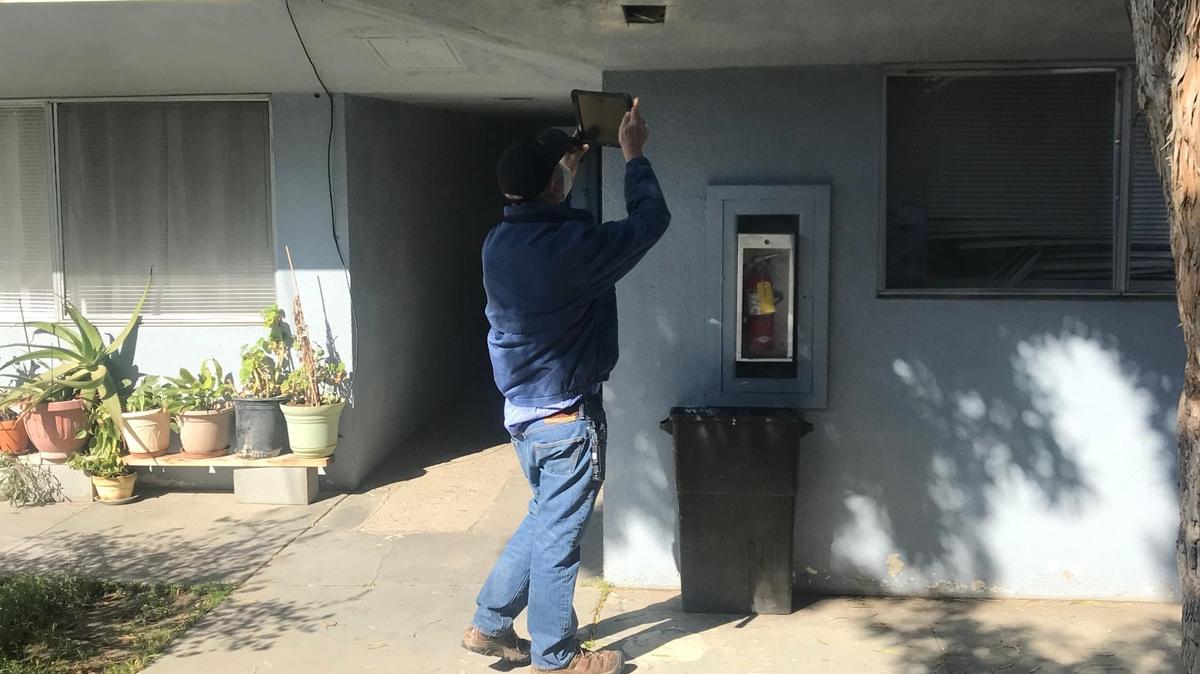
Fresno code officers swarm Manchester Arms apartments with ‘micro lens on the property’
Fresnoland’s explanatory and investigative reporting is made possible through support of our generous donors including readers like you. Please consider a donation to Fresnoland or sign up for our free weekly newsletter to help us continue to make policy public.
Inez Hernandez finally called Fresno city code enforcement in early February to inspect all the health and safety violations that she said the landlord hadn’t repaired in the six months since she paid $3,000 to move in.
Now, she and her children have been evicted. They have to be out by 6 a.m. Tuesday. The apartment still has mold; the heat and air conditioning unit is still broken; water still leaks through the floor to the apartment below, and burners on the stove still don’t work. On cold days, the family uses the oven for heat.
Code enforcement officers have been called to the complex at 3935 Effie Street more than a dozen times in just over two years for major habitability issues. They know landlord Joel Gutierrez.
Yet, for weeks, the City of Fresno failed to escalate enforcement to make Hernandez’s home safe to live in, and watched as Gutierrez evicted her — validating other tenants’ fears that reporting problems to the landlord or code enforcement will only result in retaliation or loss of housing.
“If code enforcement would have been on this, it wouldn’t be like this. They have pull,” Hernandez said. “They can do things, but they don’t. They give him all these chances. They condone what he does… How are people supposed to trust the city?”
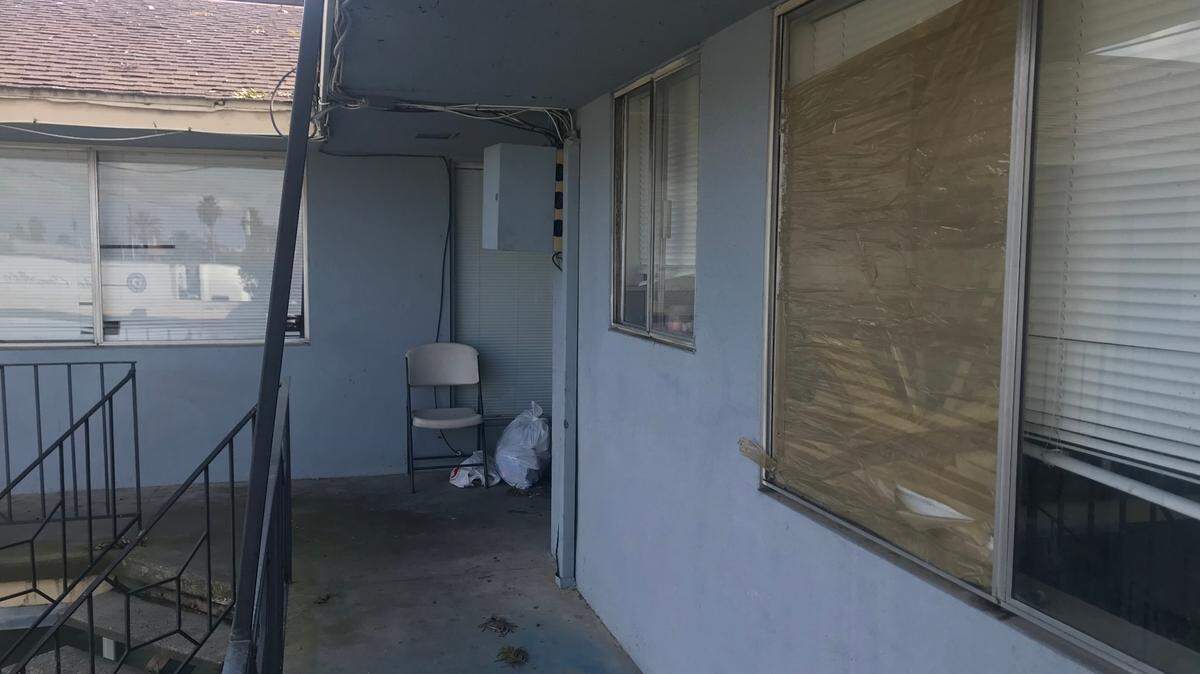
Parts of a building are literally crumbling at the 41-unit Manchester Arms apartment complex. In at least three apartments, water leaks through tiles and floorboards in kitchens and bathrooms into the ceilings of apartments below. Hot water for 21 units was shut off without notification six times since December 2019, when it was off for nearly a week and tenants were told to shower in a vacant unit.
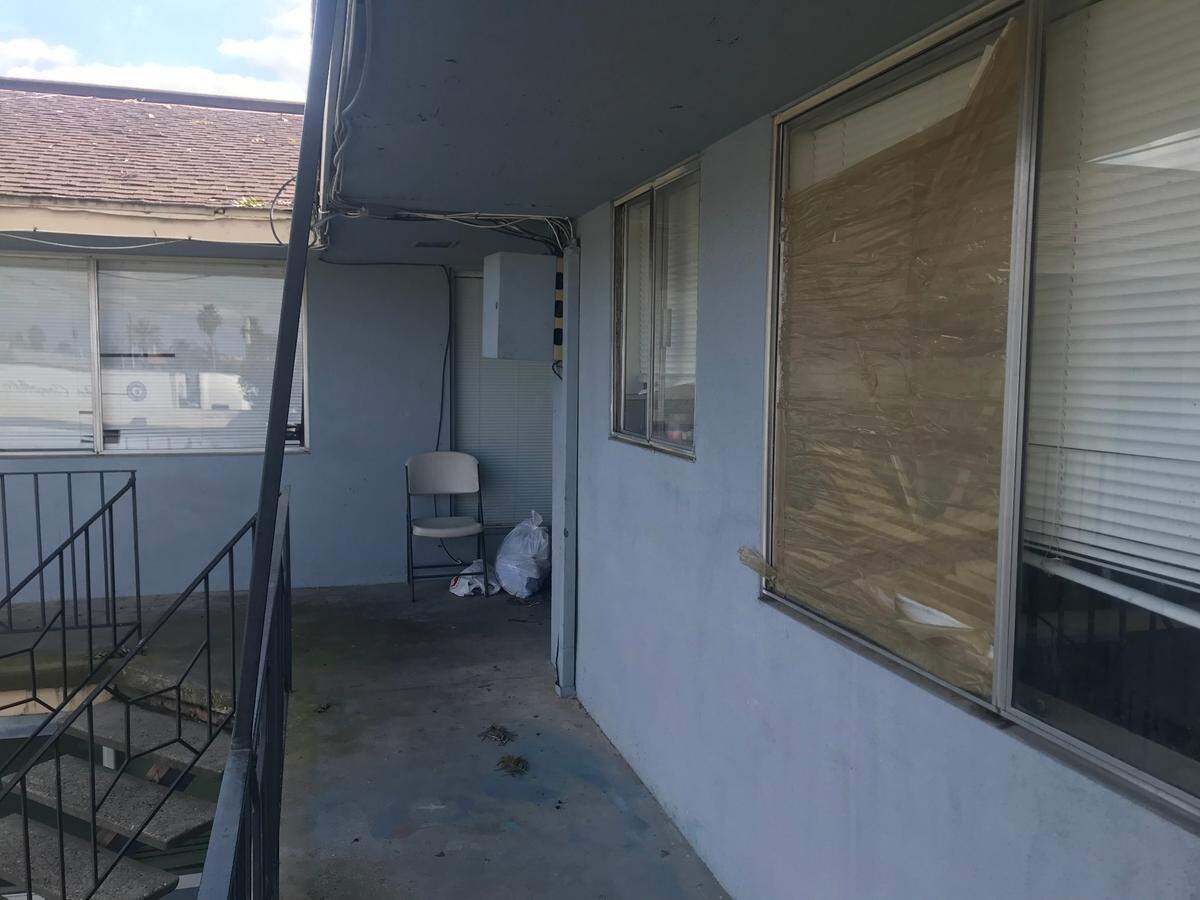
In multiple interviews with The Fresno Bee, renters said they are fearful of retaliation from the landlord. They put up with health and safety issues — and rent increases — because it’s cheaper than trying to move, and they don’t have other options.
Moving is expensive. Moving may require changing a child’s school. There is a lack of housing in Fresno. And it’s even more difficult to find housing if you rely on public funding vouchers to subsidize rent. Tenants who lose low-income housing may end up homeless.
Others said the landlord ignores requests for maintenance, offers excuses for why things can’t be fixed, or fails to hire licensed professionals to address serious issues. Screenshots of text messages, code enforcement documents, photos and witness interviews confirm their accounts.
Melissa Tepezano said she woke up after midnight on Jan. 30 to find her entire apartment was flooded by water gushing through kitchen cabinets, after a pipe broke in the wall.
She told Gutierrez, then missed a day’s work at McDonald’s to clean up the mess, pushing water out the front door with a broom and using fans to dry what she could. Still, she said, her son’s mattress and other belongings had to be tossed.
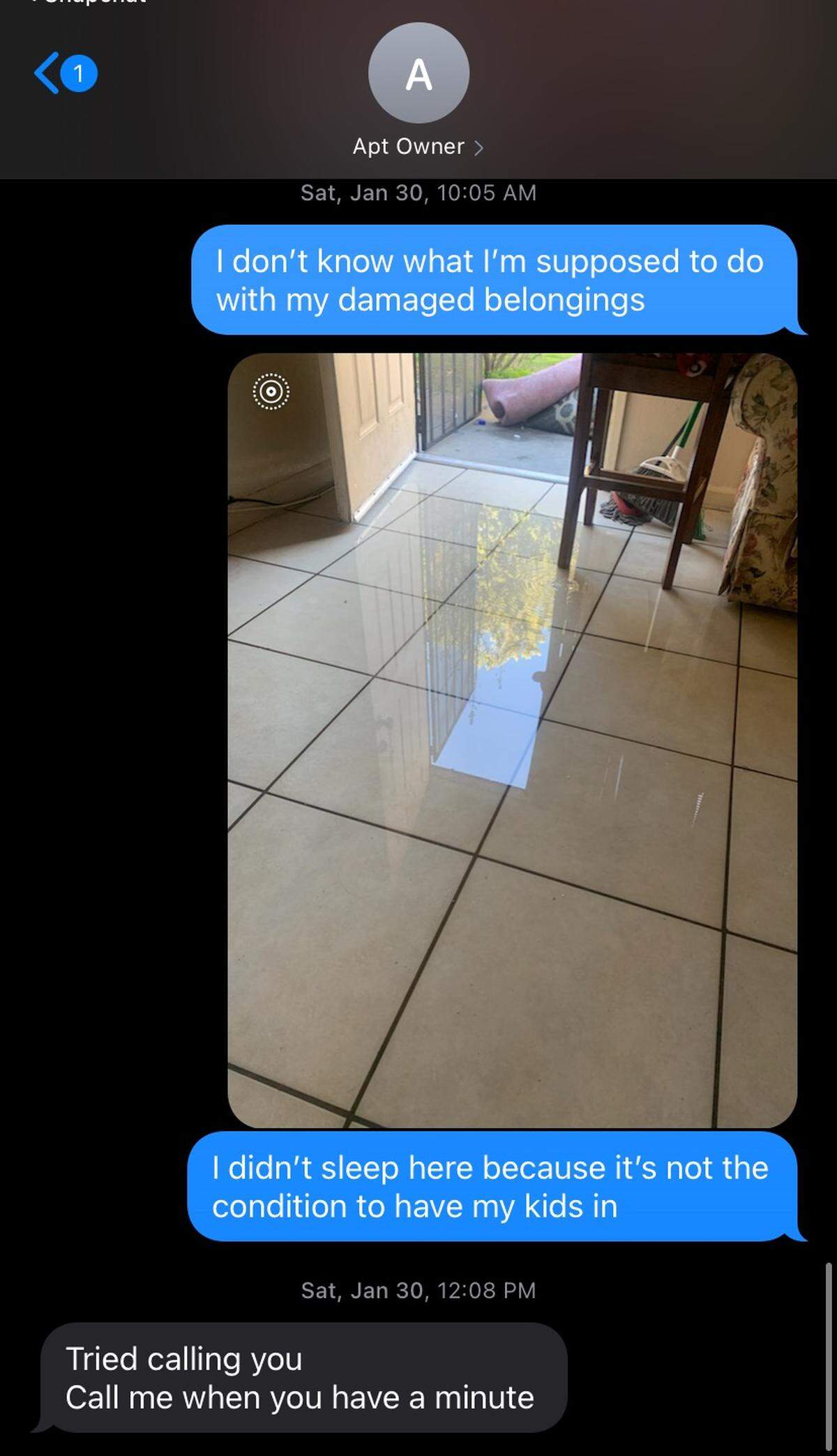
“[The landlord] said he couldn’t offer any help, because I didn’t have renter’s insurance,” Tepezano said. She didn’t call code enforcement. “I’m afraid that by doing that he is going to kick me out.”
Despite the severe conditions some tenants have faced, Code Enforcement’s Housing & Neighborhood Revitalization Manager, Rodney Horton, didn’t say Manchester Arms stands out as an egregious apartment complex.
“I don’t think any concerns about lack of repairs occurring at this particular complex is any different than any complex located in the city of Fresno that we’ve received complaints on,” he said.
Tenants who speak out fear retaliation by landlord
Landlords are required by state law to offer habitable premises and to maintain that condition.
Tenants have the legal right to withhold rent, pay for repairs themselves and deduct the cost, call code enforcement and move out without notice if their housing is not habitable. It is illegal for landlords to evict, harass, or raise the rent as retaliation for tenants asserting their rights.
Public documents show Gutierrez & Son LP purchased the Manchester Arms property for $2.4 million in April 2018. State business filings show Joel and Salvador Gutierrez of Newark are the general partners.
Joel Gutierrez denies to tenants and to The Bee that he is the owner. He declined to clarify who the owners are, saying, “I’m not going to incriminate anyone but myself.”
Tenants at Manchester Arms shared examples of what some called retaliation by Joel Gutierrez after they called code enforcement or spoke with The Bee. Gutierrez himself on March 17 told The Bee he watched security camera footage and saw which tenants spoke with reporters.
Laura Denies, on-site manager of the complex from 2014 to 2019, was the first tenant to contact The Bee to report rising rents and unfixed maintenance issues at Manchester Arms. That was Feb. 4, the same day she moved into her sister’s unit in the complex.
On March 8 she called The Bee saying, “The retaliation has begun.”
She said Gutierrez began telling tenants that she was “squatting,” or illegally occupying an apartment. Her sister, Patricia Coffey, is Denies’ caregiver. Coffey then received a three-day notice to fix or quit the lease or face court eviction, allegedly for violating the terms by allowing “a guest” to stay for more than three days.Another tenant, who asked not to be named to protect her family from an ex-husband, said she doesn’t contact Gutierrez with maintenance problems or other issues anymore, because “every time I do, he sends me a notice.” She showed The Bee multiple three-day notices sent by an agent of Gutierrez.
Another tenant told The Bee about unaddressed maintenance issues and asked not to be named because she “can’t afford to move.” She said Gutierrez called her within days of speaking to reporters, “yelled” at her and demanded she fix it.
Inez Hernandez said she began withholding her $1,000-a-month rent in October because Gutierrez was not fixing problems in her apartment. She called code enforcement and conducted a virtual inspection in her apartment on Feb. 4. Gutierrez told code enforcement he was already in the process of evicting Hernandez; when he actually filed a case against her is unclear. Gutierrez evicted her and won a default court judgment Feb. 26. Hernandez said she never received any documentation or notice of the court case, and was given notice by the Fresno County Sheriff’s to vacate by March 30.
In a phone call, Gutierrez denied some of the tenants’ examples and called them liars. He was provided a full list of complaints alleged on March 24, but he did not respond.
“We are minority owners that want to improve the community,” Gutierrez said in a phone interview March 17. “We took a shithole and we revitalized it.”
“We do everything by the book. We follow code enforcement. We communicate with them regularly,” he said.
Fresno-area housing attorneys said retaliation from landlords is common.
“That happens all the time. It’s very common in substandard housing and low-income housing for a landlord to retaliate against tenants for seeking repairs or seeking assistance,” said Mariah Thompson, who worked as an eviction defense attorney before joining California Rural Legal Assistance.
“It’s always a risk for tenants to seek assistance,” Thompson said. “It’s a risk for them to withhold rent on the basis of habitability violations. It’s a risk for them to call code enforcement. They’re essentially trapped, and they’re very easy to prey upon.”
That dynamic is the very reason housing advocacy groups like Faith in the Valley pushed for the City of Fresno to enact proactive code enforcement, where officers perform routine inspections of a sampling of rental units, according to Patience Milrod, director of Central California Legal Services.
“Literally, that is the reason it is so important to have a proactive system,” Milrod said. “The danger, the risk of retaliation is exactly why the city has an obligation to do these proactive inspections.”
Code enforcement policy fails to protect tenants
City officials had a dozen chances to recognize unhealthy conditions at Manchester Arms and intervene.
Code enforcement officers proactively inspected apartments at the complex a year and a half after Gutierrez & Son LP took ownership. Documents show that in January 2020 they found exposed wiring, unsanitary conditions, a broken heater, missing fixtures on a bathtub, evidence of water leak, mold, cockroaches, missing smoke detectors and significant damage to the roof.
That was the result of a mandatory inspection process enacted in the city of Fresno in 2017, following a series of investigative stories about dilapidated housing published by The Bee. Officers now conduct baseline inspections at a sampling of units in rental properties and return to the property to inspect again in one to five years, based on performance.
The intent of the city’s Rental Housing Improvement Act “is to safeguard and preserve the housing stock of decent, safe and sanitary residential rental units within the city and to protect persons residing in them.”
While hailed as an improvement by tenant-advocacy groups at the time, the policy did not address the power dynamic between tenants and landlords. As a result, the changes did not effectively address substandard housing or tenants’ fear of retaliation.
Manchester Arms failed its baseline inspection. Five out of six apartments inspected in January 2020 didn’t meet health and safety codes. The next month, one of two other apartments failed to pass inspection and inspection of the exterior of the building also failed to meet compliance requirements. Inspectors own internal documents said they needed to inspect two additional apartments to complete baseline inspections.
Follow-up inspections were not conducted, in part because of COVID-19, and the complex was never placed within a tier system as required under city policy.
Code enforcement finally scheduled a follow-up baseline inspection after The Bee interviewed the agency about the property in March 2021.
Any other inspections at the complex in the last two years were a result of tenant complaints.
Some tenants said code enforcement worked, and their repairs were fixed in a timely manner. That hasn’t always been the case.
Claudio Hughes, a veteran, said he didn’t have a working stove for more than two months. The problem was fixed after he called code enforcement, but not without delays. Records show he contacted code enforcement on Dec. 9, 2020, after 64 days without a stove.
The landlord told code enforcement a stove was installed more than a month prior, then called back and said the stove was never delivered because Hughes was unavailable during three attempts to install the appliance. Hughes said that’s not true. Gutierrez also told code enforcement he was in the process of evicting Hughes.
A refurbished stove was installed in Hughes’ unit the next day but the issues didn’t end there.
“They gave me one that was infested with roaches; I got that out in two hours,” Hughes told The Bee. “This guy has so many excuses, it’s pitiful… he thinks he’s above the law. He’s a dog. He’s a slumlord.”
In early January, Gutierrez stopped responding to code enforcement’s emails that asked whether another stove was installed. Code enforcement closed the case on Jan. 25 after Hughes confirmed he got a working stove.
Officers took no action against the landlord in Hughes’ case.
Tenants evicted without intervention or question
In three different cases, Gutierrez told code enforcement officers he was evicting the tenants who had filed a complaint, documents show.
Code enforcement officers told The Bee they don’t take sides when enforcing health and safety codes, including when tenants are being threatened with eviction.
“We’re not policy makers; we’re not advocates for one side versus the other,” Horton, the city neighborhood revitalization manager, said. “We see a violation; we want it addressed. Our number one goal is always to gain compliance.”
Records show in one case, code enforcement says Gutierrez can show proof of an eviction or fix the violation.
A tenant reported their AC and front windows were broken on July 29, 2020. It took 77 days to resolve the case.
When first contacted about the case, Gutierrez asked code enforcement for advice.
“He stated that the tenant is causing a lot of trouble at the property,” an officer wrote in the case summary. “They are trying to keep up with repairs, but the tenant continuously causes damage to the property, and she has not paid rent for months. He asked me what he can do. I explained that if they are in any eviction process, to provide me documentation. If not, the repairs need to be done before I can close this case. He understood.”
The unit was inspected Sept. 10. A maintenance person at Manchester Arms said on Sept. 18 the glass window shards were removed, but the window was not replaced because the landlord hadn’t contacted him.
Code enforcement on Sept. 19 received confirmation from Gutierrez’s lawyer that the tenant was being evicted.
Gutierrez was given notice that all repairs must be made by Oct. 9. The case was closed Oct. 14 after confirmation that the window was replaced.
Thompson, the attorney with California Rural Legal Assistance, said that by asking if the tenant is under eviction, it sounds like code enforcement is “implying or implicitly suggesting that a habitability violation isn’t a habitability violation unless someone is complaining about it.”
“Habitability code applies regardless of who is in the house. It applies even before someone has moved in, even if someone is being evicted,” Thompson said.
The city’s code enforcement division works under the City Attorney’s Office, but legally, they cannot interject in civil cases like evictions.
When asked what code officers do to protect tenants facing eviction, Horton said, “Currently, we are referring tenants to Central California Legal Services when matters such as these arise between the landlord and tenant.”
CCLS has six housing attorneys to serve the entire San Joaquin Valley currently managing 311 cases. Legal aid can only provide services to people who meet certain, strict income requirements.
Low-income tenants are often left unprepared to handle the repercussions of reporting a code violation, and without defense when faced with threats or eviction.
“One of the reasons landlords can get away with this, is because they know tenants aren’t going to get assistance if they get evicted,” Thompson said. “Most eviction cases default. Tenants don’t go to court. If they do go, they don’t know how to fill out the documents.”
Thompson said a city right to counsel policy would “be a game-changer.” Currently, less than 1% of Fresno tenants have an attorney in eviction court, compared to 76% of landlords, according to research by Faith in the Valley.
Milrod with CCLS said that providing tenants facing eviction with defense attorneys improves the likelihood that tenants stay housed.
“It is an important housing stabilization mechanism, to make sure people have lawyers,” Milrod said. “If a landlord loses an eviction case, they can lose attorney fees. It makes them think twice (about whether) this eviction is legit or is this retaliation?”
Safe and healthy housing, delayed
Code enforcement’s approach to remain neutral often enables the abuse of tenant rights and fails to meet its own stated goal of achieving health and safety code compliance.
“It is code enforcement’s job to enforce the law to protect families,” Milrod said. The owner is responsible for correcting any deficiency in a reasonable time, regardless of fault.
Nevertheless, officers who responded to code complaints at Manchester Arms did not question delays or why certain issues, like plumbing, were reoccurring, according to a review of code enforcement action reports acquired by The Bee through a Public Records Act request.
While officers have the authority to issue fines, prosecute the landlord, and even abate the building, they have never used any of those tools to bring the complex into compliance.
Of the 14 complaints documented by code enforcement since Gutierrez became owner, five were resolved within about a week. Five other cases took more than a month to close due to delays and untimely follow-ups. One took about three weeks to resolve, two others were closed by code enforcement, and one was ongoing.
Legally, landlords have 18 to 30 days to resolve violations once they receive a notice of violation from code enforcement, according to Horton. However, he told The Bee the goal is “to get the issue addressed as fast as possible in a reasonable time period to ensure safety and quality of life for the tenant.”
In one case, a tenant reported there was no heat in their apartment on Nov. 5, 2019. The apartment had other issues, including a roach infestation, plumbing problems, no hot water and kitchen and stucco damages. Code enforcement sent Gutierrez a notice that required all fixes be made by Dec. 7, 2019. A Dec. 16 inspection found that not all issues were resolved.
Code enforcement did not cite Gutierrez and instead reinspected the unit again in mid-January 2020. Confirmation of pest control treatment was not provided to code enforcement until March.
Other times, officers appear lenient with Gutierrez. When tenants didn’t have any hot water, they told the landlord to “do what he can” and said they would “hold off sending a notice letter as he is already working on the issue.” In those situations, the deficiency was resolved within a day.
The Bee found that isn’t always the outcome.
The case of Inez Hernandez
Fifty days after Inez Hernandez asked code enforcement to inspect her home, the apartment was still uninhabitable and she had an eviction notice ordering her to vacate by March 30.
Hernandez called code enforcement Feb. 3 to report several code violations, including that the bathtub has major leaks causing the downstair neighbor to have a yellow ring on their ceiling.
Officers did not inspect the apartment below. Officer Luis Castellanos on Feb. 11 did issue the landlord a notice of violation and order to correct violations in Hernandez’s apartment: No smoke alarms, evidence of mildew, fungus and mold in the bathroom and kitchen windows, a lack of ventilation in the bathroom, a broken HVAC system and an inoperable electrical range.
Records show code enforcement gave Gutierrez a March 1 deadline to fix the violations. By March 22, the violations had not been fixed. Documents obtained by The Bee through a second Public Records Request show code enforcement made several attempts to contact Hernandez and Gutierrez after March 1.
On March 12, Hernandez told code enforcement nothing was fixed. Code enforcement contacted Gutierrez on March 16 and told him the heater and mold needed to be addressed immediately or he would be issued a citation. Gutierrez sent a maintenance person to the apartment, but nothing was corrected at that time, email documents show. The Bee asked for an update on the case March 22.
At 3:48 p.m. March 22, Horton told The Bee in an email that the “property owner is working to bring the unit into compliance. In fact, the property owner has his maintenance worker at the property now to make repairs to fix the mold issue in the unit bathroom.”
That was untrue. Reporters knocked on Hernandez’s apartment door around 4:30 p.m. and were told no maintenance worker had been there. Reporters stayed until 6 p.m. and saw no sign of maintenance.
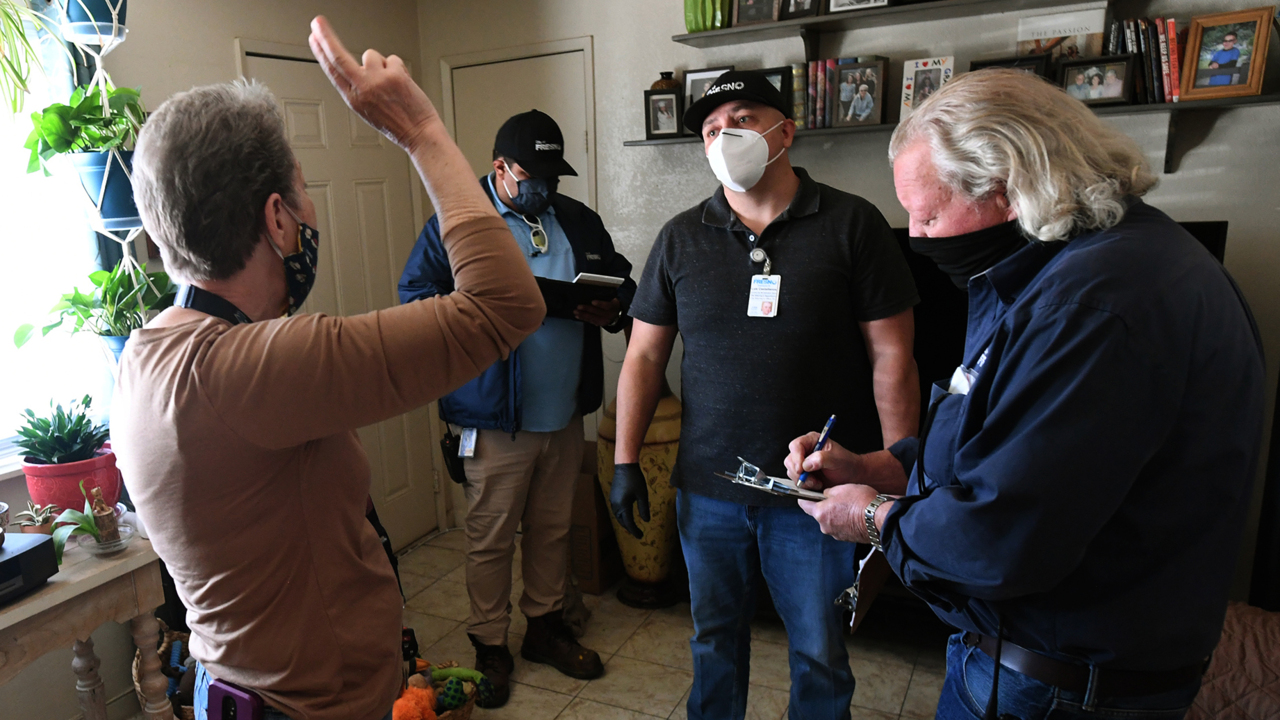
On the morning of March 24, four code enforcement officers and two police officers showed up at Hernandez’s apartment to watch a maintenance worker spray bleach on a rag and wipe down the window sills, Hernandez told The Bee.
Hernandez said when the maintenance person wiped the window sills, she knew the mold would come back. She had wiped the mold away herself several times, but that was only ever a temporary fix.
Often reoccurring issues, like hot water shutoffs and mold, were met with temporary fixes — “ghetto rigged,” Hernandez said — to appease code enforcement.
Who does code enforcement work for?
The Bee’s findings that unhealthy conditions have been allowed to persist at Manchester Arms prompted strong reaction.
“There has historically been deep confusion at the city code enforcement level about who their constituents are. Part of the purpose of the proactive code enforcement policy was to help code enforcement understand that Fresno families are their constituency, not landlords,” said Milrod, who directs the region’s legal aid service.
“When code enforcement is inattentive to family’s health and safety, at best, it’s negligence, at worst, it’s criminal, and it’s unacceptable,” Milrod said.
Code enforcement officers increased attention to cases at the complex after The Bee inquired about them.
City employee Horton issued a prepared statement in response to The Bee’s findings, saying the “Code Enforcement Unit swiftly responds to complaints of substandard housing.”
He also said inspectors “work to ensure corrections are made in a timely manner consistent with the Fresno Municipal Code.” While the pandemic changed the way inspections were conducted, Horton said officers still responded to substandard housing violations.
When told of the allegations discovered in his district, Fresno City Councilmember Nelson Esparza told The Bee he would take action.
“(T)hese conditions are wildly unacceptable and I will be directing Code Enforcement to add this property to the Anti-Slum Enforcement Team’s (ASET) list and request a full inspection of each unit,” Esparza said in a text to a reporter.
“We won’t tolerate slum conditions and we encourage any Fresno resident being subjected to to chronically substandard living conditions to contact their City Councilmember directly,” he said.
Why tenants stay in untenable housing
The number of low-income renter families in Fresno County is significantly more than the number of units affordable at their income level.
Tenants who receive government funding, such as Section 8 vouchers, that require units to meet federal Department of Housing and Urban Development code criteria often have fewer options because landlords opt to not accept Section 8 vouchers.
As a result, tenants stay in untenable situations. Many at Manchester Arms said they wouldn’t live there if they had other options, and that they feel pressure to not bring up maintenance issues because they don’t want to lose their apartment.
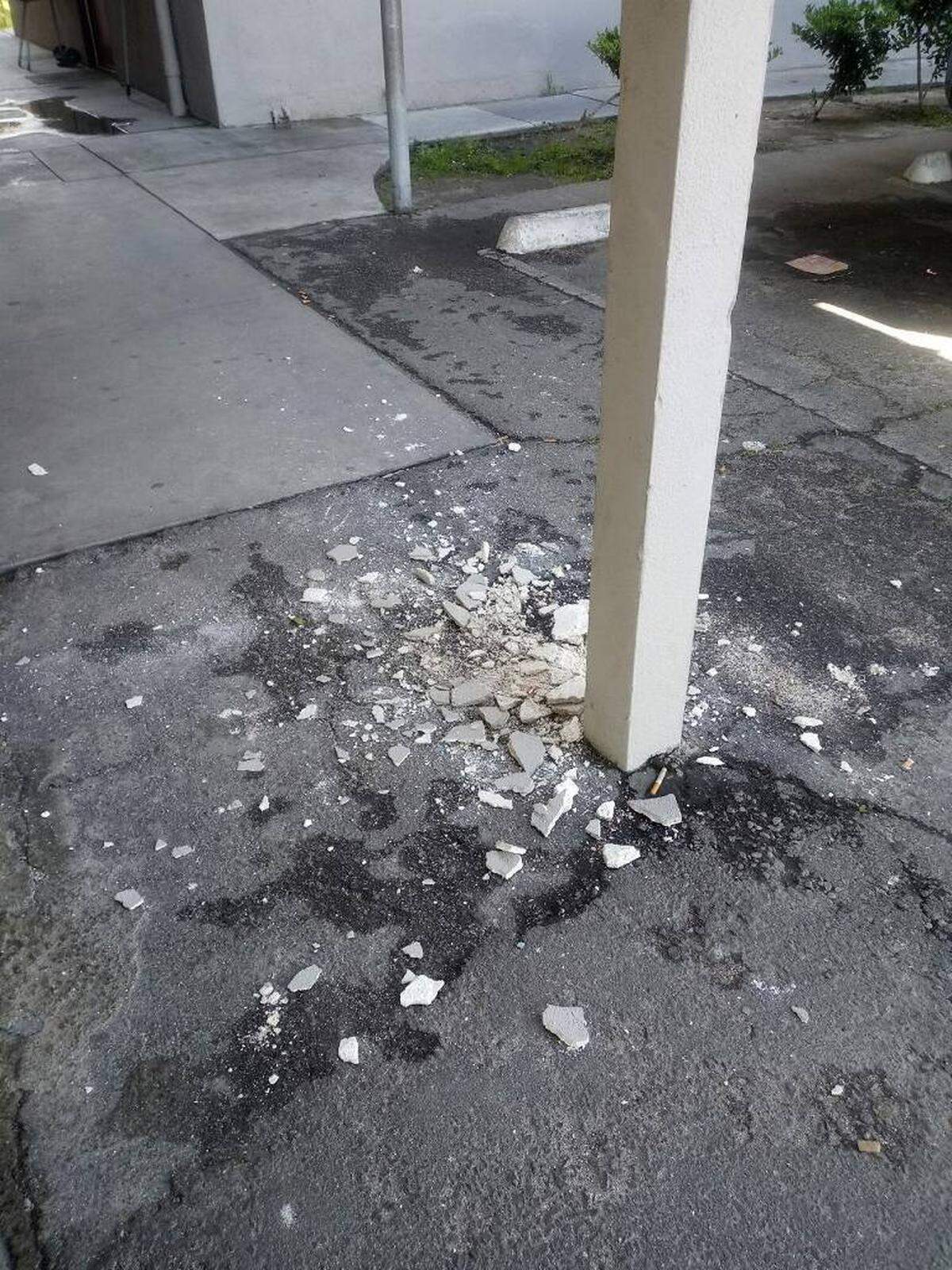
“I didn’t come to this apartment for the area, but it’s cheap,” said a woman with children; she did not want to be named out of fear of retaliation by the landlord. “I can’t afford to move.”
She said her apartment window has no screen and the track has mold that won’t scrub off. Rent in the last year increased by $50. If the landlord raises it again, she’s going to try to move because, she said, “it’s just not worth it.”
Denies, the on-site manager from 2014 to 2019, said Gutierrez is raising rents without improvements.
Current state law gives landlords incentive not to maintain apartments and to evict or otherwise lose tenants.
Residents who have been there awhile generally pay between $700 and $900 per month. It’s illegal for landlords to raise rent more than 5% plus inflation a year under the state’s anti-rent gouging law, AB 1482.
Empty apartments at the Manchester Arms complex are listed on Apartments.com for monthly rents of $900 to $1,200.
“(The landlord) starts things and never finishes. He started putting windows in and stopped. He started painting and stopped. Yet, he has raised our rent twice since he owned it, with no upgrades,” Denies said.
“This guy is a straight slumlord,” Denies said. “If he is going to raise the rent, we want this place to look like a decent place to live. We want things fixed.”
Melvin Breazell, a janitor who has lived in the complex for more than five years, said he hasn’t had any trouble with the landlord. He does, however, notice the rent hikes.
“Every time somebody moves out, he tries to hike up the rent,” said Breazell, who pays $729 per month. “This is not a $1,000 rent area.”
Fear of homelessness is enough to keep tenants quiet.
“Whatever they say goes. I just have to bite my tongue,” said Ericha Lopez, a mother of two who moved in after being homeless for three years. Lopez has evictions on her record after a lifetime of family trauma and is desperate to keep her housing this time. “It’s not right to live like that, especially when you pay rent.”
There is mold around her window; she’s had to pay for new locks on her mailbox three times after it was broken into, and the toilet and kitchen in her upstairs unit aren’t properly sealed, causing water to leak through the tile and floorboards into the living room below.
“It’s hard to move,” said Tepezano, the tenant whose apartment was flooded.
After growing up in a studio apartment with her parents and siblings, she said she is proud her wages can pay for her children to have their own room. She can’t afford to pay first and last month’s rent for another two-bedroom apartment, and “availability is really hard.”
Fearful of losing what housing they do have, most residents don’t push too hard to address the dilapidated living conditions.
Hernandez did speak up.
When she moved in, she had been saving to buy a house. After living at Manchester Arms, she will have an eviction on her record, and her big life move will be delayed.
She plans to move herself and her children into a hotel.
Hernandez told The Bee, “I feel like code enforcement failed me.”
BEHIND THE STORY
MOREHow this story was reported
The Fresno Bee first heard from a frustrated tenant at Manchester Arms in a text on Feb. 4.
Within the next seven weeks, reporters and a photographer visited the complex five times, hearing from the residents of 15 out of 41 apartments. Knowing many tenants are unaware of resources available to them, reporters left each household a paper with contact information to city code enforcement, legal aid and rental assistance programs.
To learn more about what residents were experiencing, reporters filed public records requests with the Fresno Code Enforcement Division and Fresno Police Department, and searched documents filed with the Fresno County Superior Court.
Reporters pored through 250 pages of code reports, studied housing laws, looked through Fresno Bee archives and reviewed more than 100 photos and screenshots of text messages provided by tenants.
Findings of the investigation were presented to the landlord, representatives of code enforcement and local housing attorneys.
This story was reported by Monica Vaughan and Cassandra Garibay, with contributions from Danielle Bergstrom. Lead editor was Dympna Ugwu-Oju, with final editing by Joe Kieta and John Rich. Photos and video are by John Walker.
In-depth investigations like this are made possible by readers like you. Please consider making a donation to Fresnoland.
This story was originally published March 29, 2021 at 5:00 AM.
CORRECTION: This article has been updated to reflect that Fresno code enforcement officers made several attempts and contacted the tenant Inez Hernandez and landlord Joel Gutierrez after the March 1 deadline and prior to The Bee’s inquiry March 22, according to documents obtained by The Bee through a records request. Those documents were provided March 29 after the story published.