
Summer is generally not a good time to prune, but here are three exceptions
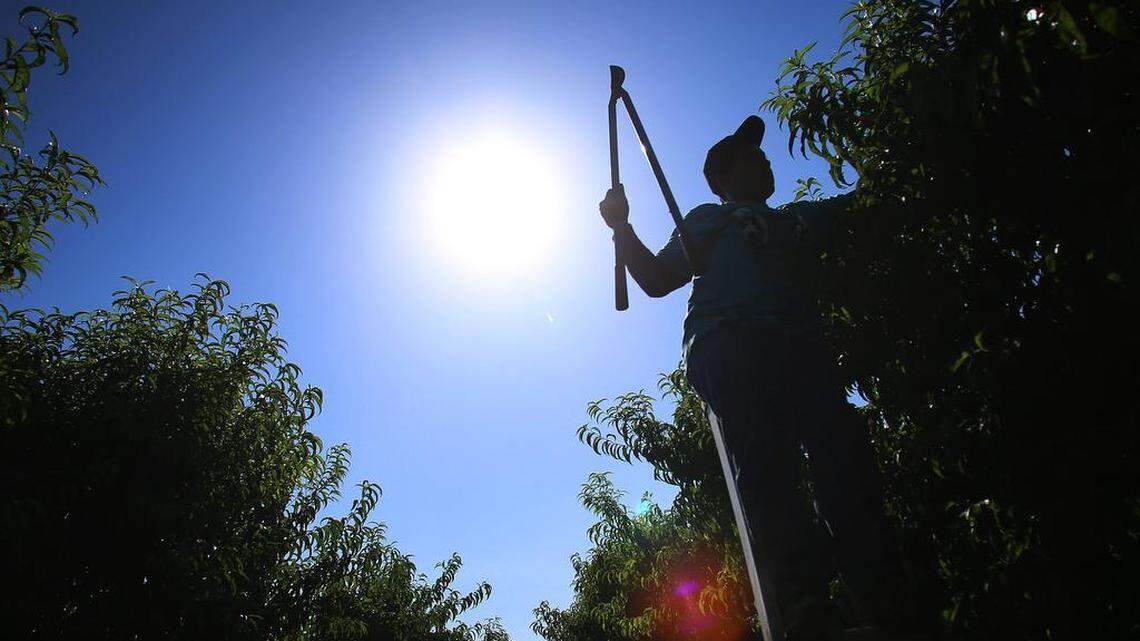
Most hard pruning is done during the winter months, but oleanders, apricot and olive trees are best pruned in the dry summer months. That’s because all three are susceptible to diseases carried into pruning wounds by splashing rain or overhead sprinkler irrigation in winter and spring.
Eutypa dieback is a fungal disease that affects apricot trees. In affected trees, large limbs suddenly break off in summer and dark cankers form on branches that were pruned in wet winter or spring weather. Some cankers ooze a gummy substance. The cankers can spread 6 inches a year and if the fungal disease reaches the trunk, the tree may die.
Prune apricots from July through September when there is no risk of rain. Make pruning cuts at least 6 inches below cankers or discolored wood and disinfect tools between cuts with a spritz of rubbing alcohol or a 10 percent solution of bleach and water.
Olive knot and oleander gall or knot are both caused by a bacterial infection that causes odd-looking small swellings or galls on olive trees and oleander bushes. On olives, the galls form on trunk and branch pruning wounds and on young shoots, roots, trunks and leaves. If the galls girdle or encircle the twigs and branches, dieback occurs. If the galls girdle the trunk on young trees, the tree will die. Olive knot has become a more common and serious problem here in the central San Joaquin Valley, especially on the highly susceptible Manzanillo olive cultivar.
The bacteria survive in the galls. In winter and spring, the bacteria are carried into fresh pruning wounds and bark cracks by splashing rain. Prune galls off twigs and branches in summer, sterilizing pruning tools often.
Fungicide and bactericide treatments can reduce the fungal and bacteria populations, but control is never complete and is expensive for the home gardeners.
Master Gardener program
Applications for the 2019 University of California Cooperative Extension (UCCE) Fresno and Madera Counties Master Gardener program are available online now until Aug. 31. If you love gardening (but aren’t necessarily an expert) and if you enjoy meeting new people and sharing gardening information, you’ll fit right into the Master Gardener program.
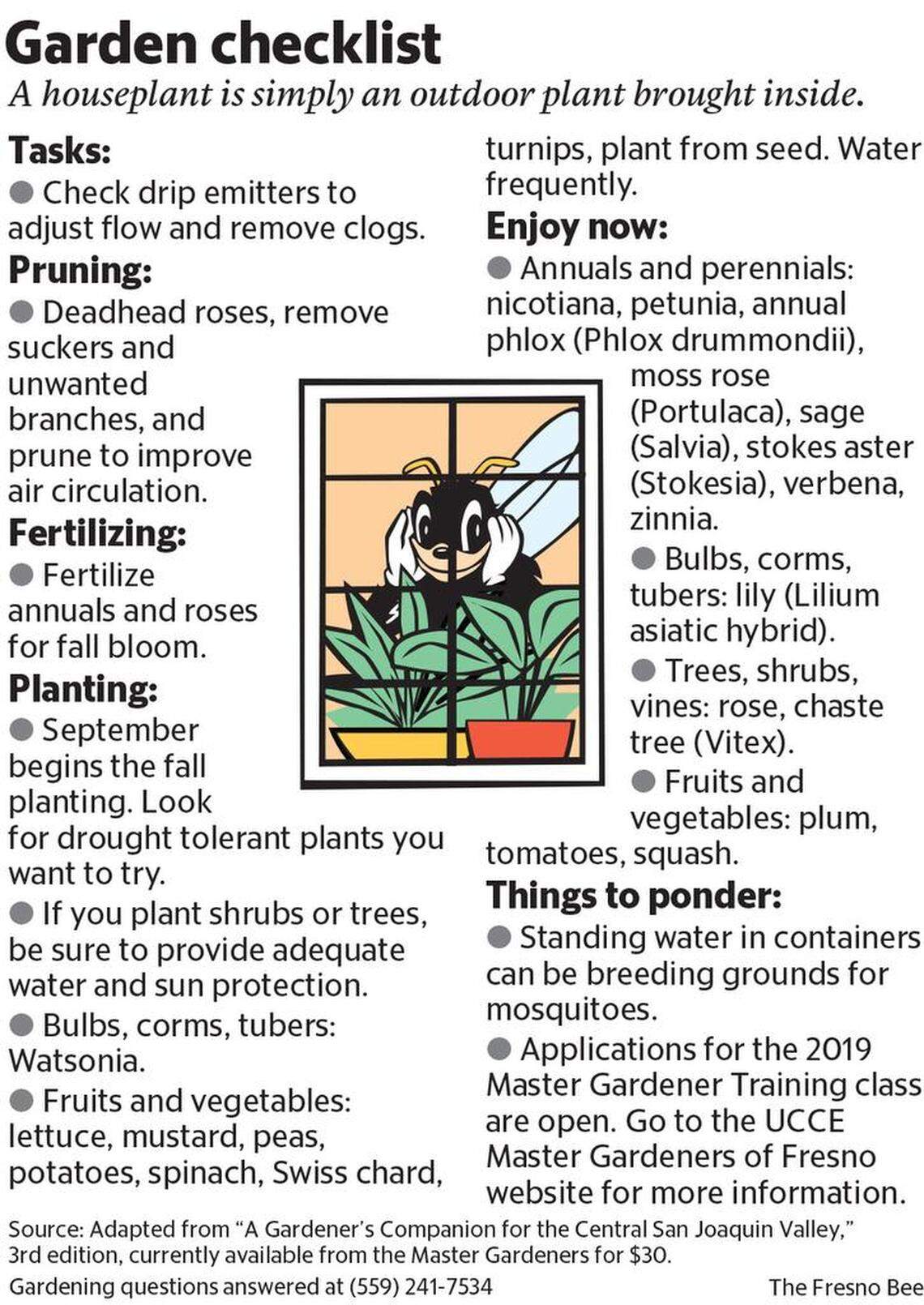
Training classes are held for 16 weeks, from the first Thursday in January 2019 until the end of April 2019. Class hours are on Thursdays from 8:30 a.m to 12:30 p.m. Instructors are UCCE advisers, horticultural specialists and community experts. There is a final exam and first-year intern Master Gardeners must complete 50 hours of hands-on training during the first 18 months. You won’t be facing the challenge of becoming a Master Gardener alone; there is an active mentor program for prospective Master Gardeners to guide, support and assist you.
Applicants must attend the “Meet the Master Gardeners” meeting at which time an interview appointment will be scheduled. For more information and the online application form go to the Fresno County Master Gardeners . An email address is required for verification of your application.
Elinor Teague: etgrow@comcast.net
This story was originally published August 9, 2018 at 1:22 AM with the headline "Summer is generally not a good time to prune, but here are three exceptions."