
Puebla artists create traditional muskets for Mexican carnivals in February
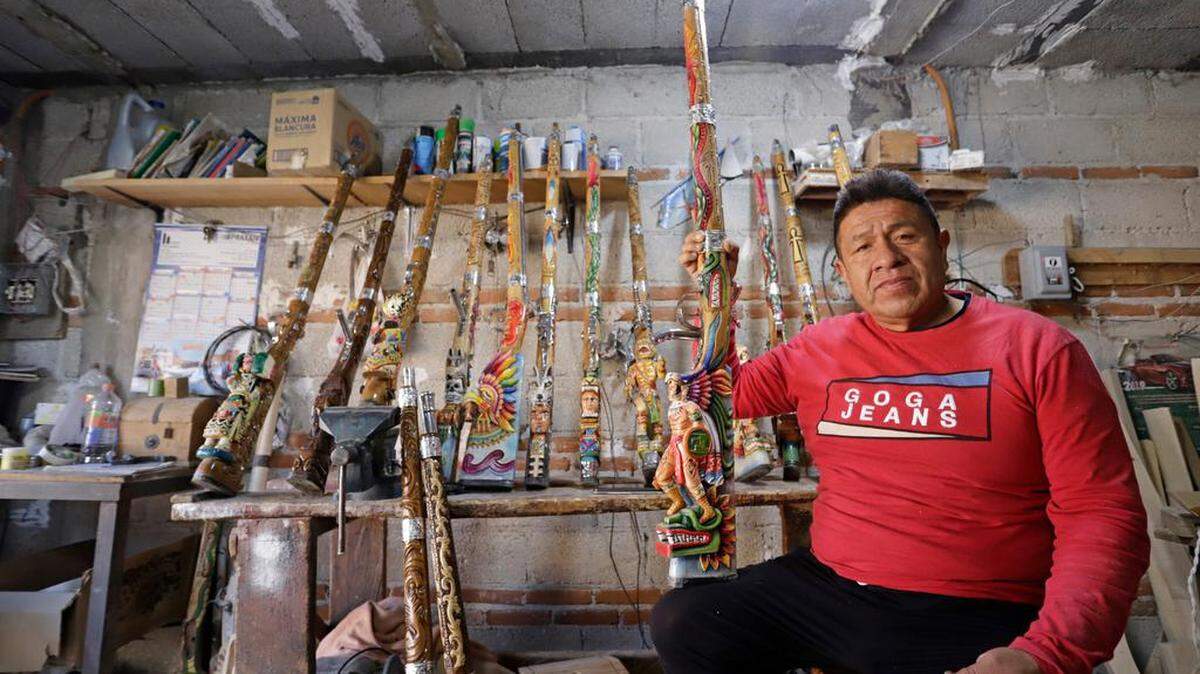
Artists in central México use their imagination and skill to make the traditional muskets that are fired by dancers in one of the largest carnivals in Latin America every year.
The carnival takes place in the municipality of Huejotzingo, located in the central Mexican state of Puebla, in February.
The rifle-shaped wood pieces are decorated with pre-Hispanic designs and historical references. Fitted inside them is a metal system that helps insert gunpowder in them and then detonate them.
David Montes Rueda, a carpenter from Huejotzingo, began making these artifacts 20 years ago for family members taking part in the carnival.
Growing demand from other people for the muskets led him to leave carpentry and set up a family workshop dedicated to the creation and design of these wooden artifacts that are popular throughout the year.
The craftsman explained that although at first only locals bought the rifles, foreign tourists who visited the municipality during festivals or festivities prior to Holy Week began enquiring where they were made and then buying them to display in their homes.
“I know that my works have been taken to New York, Connecticut, Philadelphia, Indianapolis, New Jersey, because the Mexican community has expanded the tradition of the carnival,” he said.
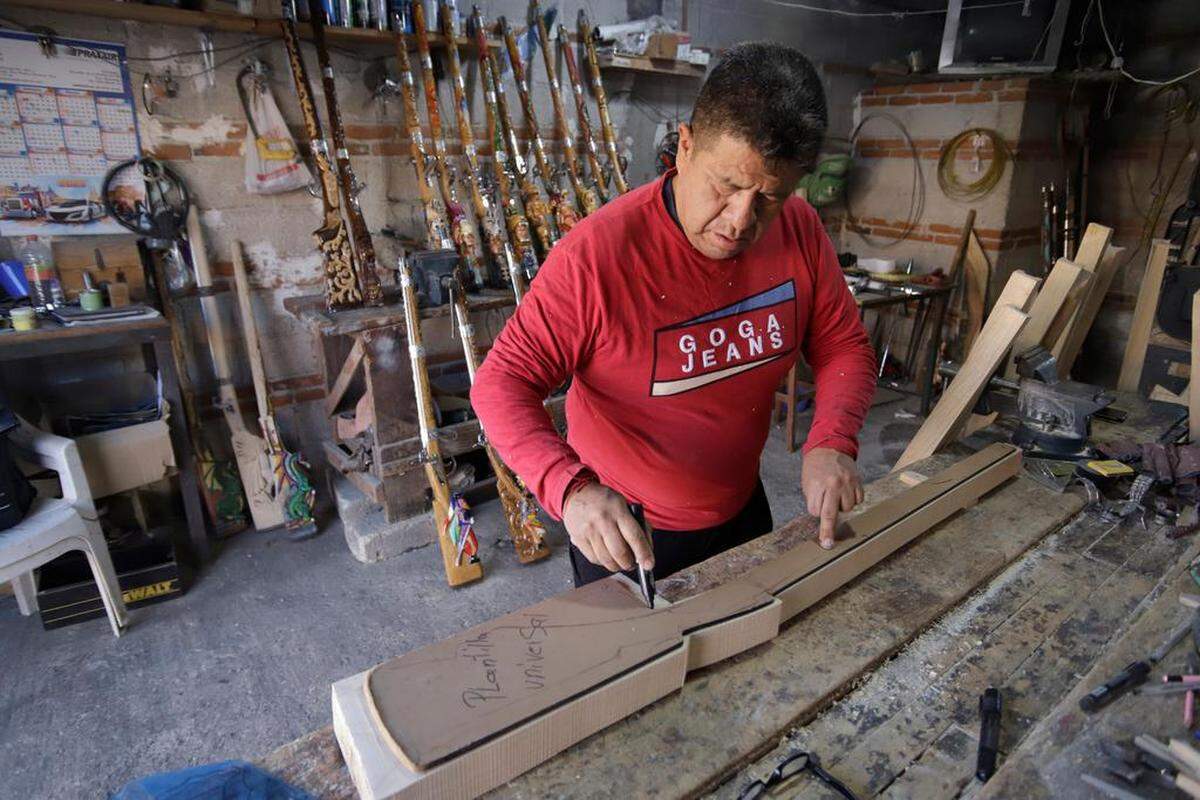
David said that the most important step in the making of the muskets is the selection of wood, which has to be the most resistant.
He always selects oak, he added, since it withstands the impact of gunpowder.
After selecting the wood, he begins sanding it so that it is completely smooth.
He then draws a L-shape on it and traces the design to be made on it.
Using a cutter, he cuts it into the shape drawn on the wood and uses a manual machine to give depth to the silhouette.
His wife then paints and decorates the wood using photos from the internet or those that the clients bring.
The last step is to fit the muskets with the detonation hardware.
The craftsman said that the price of these artifacts range from 5,500 pesos (about $290) to 10,000 pesos (527 dollars) depending on the clients’ requirements although traditional muskets tend to be cheaper.