Parlier residents raise a stink about smell from cannabis operation
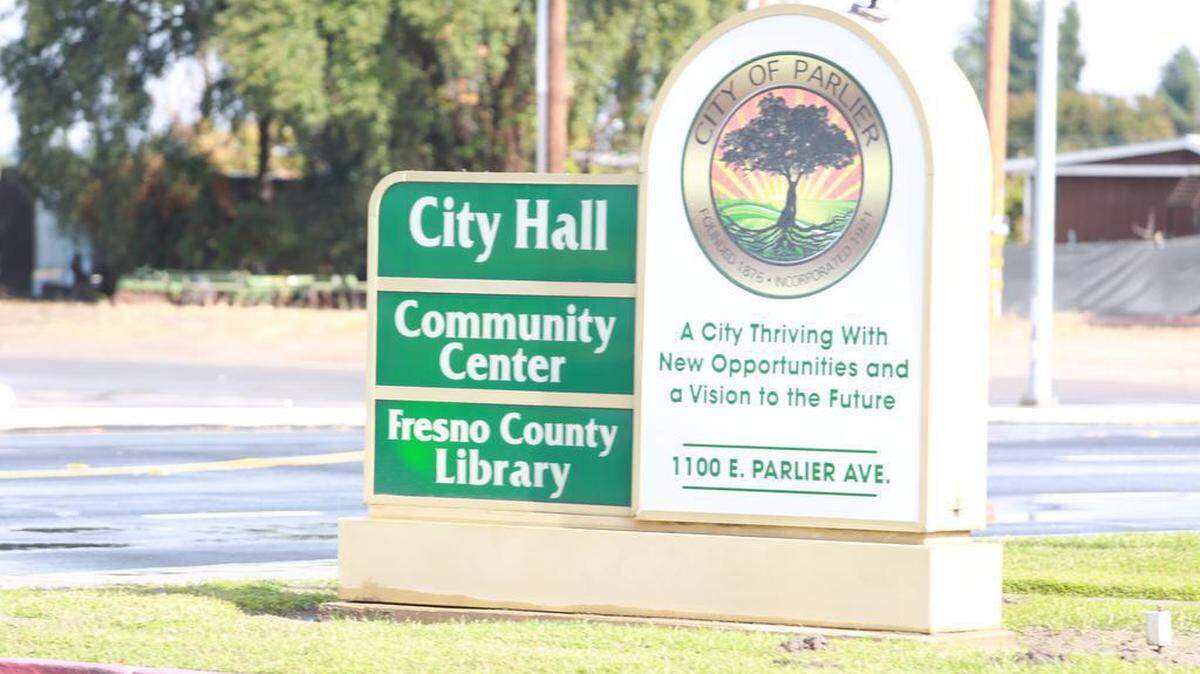
In the last couple of weeks, some Parlier residents have complained about the smell from a cannabis operation within the city’s industrial park, which is located on Mendocino Avenue south of Manning Avenue and outside the city’s residential area.
“Two locations and they’re in an industrial park, which is not residential,” said Parlier Mayor Alma Beltrán. “The reason that they smell, it is because when you pass by, you’re going to get the odor. It’s like any garlic field or onion field.”
The cannabis odor could be smelled the afternoon of Oct. 25 as you drove west on Manning Avenue to make a left turn to drive south on Mendocino Avenue heading to the industrial park.
“From what I’m gathering from the people that are complaining, it’s not so much the smell. It is the type of business,” said Beltrán. “They are so against the cannabis. And that is why they’re getting the negative attention from the people that are really against it.”
Not too far from the industrial park, at the corner of Manning and Mendocino Avenues you can find an Arco gas station, as well as a commercial shopping area which includes a fast-food restaurant, some stores, restaurants and a grocery store.
On the eastside of the commercial shopping area is the Salandini Villa Apartments on East Manning Avenue which house 148 2-4 beds apartment units.
Beltrán, who is retired from law enforcement, said when cannabis was first put on the ballot for it to be legal in the state, she voted against it.
As the mayor, Beltrán said she is having conversations with her constituents who have approached her regarding their recent concern of the cannabis odor.
“When I had this conversation with one of our residents that approached me on Sunday, he was just more concerned because it’s recreational cannabis,” said Beltrán. “And I said, ‘I understand the concern. But the people voted in favor of the cannabis for it to be used for medical or recreational or whatever the purposes are for the individual.’”
Beltrán said that in 2015, the city of Parlier was about to lose its police department as the council before she came in was contemplating disbanding the police department.
The city had a $1.5 million budget for its 9-officer police department. That, she said, translates to one officer per shift and two officers on the weekend shift which Beltrán said is not enough for the size of a city like Parlier. According to the 2010 census Parlier had a population of about 14,494.
As someone who has been in law enforcement, Beltrán said she understood the need for Parlier to have and sustain its own police department so if people dial 911 officers would respond within five minutes of the call.
Before looking into cannabis being the solution to fund the police department, Beltrán said at that time the city tied to pass Measure Q to sustain the police department and failed. They tried a second time to pass Measure Q and also failed again, until 2016 when the city was successful to pass Measure Q because of the high number of shootings in the city at that time.
Beltrán said Measure Q has a sunset date and will expire this year. The city gets about $500,000 in property taxes that go to the police budget.
“So, we know that because of the size of the community, we still needed more officers. We cannot just have one officer per shift,” she said.
Beltrán said the city council approved in 2017 a non-storefront cannabis dispensary to bring the monetary resources to not only sustain its police department but to bring it to the size it needed to be and to better serve Parlier residents. It was also approved for cultivation but they have not started that part of the business until recently.
“Now they were working on the cultivation in the district park,” she said, adding that the council asked two key questions regarding cultivation of cannabis, one being security and the second being the odor.
Both cultivation location in the industrial park have security which includes cameras and a wired fence.
Beltrán said the business tried first to do cultivation of cannabis outdoors instead of having a greenhouse or being done indoors.
“So they tried it. Then we started to get the complaints about the odor because it kind of lingers on, you know, and it’s not an all-day persistent odor. It just comes and goes,” said Beltrán, adding that she asked how long that would be an issue.
She said the odor usually happens during the harvest time, which is usually a time frame of seven-to-eight-week harvest time.
“But you really smell the odor only on the last three weeks,” said Parlier City Manager Sonia Hall.
Beltrán said the odor is stronger when the plant is being cut and left to dry, but only through certain times of the day.
“It’s whenever the pressure in the atmosphere is the heaviest, because the odor doesn’t go up, instead it stays down. And that’s when people are smelling it. Generally, it’s in the evenings or early mornings,” Hall added.
Beltrán said she constantly drives by there because she does want to address the concerns of the public.
“We’re not going to ignore the fact that even though it’s not in a residential area, it’s still a concern because some people are complaining about it. And so, we looked into it,” Beltrán said, adding that she spoke with the actual owner and met with him. “Next year they’re going to make sure it is in a greenhouse and they’re putting in the odor control equipment.”
“Once they put those systems in, it doesn’t eliminate it, but it reduces it completely to an extent where it’s not going lingering on, you know, it kind of controls,” Beltrán said.
Hall said this is the first year the company has done cultivation.
“Never done this before. It’s a learning experience for all of us,” Hall said.
María G. Ortiz-Briones: 559-441-6782, @TuValleTuSalud
Esta historia fue publicada originalmente el 3 de noviembre de 2021, 1:29 p. m..