Doctors Academy survives pandemic’s many challenges
When the COVID-19 pandemic hit in March 2020, sending students across the state home to attend school remotely for safety, the staff of the Doctors Academy program – which was taking place at three high schools and three middle schools in Fresno County – had to make an important decision about the future of the program.
After all there was so much uncertainty with the global pandemic that it was unknown if students would even return to the classroom to finish the 2019-20 school year or if that effort would be done remotely.
“The first step was making the decision that the program was important enough that we had to figure a way to continue despite the virtual nature of what we were doing,” said Dr. Katherine A. Flores, director of the UCSF Fresno Latino Center for Medical Education and Research.
Flores said it was not an individual decision by the program, but a joint decision with all three campuses – Selma, Caruthers and Fresno Unified school districts – to talk about what to do.
“We didn’t know what was going to happen and everyone agreed that the program was important enough. And of course, the students are important enough that we needed to figure a way to complete the year,” Flores said, adding that at that point they had no idea the pandemic was going to extend into the next school year. “All we knew was that the likelihood the kids were going to go back to school before graduation was slim.”
Evolving from in person to virtual during the pandemic
When it was very apparent that the program was not going to provide in-person clinical experiences for the summer, Flores said they had to figure out how to replicate that training without physically being in the hospital or in doctor’s office.
“We were in the middle of a research project, so students were doing their research papers,” Flores added.
And after consulting with each of the school sites, Flores said it was agreed to continue the summer clinical experience virtually and they designed the entire program with the support of clinical preceptors.
“It was amazing how everybody showed up willing to give an hour of their time to give a workshop or a lecture or presentations on Zoom,” Flores said.
The pandemic cancelled last year’s in-person awards ceremonies and were done virtually, as was the summer symposium which takes place every summer after the students complete their clinical and research.
“We still were able to do it and it still had good attendance,” said Flores, adding that students were engaged despite their anticipation of an in-person clinical experience like previous summers.
“They were very disappointed. I am sure they still are that they did not get that experience because you know, there is just nothing like being in the hospital, in the operating room. But we did the best that we could,” Flores said.
When facing a global pandemic, Flores said that “if you feel like you have a program that is valuable for the students to get the exposure to medicine or health, then you need to figure out how pivot into something that is doable virtually.”
Dr. Emy López Phillips led the transition to virtual learning for the summer program and the academic school year at the middle and high school levels.
“There was a lot of planning, thinking, processing of first what were the immediate needs of the students, and primarily that was what the districts were working on and that was the technology access,” Phillips said, adding that was a big concern because internet access in Caruthers not very consistent or reliable.
“Because of that, we worked very closely with the school district, and they did an amazing job of doing their best to get students connected,” Phillips said, adding that the district got creative to get the students access and meet their needs.
“And once that happened, then we were ready with providing the content,” Phillips said. “And so for us, what that looked like was thinking through how could we take a on land, very hands on experience and still make it interesting and exciting for students in a virtual environment.”
The staff came up with lots of virtual type activities and games, with lots of guest speakers.
Since many doctors’ elective surgeries were postponed because of the pandemic, Phillips said suddenly, they had so many more faculty who were interested and excited about helping and participating in the Doctors Academy program that was being put together virtually.
“We were very grateful for that,” Phillips said, adding that some of those doctors would do dissections or show a lab being done.
Phillips said that thanks to the virtual environment more students were able to experience those types of classes compare to when it has been done in person where sometimes they couldn’t always take everyone.
“We were able to plan some of these things very quickly and make it just as meaningful,” Phillips said adding that they encourage students to invite their family members if they were at home to listen in and learn to for the virtual presentations.
“So, it became really, almost a community building, family building opportunity too. So, we realized very quickly we were not we were no longer just supporting and educating our students. We are educating their families as well. So, we try to then include topics that would be appealing to family members.”
Phillips said it was an opportunity to think outside the box and include topics in areas they have never covered before because it was hard to get people in person, which now, that barrier was no longer there and meet the needs of the families and the students that they were serving in at this current time.
“We just really took it from what is the need currently and how can we reach out and coordinate resources that are timely,” Phillips said, adding that many of the people who took part allow the program to record so they were able to record many of those webinars and save them for people to watch the information.
“Our plan is to build kind of a virtual library of resources,” Phillips said.
Looking back, Flores said school districts were very good about providing the equipment to their students from tablets to laptops to hot spots.
“They really stepped up in this whole pandemic. School site administrator and teachers, they have been working so hard to meet the needs of the students and we just come alongside them, and we do our part,” Phillips said.
Challenges included missed field trips
One of the many challenges last year was not being able to allow the students to travel, said Phillips.
“They missed out on field trips. They missed out on the hands-on experiences that usually come in the summer of being able to shadow a doctor,” Phillips said, adding that it was challenging to create something beneficial for the students when there is so many expectations of the students and then it’s a huge disappointment as their life has essentially been halted.
“I was just holding on to hope that I would get to experience that because I also have had friend who were older than me in the past and just speak so highly of that internship and that experience,” said Chelsea Castillo, a senior at Caruthers High School who participated in the virtual summer experience.
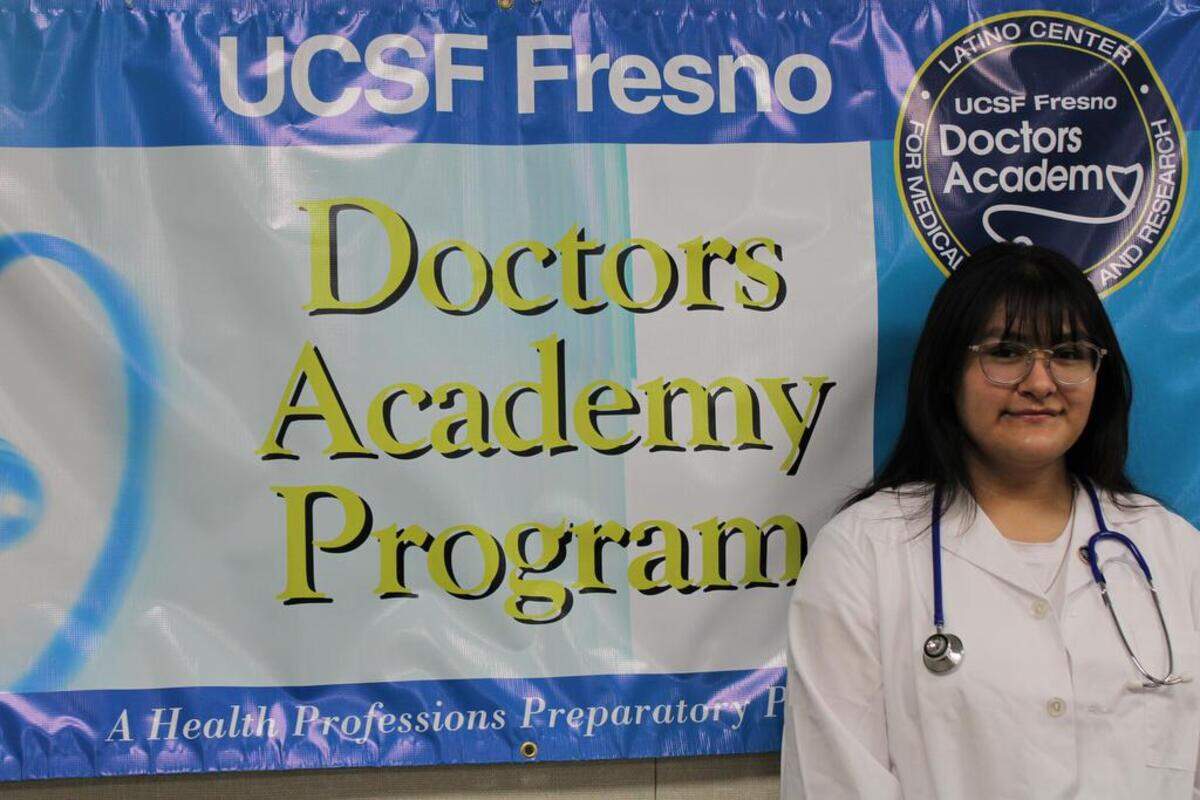
“I wanted to take the opportunity of the internship to kind of see what I could potentially do more in the medical field.”
Phillips said in creating the new virtual curriculum, they were mindful and respectful of that while still providing students with meaningful opportunities while reassuring students that eventually the pandemic and the urgency of the emergencies will go away.
As a team, Phillips said the challenge they faced in planning for the 2020-21 year was also having the mindset and accepting that what was happening was the new normal and they will have to adjust to not being able to go back to in person or on campus.
“It was just about really helping our department accept the reality of the fact that we all needed to be flexible and that our work as we knew it was changing and change is hard sometimes,” Phillips said. “The team did a really great job of getting over it and moving forward and again with the mindset of what are the students need and how can we how can we help them still keep their eyes on their future?”
“We heard all types of stories from our students. It has been a very difficult year. But also, I’m really proud of the work that we’ve all done to still provide the students with meaningful resources and opportunities that will enhance their future,” Phillips said.
For Doctors Academy senior student Jolene Uribe at Sunnyside High School, one of the hardest things of finishing the program in the middle of the pandemic was keeping herself motivated.
“Being virtual, it is hard to connect to others. So sometimes I catch myself kind of slacking off in my classes,” said Uribe, who started in the Junior Doctors Academy program while she was in eighth grade and will be majoring in biology at Fresno State.
.JPG "DoctorsAcademy_05-19-21_Maria Ortiz-Briones (5).JPG")
The 17-year-old valedictorian who plans on going to medical school said she tries to remind herself to keep going and look back to what she has accomplished so far.
“It does get difficult at some point where you have to find the motivation to keep going. But so far, I have been able to do it,” Uribe said, adding that she had to prioritize what was in her schedule being it was her last year of her high school career. “So, it’s been hard to manage my schedule and I just try to keep up.”
For Vanessa Esquivel-Ruiz having her mother get sick with COVID was the biggest challenge she had to face while finishing her senior year in the Doctors Academy program.
“I really took a toll on me,” said Esquivel-Ruiz, who also attends Sunnyside High School.
Esquivel-Ruiz said she loves online learning so transitioning to the online curriculum was “very simple and easy for me. So, I really like it.”
.JPG "DoctorsAcademy_05-19-21_Maria Ortiz-Briones (7).JPG")
Paula Peterson, Sunnyside High School Doctors Academy academic program coordinator, said “challenge is like the understated word of the year. The other one that goes around along with challenging is just flexibility and a lot of patience.”
“Those two words have kind of become our mantra,” said Paterson, adding that the pandemic allowed the program to build out the curriculum and make it more cohesive across the sites and available to be taught online.
“We, of course, would love to be in person, but we cannot be right now, so it’s been a challenge, but we’ve been able to still meet those challenges and bring the curriculum to the students fully online,” Peterson said.
A positive for Peterson has been more classes even though they are online.
“I’ve had more access to my students,” Peterson said, adding that with the online option she has been able to create a sub classroom or sub office room for her to meet with students and talk to them about what classes they are struggling and need help or get them caught up on other things.
“That’s actually been a real positive, the opportunity to meet with students one on one. And we have built out new platforms,” Peterson said. “It allows me more opportunity to check in with that student and say ‘how is this going? Is there more support that you need? And so, it is kind of made things a little bit more personal. And I think that’s a huge blessing.”
Caruthers High School Doctors Academy academic program coordinator Stephanie Huerta Álvarez agrees too.
“I think the biggest part has been our increased communication,” Huerta Álvarez said of communicating directly either the students or the teacher because of the way Caruthers was set up where she would work directly with one person on campus in term of scheduling everything.
Huerta Álvarez said the entire staff of the Doctors Academy program has been resilient.
“We’ve had good leadership,” Huerta Álvarez said of the staff revamping and updating the whole curriculum last summer, coming together brining their won expertise to design a program not just for high school but also the middle school and make the curriculum flow, like a pipeline from seventh through 12 grades.
“While the students got some information that was repeated or reinforced, there was always something new coming for them to learn,” Huerta Álvarez said.
Learning as you go
Other thing that the Doctors Academy staff learned from the summer program as well as during the 2020-21 academy year is that students get tired of being on zoom all day long.
Flores said they had to take into consideration mental health – the notion of wellness and well-being – and seriously think about how to incorporate that into the curriculum and give students the opportunity to voice those concerns about zoom fatigue.
“Kids are social creatures, and we took them away from all of their friends in person. And you just cannot replicate that online,” Flores said, adding that while students were online all the time prior to the pandemic, it’s not the same being sheltered at home and doing school virtually without seeing people in person.
The new curriculum included a lot of breakout sessions so that it was not just someone taking to 30 students in classroom on zoom, but rather breaking out into small groups so that students could express themselves, ask questions, etc.
The Doctors Academy program also decided to go ahead and have its annual parent student HEaL (Health Education and Leadership) conference that is held every year in early March 2021.
“We weren’t sure how parents would accept it,” Flores said, adding that the conference is a full day, but this year was only five hours virtually.
“We had over 300 students and parents who showed up and who stayed engaged throughout,” Flores said, adding that it was done with instant interpretation from English to Spanish and vice versa with session on wellness, COVID and vaccines to mention a few. “It was really well attended. Really well done.”
While people can get tired of doing things on zoom, Flores said looking at the bright side of the pandemic was that allowed parents who might not otherwise go to in-person meetings to attend the HEaL conference.
Another Doctors Academy event casualty was the annual trip for seniors to San Francisco to visit the school of medicine and see what it is like to be a medical student. The trip was conducted virtually with students receiving a package in advance at home with things they would need for their virtual trip.
“It’s not the same, but we tried our best to do what we could so that they didn’t feel like they were missing out,” Flores said.
Selma High: A COVID-19 casualty
However, one of the casualties of the COVID pandemic was the termination of the Doctors Academy program at Selma High School.
In July 2020, the Selma school board opted to drop its partnership with the Doctors Academy.
Flores said the board had to look at their budget and make “a very difficult decision to no longer fund the program there.”
“So, what we did is we committed to working with their seniors because the kids have been with us for three years already,” said Flores of the staff coordinating a transition program. “So, we continue to work with them as much as we could this academic year.”
Flores said Doctors Academy continues to offer programing to those senior students at Selma High School remotely during the 2020-2021 academic year and worked with seniors to prepare them for college admissions.
“We still did our best to support them,” Phillips said.
Compared to students in the Doctors Academy program at Sunnyside and Caruthers highs schools, where those students still have teachers who oversee the program as well as there is still a class period for the Doctors Academy class where students are expected to be there, Selma’s students did not, which made it a big challenge to continue offering the Doctors Academy programing.
“Selma, it was not longer a class, so it was all volunteer,” Flores said.
During the partnership with started in 2010, the Doctors Academy program saw 173 students graduate from Selma High School. Of those students, 52 have already received their bachelor’s degree and 68 others are currently enrolled in higher education with 67.3 percent attending a CSU school, 28.8 percent attending a UC campus and 1.9 percent attending a private university.
The Doctors Academy is set up as a partnership between the school district and the Latino Center where the district commits to teachers to teach the elective classes for all four years, an expense that the school board would have to cover as well as the board commit to contracting with the center for the cost of a coordinator and commit to funding for study trips.
“There’s a there’s a big commitment, a financial commitment that comes with this four-year program,’ Phillips said.
“The fact that the students at Sunnyside, Caruthers and even Selma is because the school boards of those school districts recognize the investment in the program because it certainly does enhance the college and career readiness of those students who participate,” Phillips said.
New opportunities
The Doctors Academy staff is preparing for another virtual summer program, even though students started to go back to school little by little, but the program must follow the hospital and university’s guidelines which includes that they cannot have young people in the hospital setting yet.
“So, we are doing the same thing we did last year, but now, we had a year to prepare so we have a better sense of how to do the virtual learning,” Flores said.
The pandemic did not keep incoming high school students from applying for the program.
Flores said they are planning for the next school year hoping that they will be in person.
“We are assuming that we will be,” Flores said adding that they are not expecting another surge of COVID cases, but if that was the case, they are prepared to revert to what they have been doing.
“Our hope is that by August that we’ll be able to be back in the classroom. But again, nothing is for certain. So, we have both contingencies covered,” Flores said, adding that the virtual curriculum could be refined if necessary.
Another pandemic challenge was technology, Flores said, adding that she does not think they will let go of some of the things that they improved on through technology.
“For instance, there are guest speakers who are not able to come out to the Valley to talk to our students,” Flores said, adding that the program doesn’t have the money to fly those speakers in but with technology those speakers can now virtually talk to the students.
“What we’ve learn learned from this experience is that, again, there are challenges, but there are opportunities. And the opportunity is to take advantage of speakers who we could bring into the classroom on a virtual platform,” Flores said. “Which before I was not into at all, because I felt like there’s nothing like a personal interaction. And I still think that is true. But, you know, something is better than nothing, and sometimes it’s even better.”
One of the silver lining of the pandemic is that the Doctors Academy program has partnered with other programs across the state that run academies and those programs have share with each other what they have learned to make their programs better in the middle of a pandemic.
“And we’re developing a series of speakers who we could then use virtually for any student in the state. So that is exciting,” Flores said, giving the example of Dr. David Hayes-Bautista who has done research on COVID and the Latino community and its health and economic impact. “So we’re planning to invite him to speak with our students, to teach them how it’s not just the medical impact that this disease has had, but it’s an economic impact of the whole community.”
“We couldn’t bring him in to speak to every class, but we can certainly do it virtually,” Flores said. “We try to try to look at the positives that you learned from all of this.”
One of the things that the program has tried to do is use this situation as a real-life lesson for students to see what happened in a pandemic, which is not just a disease, but it’s something that has an impact on everything, including the education system and teach them about public health and how the public health systems was scrambling nationwide.
“It was an opportunity to teach the students about what is public health. It’s not just about being a doctor. It is not just about being a nurse. But there are other facets of medicine and health that they should think about that they could be a big contributor for a research,” Flores said.
María G. Ortiz-Briones: 559-441-6782, @TuValleTuSalud
María G. Ortiz-Briones: 559-441-6782, @tuvalletusalud
Esta historia fue publicada originalmente el 8 de junio de 2021, 5:13 p. m..