Director Ken Rodgers on deepfakes & more in ESPN 30 for 30 doc ‘Al Davis vs. The NFL’
Whether through the reality series “Hard Knocks” or the four documentary films he has directed, Ken Rodgers said he has learned plenty from the sports figures he has profiled.
Rodgers’ first contribution to ESPN’s 30 for 30 library was “Elway to Marino” on the landmark 1983 NFL draft that saw six quarterbacks taken in the first round. Next came “Four Falls of Buffalo,” on a Bills franchise remembered not for the historic achievement of winning four straight AFC Championships but each time losing the Super Bowl game that followed.
Next came “The Two Bills” that detailed the relationship between New England Patriots coach Bill Belichick and Hall of Fame coach Bill Parcells. He also directed the Deion Sanders-focused “Deion’s Double Play,” on the cornerback/outfielder’s quest to play simultaneously in both the NFL and Major League Baseball.
But the Emmy Award-winning supervising producer for NFL Films may finally have his true epic. His latest work recalls the long battle and legal clash between longtime Raiders owner Al Davis and then-NFL Commissioner Pete Rozelle.
“Al Davis vs. the NFL” premieres Feb. 4 on ESPN, with the first showing scheduled for 6 p.m. PST.
The Fresno Bee sat down for an early screening of the film, where viewers will not only see vintage footage but also “deepfake” technology that channels the spirits of Davis and Rozelle as they tell their own stories in a first-person narration.
The Bee then caught up with Rodgers to talk about the film.
Question: Ken, this battle obviously started a long time ago. Did you know much of the legal battles between the two in the early 1980s and what did you learn?
Answer: I wasn’t really paying attention to this story, so this was a great way for me to, not just tell this story, but to learn this story. I would hear about these clashes, but to really learn the details of them was amazing. I never knew about an NFL owner having a heart attack testifying against another NFL owner, and these types of stories amaze me when I heard them. I just couldn’t believe it. If it happened today, it would be the No. 1 story in the world. I just couldn’t believe these things would happen.
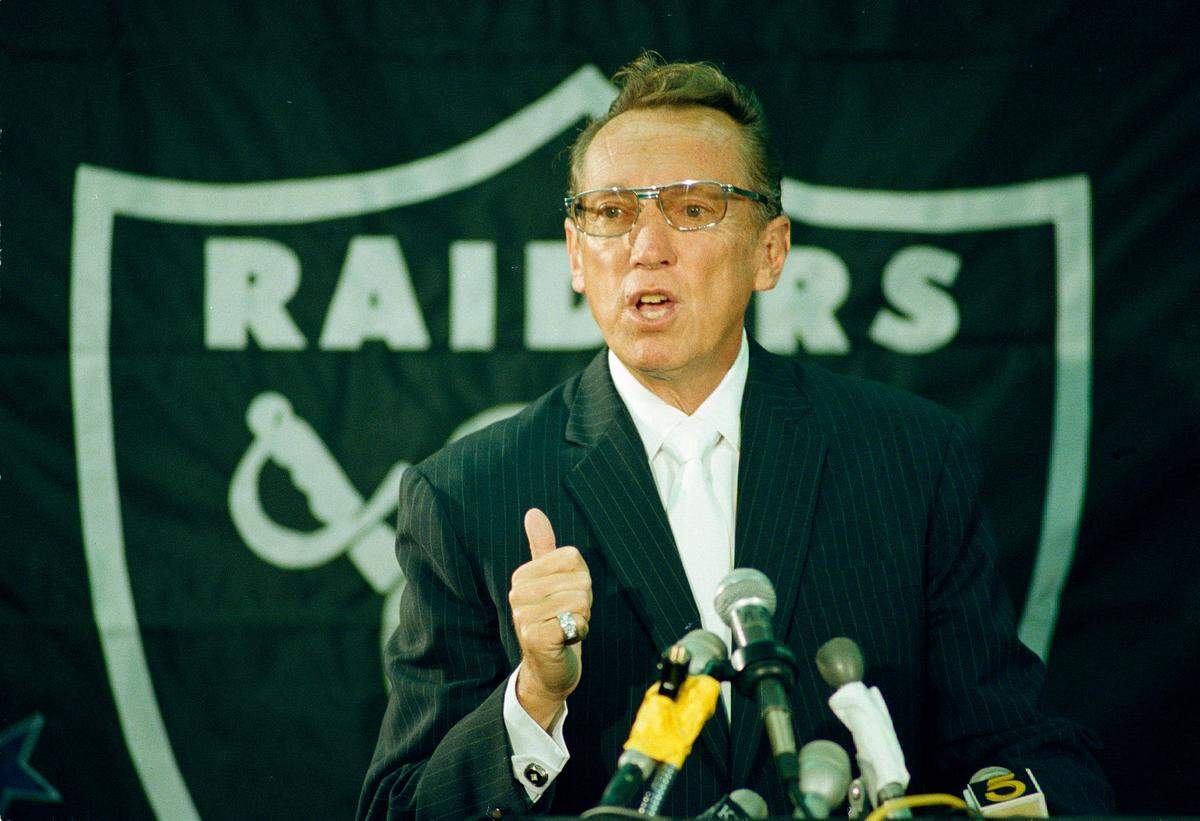
If this battle continued to the present day, how much attention do you think this would be getting?
If this happened in the modern day, it would be the biggest sports story of the year and many consecutive years. There were so many insane twists and turns. Ownerships versus commissionership stories that I cannot imagine happening today. I was amazed at the vitriol between them and how openly they discussed it. I think a lot of these things would‘ve been discussed privately and not on the record. Certainly not in front of cameras on the courthouse steps. It was pretty amazing to see how public they were in their consternation towards each other.
Talking to (ex-Raiders) coach Tom Flores the other day, he alluded to a time during the 1982 NFL Draft, it was him and then-general manager Ron Wolf making the selections. But at one time, Al Davis was in recess and called to see what is going on. Do you believe Al and Pete would’ve rather focused on football and not court battles?
He would rather much do football stuff, that’s the thing. I think both Al and Pete paid personal tolls that they would have rather not paid fighting each other. They would rather not have this fight, but they both felt strongly about their positions.
When you put this film together, I’m sure a lot of things were going through your head. But what was the biggest challenge did you face as your ideal came together?
The No. 1 challenge for this film is the fact that the two of them were no longer with us, combined with the fact that we didn’t want to tell the story through the eyes of other people who may have been there from a distance and told the story from their point of view, from the outside of this battle. There were people who were around. Tom Flores was present but he was coaching a football team. He wasn’t intimately involved in the relationship between Rozelle and Davis. He had a whole other job he was asked to do. He might’ve been able to give an antidote or two, but he didn’t know the details of their relationship, certainly not the details going back to the 60s or how they felt about each other.
There were a lot of people like that and we felt it wasn’t fair to Pete and Al’s legacy to allow these people to tell the story. We want Pete and Al to tell their own story, and that was a real challenge. I think 20 years ago we would’ve had actors try to do that and they probably wouldn’t look like Al or wouldn’t have sounded like Al. As technology changes and still makes changes. It allowed us to do this deface technology, in my knowledge to the first in sports film-making in sports documentaries. It was dipping our toe in this water of almost a science fiction world of allowing the spirits of Pete and Al to tell their own stories, rather than rely on eyewitness accounts. Because these characters are capable of telling their own stories, we had so much material; so many written transcripts and interviews and source material to write their dialogue. We felt confident we could express their words accurately.
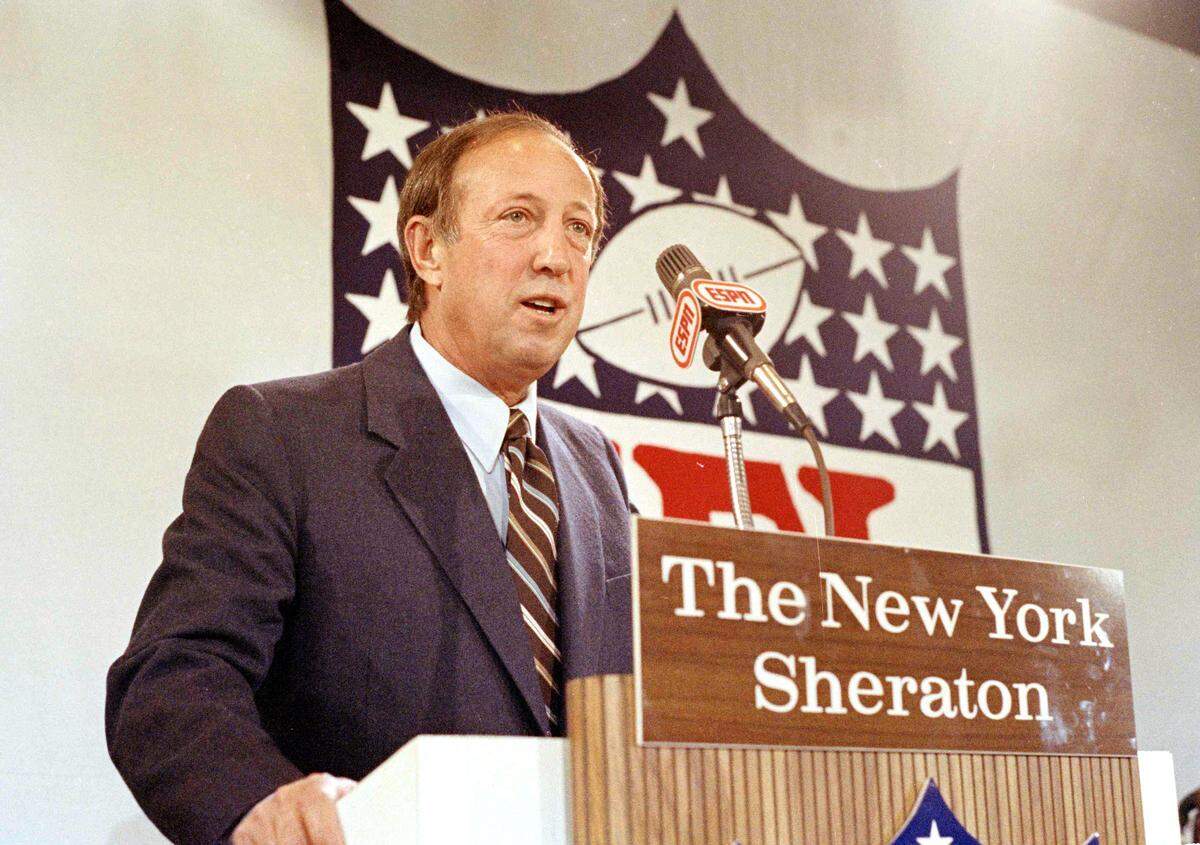
For how long have you been wanting to focus a film on Al Davis vs. the NFL and why now?
This has been on our list for a very long time in terms of doing something like this about his relationship with the league and specifically Pete Rozelle. It seemed like the perfect time to do it in 2020 to film this because I felt it was the end of something. Felt like the end of hostilities between Pete Rozelle and Al Davis. Even though they have been deceased for years, in Pete’s case decades, it felt like with the building of Allegiant Stadium in Las Vegas that the war was finally over. That the next generation, Mark Davis and Commissioner Roger Goddell, had put to rest the disagreements of the previous generation by building a new home for the Raiders franchise. It felt like this film could, not only look back at the war that was, but show that peace has finally been found between the two organizations. If you believe in the spirit world, maybe the two met.
Do you feel Mark Davis learned a lot after seeing what his father was going through against the NFL and do you feel lessons were learned?
I think so. Mark Davis told me he spent a lot of times in the courtroom with his father and I think he saw the frustration and the personal toll that his father had to pay. As he said in the film, ‘learn from them and learn the lesson that it’s sometimes better to cook with sugar rather than salt. By that I believe sometimes it’s better to have the recipe sweet than bitter.’
Al and Pete’s relationship could never be anything but bitter. It was set in stone in the 1960s when they went to war over the AFL-NFL merger. ... They had a ton of respect for each other. In another lifetime, might’ve been the best of friends. In this lifetime, there was just too much bitterness. I think both Mark Davis and Roger Goddell learned a valuable lesson from Pete Rozelle and Al Davis. That lesson was bitterness doesn’t solve anything.
How much credit do you give Mark Davis for finding that state-of-the-art stadium in Las Vegas that his father was looking for for 40 years?
KR: A ton of credit. He also learned from his father that his tie to competitiveness that the state-of-the-art stadium and facility is vital to a team’s success, financially to stay competitive in a crowded entertainment marketplace where people can stay at home and watch Netflix or Amazon Prime. Going to a stadium is no longer about the game. It’s about seeing the architecture and art work and eating the food and seeing a world class building along with the game.
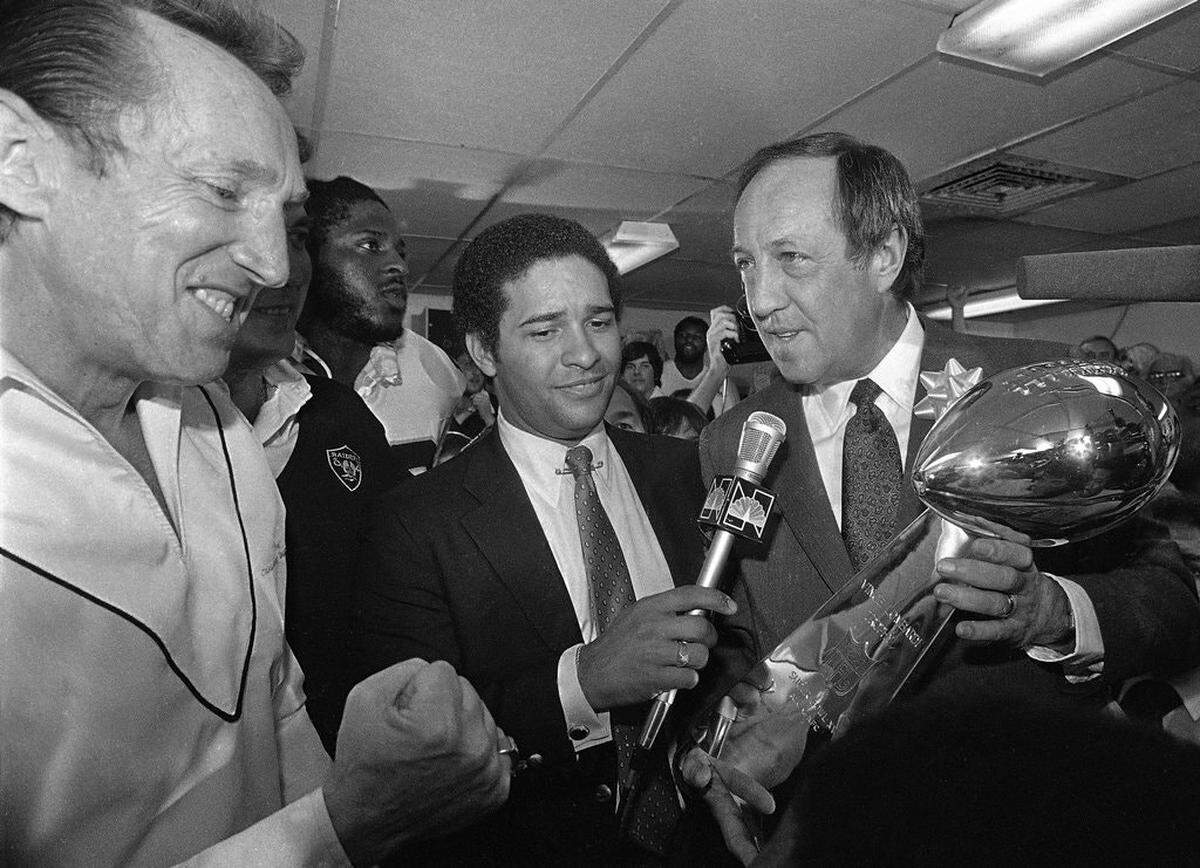
The revenue from that stadium allows the team to be competitive on the field and keeps parity in the league that Al thought was so important. It was always keeping the Raiders competitive with the richer clubs in the league. Al Davis didn’t have another business that he was sitting on with billions of dollars behind him. He made it to pay players through income from the Raiders. He needed the Raiders to be financially successful in order to attract the best players and pay the best players. I think Mark Davis learned that lesson. For the team to be good and successful, the franchise has to be good and successful, and that includes their home.