
Trump’s new ‘anti-weaponization’ fund shows how memorials can be weaponized | Opinion
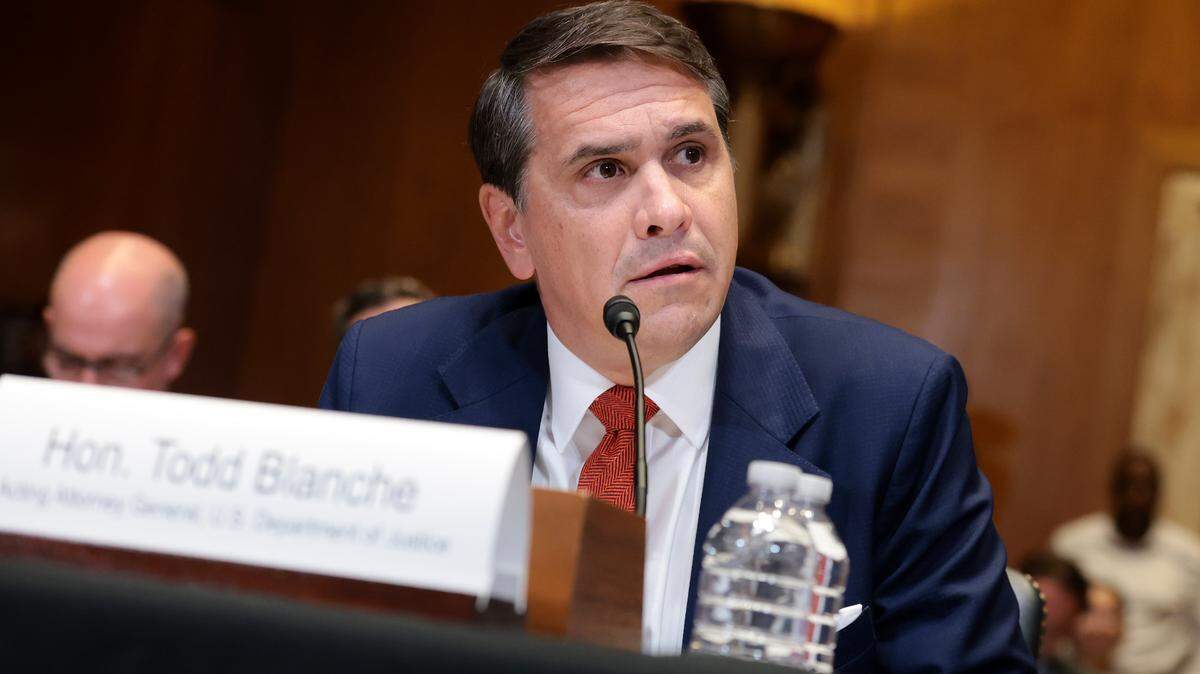
The U.S. government’s newly announced $1.776 billion “anti-weaponization” fund will compensate people “prosecuted” by the Biden administration. Acting U.S. Attorney General Todd Blanche has not ruled out that those who attacked the U.S. Capitol on Jan. 6, 2021, would be eligible.
The creation of this fund is the latest move by this administration to reframe the events of this day. President Donald Trump’s first move this term was to pardon all those convicted for participating in the storming of the Capitol. Now the day’s events may prove downright profitable for them.
Jan. 6 provides a fascinating example of how memorials and symbols can be warped and weaponized.
The White House’s online memorial to Jan. 6 celebrates Trump’s eventual triumph at the polls, fueled by “Patriotic Americans and God’s unmistakable grace.” It goes on to say that the Capitol police were the aggressors on Jan. 6 and that Ashli Babbitt was “murdered in cold blood” by a Capitol police lieutenant. “The Democrats masterfully reversed reality after Jan. 6, branding peaceful patriotic protesters as ‘insurrectionists’ and framing the event as a violent coup attempt orchestrated by Trump.”
But who is reversing reality here? This tests the human mind. Memorials often distort and manipulate reality.
The rise and fall of Cesar Chavez comes to mind as another example of how public remembering involves a struggle to control symbols and narratives. Memory is a reconstruction of reality. Most of what we experience is quickly forgotten, but some events attract our attention. The significance of a person or an event depends upon our interests, values and identity.
A social process transforms people and events into fables and idols. We tell stories and share symbols in community with others. In telling and retelling, memories are deepened but also warped. Many stories are eventually forgotten. But some persist. They become legendary, part of the lore and mythology of a community.
This is natural and understandable. We massage our narratives to better express values and identities. Some stories celebrate heroism, others mourn loss, some gently support victims. Other stories and symbols are used as propaganda.
George Orwell explained in “1984” that “who controls the past, controls the future.” Memories and memorials are organized in the interests of power. Truths are flushed down the memory hole; lies are repeated by the powerful.
Politicized remembrance can lead us to distrust our own experience. That’s why Milan Kundera said, “The struggle of man against power is the struggle of memory against forgetting.”
Memorialization can result in strange reversals and transformations of symbols and stories. Christianity provides an obvious example. The ancient Romans used crucifixion to demonstrate power and to humiliate their victims. But Christians reinterpreted the cross and transformed it into a symbol of hope.
All this brings us back to the symbolic number 1776 and our president’s use of it. Which party does this date and other American symbols belong to? Who is a patriot and who is a traitor?
American history reminds us that these questions are not easily resolved. The Declaration of 1776 was aimed at justifying the demand for independence from the British crown. The document attempted to prove that King George was a tyrant. Today we think of the American Revolutionaries as patriotic heroes who were simply stating the truth.
But not everyone agreed. The American Revolutionaries were described by King George as “dangerous and ill-designing men” engaged in “treasons and traitorous conspiracies.” And British loyalists remained throughout the colonies. This included Benjamin Franklin’s son William, who was imprisoned by the Revolutionaries for opposing the Revolution.
Our own history shows us that one man’s tyrant is another man’s legitimate sovereign. What is patriotic to some is treasonous to others. And what some view as a political payoff is viewed by others as a reward for loyalty.
As we celebrate Memorial Day, it is important to understand that memory is used in the interests of power. Our experience is warped by the symbols, legends and myths we inherit. There is no such thing as value-neutral remembrance. That’s because memory and memorials are not only about the past. They are also about who we are today, what we value and what we imagine for the future.
Andrew Fiala is a professor of philosophy and director of The Ethics Center at Fresno State.