
In Fresno County, how sheep grazing can boost local finances | Opinion
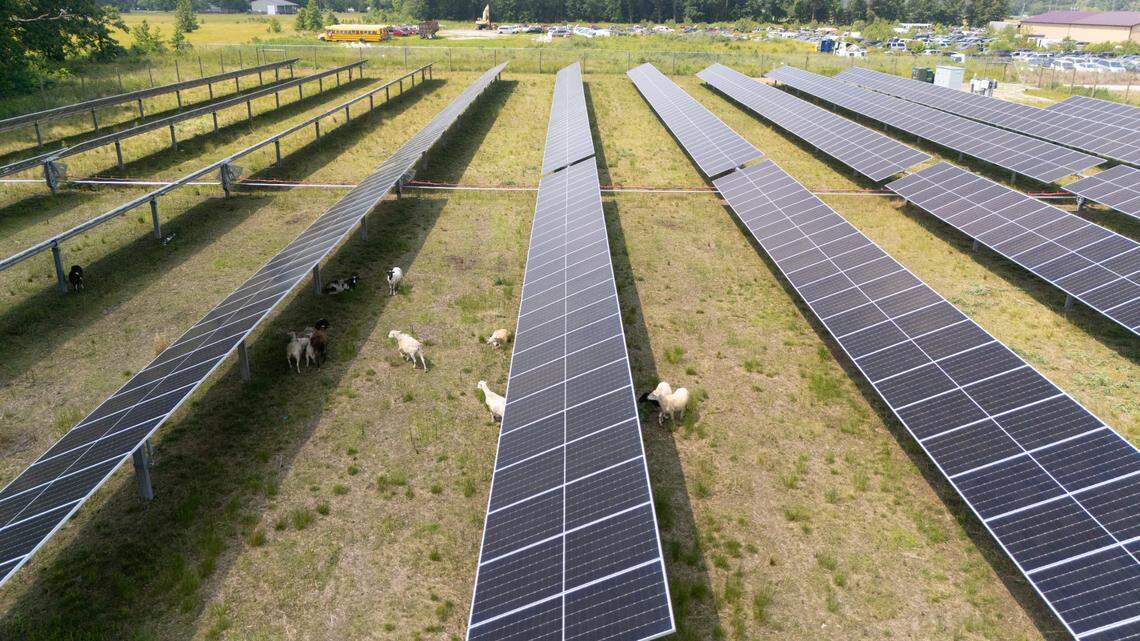
Across Fresno County, new solar and battery storage projects are being proposed that will allow us to honor our agricultural past while securing a sustainable future. For me, the approval of these projects means I can pass on a viable business to my daughters. For our community, it means jobs, energy reliability and financial certainty. And for the Central Valley, it’s proof that we can face challenges head-on by finding new ways to make the most of our land.
Here at home, one example is the Cornucopia Hybrid Project in southwestern Fresno County. It pairs 300 megawatts of solar with 300 megawatts of battery storage to keep power flowing after sunset and during heat waves. Projects like this turn low-water, fallowed acres into productive ground again, producing power instead of sitting idle. They also create steady lease income for landowners and work for local crews and businesses. At these sites, managed sheep grazing keeps vegetation low without machinery or chemicals, so the land stays in agricultural use while producing power.
For generations, agriculture has defined life in the Central Valley. Families like mine have raised sheep, grown crops and worked the land with the hope of passing it on stronger to the next generation. But today, those traditions are under pressure. Every year, more open pasture disappears under housing developments and warehouses, while water scarcity forces once-productive farmland to lie fallow. For ranchers like me, access to land has become the biggest challenge we face — without it, our way of life is at risk.
I come from a long line of sheep ranchers. My granddad raised sheep, my dad raised sheep and now I am proud to be the third generation carrying on that tradition here in California. My family also farms cherries, oranges, almonds and dryland wheat on our ranch in Clovis. It is hard work, but it is an honor to continue the Indart family name in the sheep industry.
Drought has only deepened these pressures. Fields sit idle, the cracked earth a silent reminder of how water shortages have reshaped agriculture in this Valley. Where others see loss, I see opportunity. By partnering with solar projects, ranchers like me can keep working the land in different ways.
Sheep are custom-made for solar sites. They graze under and around solar panels, keeping vegetation low without machinery or chemicals. In California, that role is even more critical because of wildfire risk. Sheep act as “Mother Nature’s firefighters,” clearing the vegetation that sparks and spreads wildfires. This protects solar infrastructure and nearby communities, while allowing us to keep producing lamb and wool at the same time.
This is about adapting with intelligence and foresight. The very reason this land lies unused — lack of water — is precisely what makes it ideal for solar generation. Solar requires virtually no water to operate, turning fallowed ground into a new kind of harvest: renewable power, economic diversification and long-term resilience.
The benefits ripple across our community. For landowners, leasing land to solar developers provides stable income where farming has become uncertain. For ranchers, projects mean steady pasture for flocks and stronger markets for locally raised lamb and wool. For neighbors, solar and storage projects create jobs, support local businesses and generate millions in new property tax revenue to fund schools, roads and public safety. And for everyone, large-scale batteries keep solar power flowing after the sun goes down, strengthening the grid and reducing the risk of blackouts during heat waves.
This is what American ingenuity looks like: two industries, energy and agriculture, working together to meet today’s challenges.
Ryan Indart is a third-generation farmer and rancher from Fresno County.