
How a public bank would allow Fresno to finance our own needs | Opinion
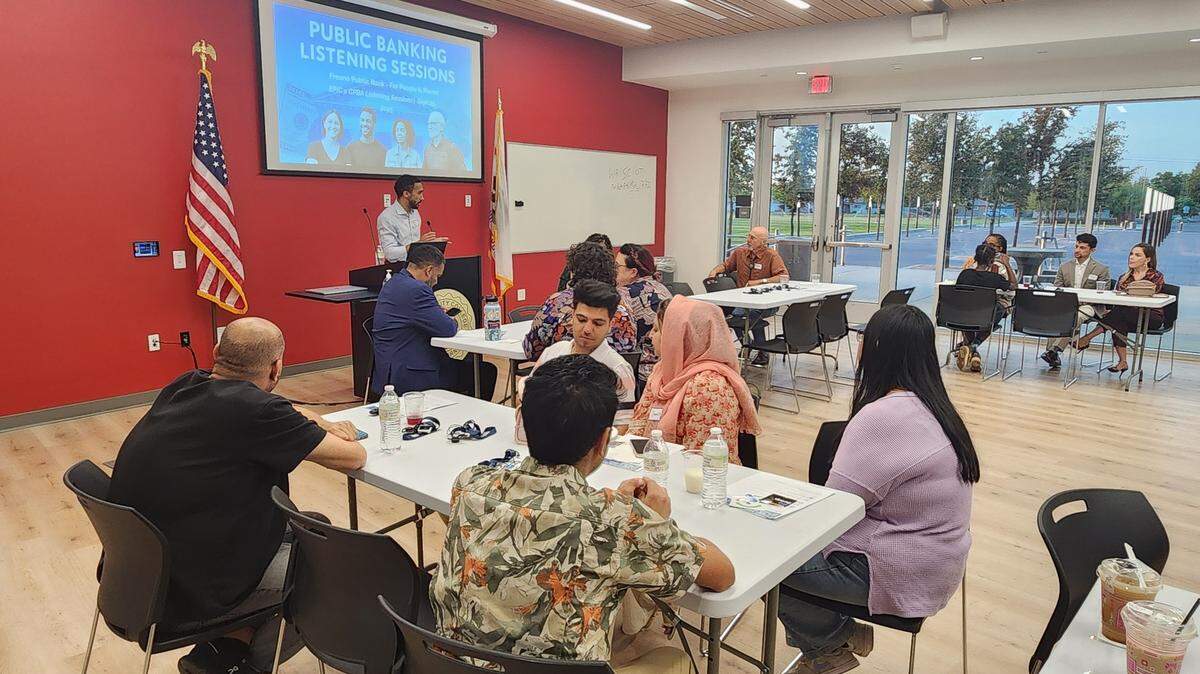
When political disagreements in Washington, D.C. threaten to halt local progress, cities like Fresno are left scrambling to keep vital projects alive. From withheld federal funds to rising borrowing costs, local governments are increasingly caught in the crossfire — and residents are paying the price. When essential funds are withheld, public banking offers a solution by leveraging public dollars to fund local priorities, cut costs and create jobs. In 2024, a study by the Urban Institute found that Fresno City and County ranked 97 and 98 out of the 100 largest cities and counties in the country for small business lending. A public bank could help fix that. That’s why, on Sept. 25, members of the California Public Banking Alliance, The Academy of Financial Education, the Central Valley Urban Institute, End Poverty in California and other community organizations gathered at Fresno City College to learn how public banking can give local governments — and their residents — greater control over their financial future. Residents voiced a range of concerns, from difficulties setting up bank accounts, small businesses being denied loans and high fees charged by banks and cash checking services.
One local businesswoman, Stacy Williams, owner of B.B’s Gelateria, shared that when she sought a loan of $10,000 for her new business, she applied to four financial institutions before finally being approved — despite maintaining a credit score above 780.
Stories like Williams’ highlight how even financially responsible entrepreneurs face numerous barriers that limit economic mobility and stunt local growth. These challenges are compounded by recent efforts from the Trump administration to withhold more than $250 million in federal funding from the City of Fresno over diversity, equity and inclusion language in grant agreements, according to a lawsuit filed in the Northern District of California. The freeze has stifled projects, incurred unnecessary expenses and distracted from other city priorities. Much of this funding had already been allocated for improvements to Fresno’s airport, local roads and affordable housing — projects that directly benefit working families and local businesses. By establishing a public bank, Fresno could hedge against such political and legal disruptions. Public banking enables cities to leverage local funds, maintain control over their deposits and reinvest in community priorities.
Instead of relying on large national institutions that may pull funding or impose high borrowing costs, a public bank would allow Fresno to finance its own infrastructure, expand small business lending and build financial resilience while saving millions in interest and fees each year. Public banking isn’t a new or radical idea. The U.S. already has a proven example: The Bank of North Dakota, established in 1919 during the Progressive Era, which is still handling finances in a state that is solidly Republican.
According to its 2023 annual report, the bank has delivered an 18% return on investment to North Dakota residents. More importantly, it has served as a stabilizing force in times of crisis. During the COVID pandemic, the Bank of North Dakota launched emergency programs, such as the Small Employer Loan Fund, to assist businesses with 10 or fewer employees. These actions kept small businesses afloat, preserved jobs and gave families breathing room when they needed it most. Imagine if Fresno had a similar tool — one designed to serve the public good rather than to maximize profit. When federal funds are withheld or economic shocks strike, a Fresno public bank could step in, ensuring that crucial community projects continue without interruption. Public banks do not compete with local banks, credit unions or Community Financial Development Institutions that are the best lenders for local projects. In fact, public banks help local financial institutions to lend more by cooperating with them in participation lending. California took the first step in 2019 by passing the California Public Banking Act, which allows cities and counties to establish public banks. The framework is already in place. What’s needed now is the political will and public support to make it a reality. Samuel Molina is the CEO and founder of The Academy of Financial Education.