
The role that Buffalo soldiers played in the Mexican Revolution | Opinion
When I was a young teen growing up in Denver, Colorado, many of my friends were Chicanos, and I became fascinated by the artwork of the Chicano Civil Rights Movement. One central theme of this art was to reclaim the great images of Aztec warriors and queens.
However, one image that stayed with me was that of Emiliano Zapata, who led the men and women (soldaderas) from the province of Morelos to fight in the Mexican Revolution of 1910-1920. And subsequently, when I viewed the 1952 film “Viva Zapata,” starring Marlon Brando as Zapata, it reignited my interests.
My close friend John Abeyta and I discussed the merits of the film per the Chicano activism taking place at the time in Denver, led by Rodolfo “Corky” Gonzales, founder of Crusade for Justice and author of the famous liberation poem, “Yo Soy Joaquín.”
Interestingly, I had several disagreements with my friends John Cortez and Richard Salazar. Both, like me, were minority youth copy boys hired at The Denver Post newspaper, and they expressed their dislike for Corky Gonzales, who charged their parents hefty sums when Gonzales was a bail-bondsman.
Furthermore, from my study of the Mexican Revolution, I realized the violence of such events; in this period of dramatic social change, every major leader was assassinated or their life ended in a nefarious manner.
From Fernando Madero to Álvaro Obregón, to Venustiano Carranza, to Pascual Orozco (killed by Texas Rangers), to Emiliano Zapata, to Victoriano Huerta, to Pancho Villa, most died as middle-aged men.
It was Villa, the “bandito,” who led a cross-border 1916 raid into Columbus, New Mexico, to acquire weapons and supplies that led African American soldiers to get involved in the Mexican Revolution south of the border. Villa’s men killed 15 townspeople before being driven back by a detachment of U.S. military stationed close by.
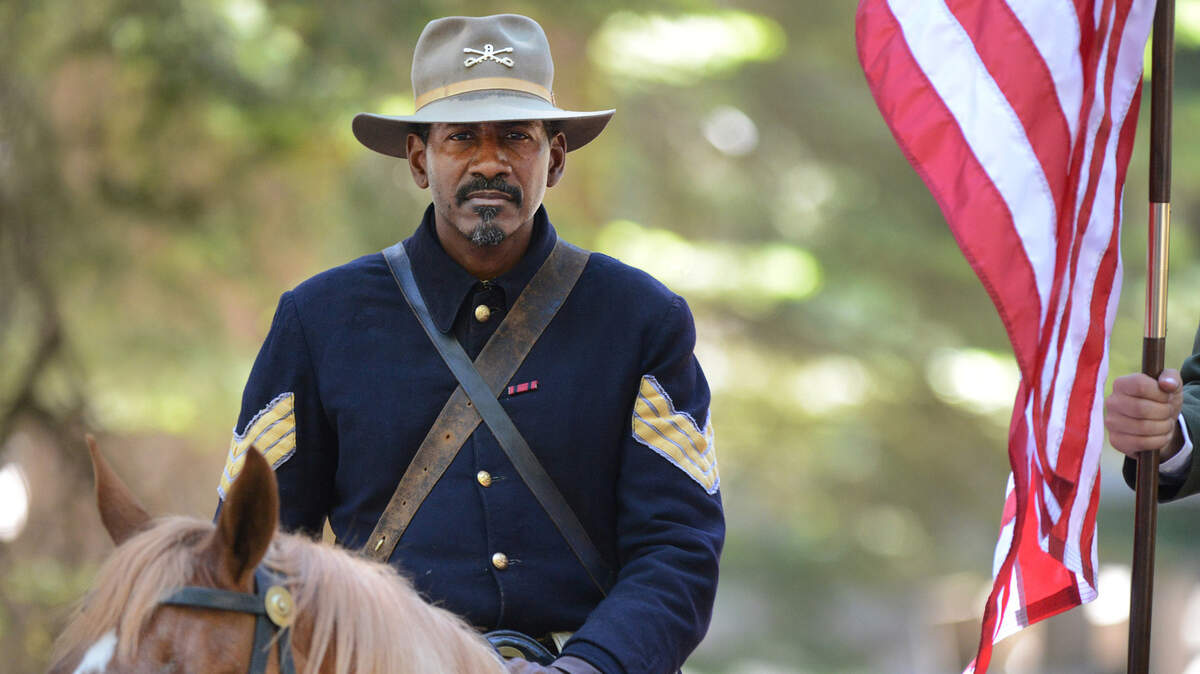
President Woodrow Wilson sent General John “Blackjack” Pershing into Mexico to kill or capture Villa, and Pershing had a company of African American soldiers under his command. Pershing’s campaign was called the Punitive Expedition.
At the time of the Villa raid, there was one Black resident of Columbus, but that number was not indicative of the number of Blacks living in the borderlands and the degree of miscegenation.
Pershing’s forces met their glory on June 21, 1916, but the irony was that it was not Villa’s forces that Pershing met on the battlefield but were soldiers of Mexico’s future president, José Venustiano Carranza, who the time was the governor of Coahuila.
Carranza saw the expeditionary force as an invading intrusion into Mexico’s sovereignty.
Pershing’s nickname, “Blackjack,” was derived from his command of Black American troops. It was these Black men who fought the Carrancistas at Carrizal, Chihuahua, Mexico, on June 21, 1916.
Pershing’s “Buffalo” soldiers of the 10th Cavalry of about 100 men, led by Captain Charles T. Boyd, encountered a Mexican force of 400 under the command of Captain Felix Gómez. Both young commanding officers demanded that the others stand down and retreat, but both headstrong commanders refused and attacked.
In the battle, both commanders were slain, and the American forces lost 10 soldiers dead and 24 captured, all Buffalo soldiers.
Gómez’ command lost the lives of 24 Mexican soldiers. The Black soldiers became prisoners of war and placed national pressure on President Woodrow Wilson to negotiate their release. An embarrassed Wilson, a Virginian who had segregated the federal bureaucracy, found himself being an advocate for Black men whom he neither liked nor respected.
The prisoners were eventually released, and the event was chronicled in the 1917 “race” movie “A Trooper of Troop K.” This film was written and produced by Lincoln Motion Picture Company, directed by Harry A. Gant and starring Noble Johnson.