
In Trump and Musk’s America, should we ‘stop worrying and learn to love the bomb?’ | Opinion
Should we worry about Elon Musk’s mandate to overhaul the government? Musk, the world’s richest man, runs multiple companies. Despite this workload, he has spare time for the Department of Government Efficiency (DOGE), saying recently that “DOGE is the woodchipper for bureaucracy.”
Some may think Musk’s mandate should have been revoked after he gave a strange Nazi salute at President Donald Trump’s inauguration. But Musk gave nearly $300 million to Trump’s campaign and the president likes him.
“Elon is doing a good job,” said Trump, according to The Hill. “He’s a smart guy. Very smart.”
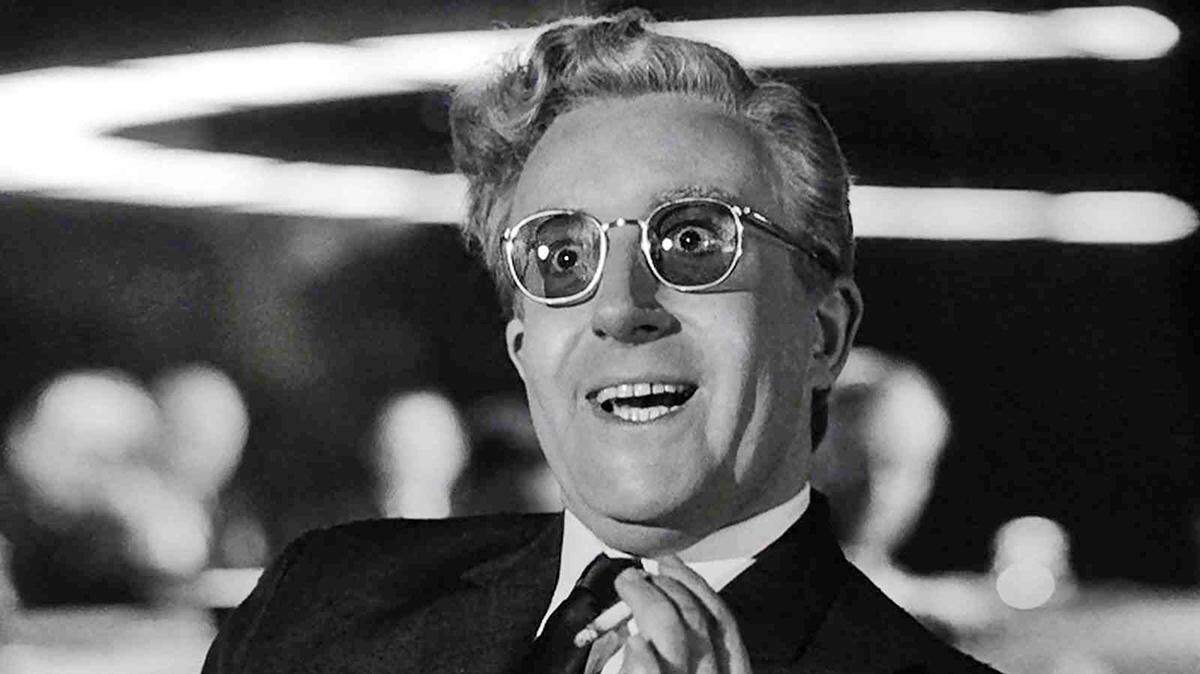
This almost seems like some elaborate parody. Stanley Kubrick’s 1964 movie “Dr. Strangelove” comes to mind. The titular character — an expert consultant whose arm would spontaneously extend in a Nazi salute — had a bizarre plan to repopulate the Earth after nuclear doomsday. The satirical lesson of the film was to “stop worrying and learn to love the bomb.”
Should we stop worrying? When Joe Biden left office, he worried about oligarchy and technocracy.
“Today, an oligarchy is taking shape in America of extreme wealth, power and influence that literally threatens our entire democracy,” Biden said in his farewell speech, further warning against “a tech-industrial complex that could pose real dangers for our country.”
Biden, of course, assumed that democracy is valuable in itself. But is it? Democracy is unstable and inefficient. Congressional logjams and partisan bickering make it difficult to get things done. Elections disrupt the status quo. And we, the people, disagree about what is valuable and true.
Oligarchic technocrats may think that smart efficiency experts armed with artificial intelligence can do a better job than seasoned bureaucrats and elected officials. The problem is that we fundamentally disagree about who is smart and what kind of expertise is valuable. As we are seeing, wealth buys access for cronies and kooks, while creating a facade of intelligence.
These are the fatal flaws of so-called “epistocracy” — a fancy word meaning “rule of experts.” This idea goes back to Plato, who thought that the ideal society would be ruled by a wise and virtuous philosopher-king. But there are no wise and benevolent kings. We disagree about what counts as wisdom and virtue. And rich oligarchs are good at pretending to care.
Jason Brennan, a professor at Georgetown University, has defended epistocracy, arguing that democracy fails because it empowers ignorant, disengaged “hobbits” and reckless, ideological “hooligans.” Brennan explains that in a democracy we put our fate “in the hands of ignorant, misinformed, irrational, biased and sometimes immoral decision makers.” Brennan’s solution is “rule of the knowers.”
Expertise is obviously valuable. We want experienced pilots to fly our planes, and smart dentists to fix our teeth. But expertise in one domain does not necessarily transfer to another. We don’t want dentists to fly our planes, or pilots to fill our teeth.
Nor are experts politically or morally neutral. Experts are mere mortals. They have values, interests and biases. Smart people disagree about all kinds of things. And sometimes even smart people do dumb things.
That’s why there ought to be checks and balances. As James Madison said, “If men were angels, no government would be necessary. If angels were to govern men, neither external nor internal controls on government would be necessary.” The system of checks and balances is designed for a world of hobbits, hooligans and cronies.
Moreover, the government is not a business, an airplane or a dentist’s office. The law is not a machine to be tinkered with by engineers or a system to be hacked by technocratic geeks.
Rather, the legal system expresses and defends fundamental values. It is itself the result of historical struggles for justice. Democratic government ought to reflect the will of the people, as expressed through elections that authorize elected leaders to make decisions on our behalf and in the name of the common good.
Biden’s warning of doomsday for democracy is worth revisiting. But by the time Dr. Strangelove takes center stage, it may already be too late. One hopes that our system of checks and balances is resilient enough to survive the chainsaw. If not, we may have no choice than to stop worrying and learn to love the woodchipper.