A Fresno family honors its Cambodian roots thanks to Jimmy and Rosalynn Carter | Opinion
Every morning the alarm clock goes off at 2 for my parents, just as it has for the past 35 years. They’re Cambodian refugees who have survived in this country by running a donut shop in Fresno.
They take only two days off a year: Christmas and the day after. Freed from shop duties, their only wish is that I drive them from Fresno to Southern California in search of the perfect bowl of pho, and bags of fresh-baked cha quai — a deep-fried bread that isn’t made in the San Joaquin Valley.
“I’m looking for a 10,” my dad said, holding both hands up. He’s taken to rating bowls of pho lately, and he had high hopes for a pho house in Westminster.
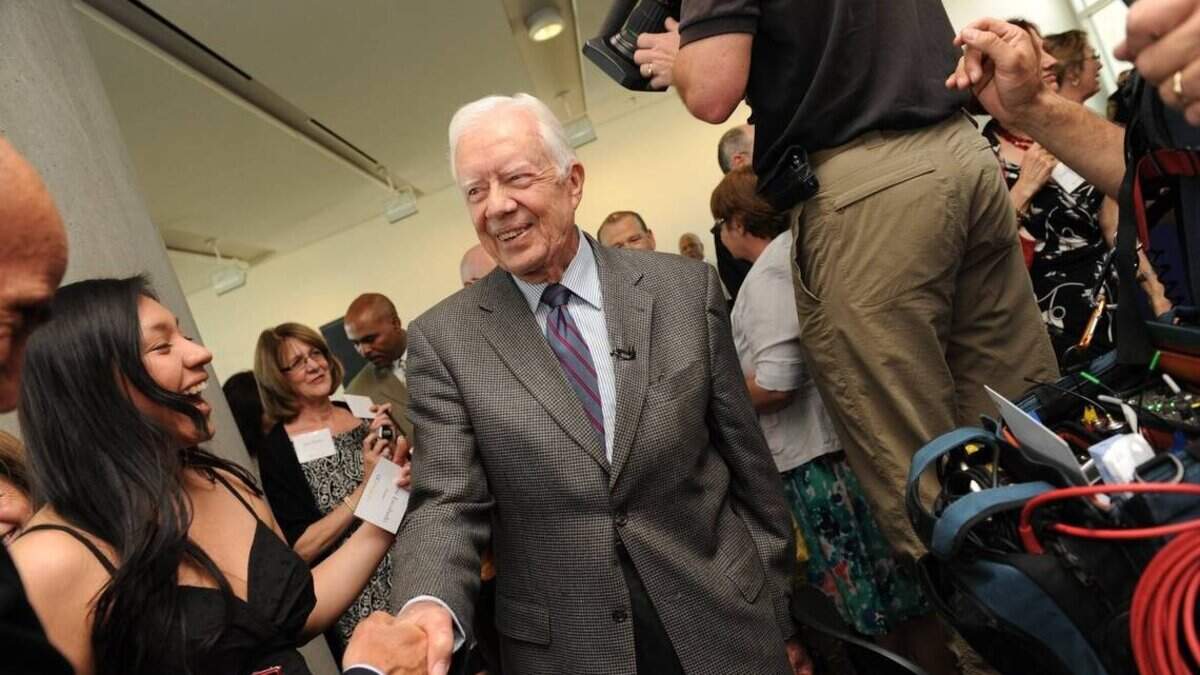
Our annual trip to Southern California has become something of a pilgrimage, a journey to a place that marks a rebirth for people like my parents who endured war and genocide. That rebirth would not have been possible without the compassion of Jimmy and Rosalynn Carter. One of the greatest legacies of our 39th president and first lady — that they opened the door to America for hundreds of thousands of Southeast Asian refugees — has remained largely forgotten.
In the 1970s the Vietnam War, and then the Secret War that ravaged Laos and Cambodia, thrust the region into chaos and created waves of refugees fleeing starvation and genocide. I was one of those children.
Seeing television footage of Cambodians crossing the border into Thailand, Rosalynn Carter was the first to act. She flew to the camp where my parents and grandparents had found refuge and helped fix a broken funnel of aid. Back in the U.S., she urged her husband to lift restrictions and allow more refugees into the country. President Carter ultimately signed the Refugee Act of 1980, and that year, more than 200,000 refugees were admitted, most of them from Southeast Asia.
No other state has been more shaped by the migration of these refugees — Vietnamese, Cambodian, Laotian, Hmong and Mien — than California. From Garvey Avenue in the San Gabriel Valley, to Anaheim Street in Long Beach, to Bolsa Avenue in Westminster, their entrepreneurial spirit has transformed the cultural, physical and political landscape.
I was 2-years-old when we left the camps and landed in Echo Park. My parents did what so many Cambodian refugees before and after them did: My father learned how to make maple bars and apple fritters and my mother perfected her ham-and-cheese croissants. Over the next two decades, my parents moved my brother and I to Tehachapi, then Santa Clarita and finally to Fresno, opening up a donut shop in strip malls in each city.
Even as I worked my way through college, became a TV producer and later, a radio reporter, I’ve always kept my weekend shifts at the shop.
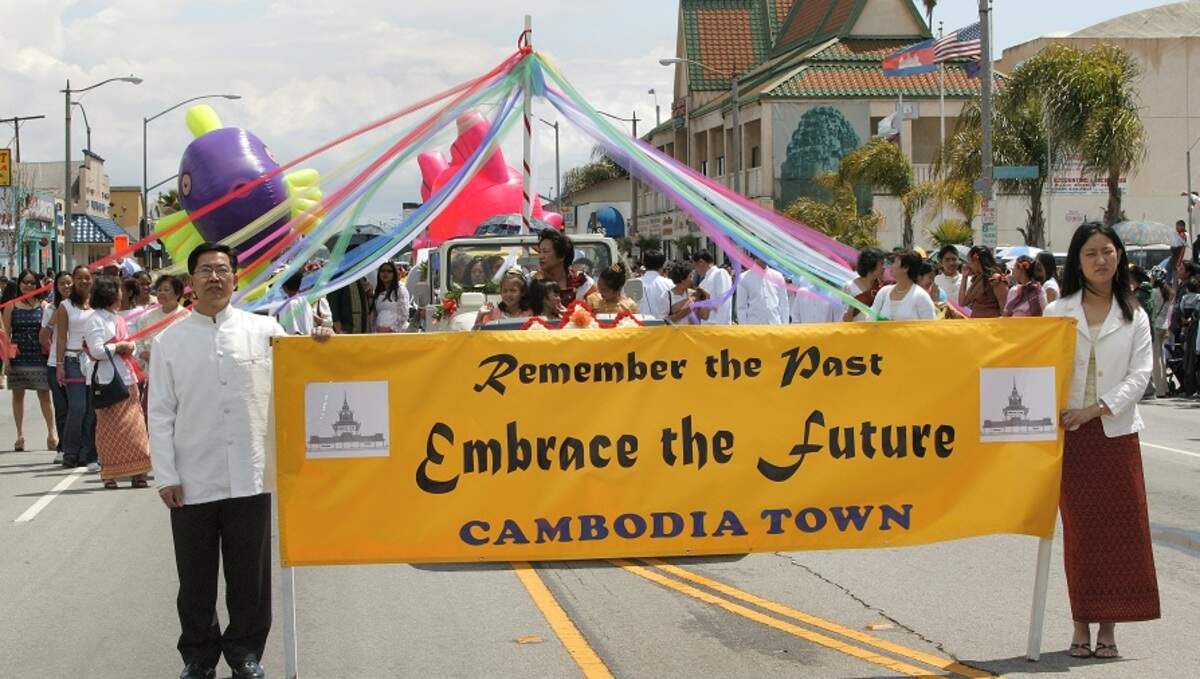
The day of our trip, Dec. 24th, we worked a morning shift and finished closing up. My dad reclined his passenger seat and was soon fast asleep. My mom stretched out in the back and watched the orchards go by on Highway 99. Four hours later, we reached Long Beach, a city with the largest Khmer population in the U.S. Cambodia Town is a one-mile stretch of restaurants and shops on Anaheim Street. Our destination was Hak Heang, a Long Beach staple. We ordered a full table of shrimp, mussels, grilled beef sticks and papaya salad, rice and traditional Samlor Machu Youn (Cambodian sour soup).
On Christmas morning, we rolled into Westminster, where the mayor and three out of four council members are Vietnamese-American. Other than Christmas lights on Bolsa Avenue in Little Saigon, you would never know this was a holiday. Pho houses beckoned on nearly every corner. Bakeries showed off glossy-wrapped pastries and glowing cases of fresh-baked pork and egg baos.
To sniff out the best pho spots, my dad only needed to see the line of people waiting outside the door. At Pho 79, the line wrapped around the building. We grabbed a table and watched a busboy, an elderly Vietnamese man who pulled up with his cart, empty and stack dishes and spoons. He didn’t waste a motion. As he bent down for a final towel wipe of the table, the host had already signaled over the next guest on the waitlist.
“I give this a 6,” my dad said with a solemn slurp. “Not sweet enough.” He motioned the server to bring him a couple packs of sugar.
We headed to Asian Garden Mall, the largest Vietnamese-American shopping center in the U.S. Since 1987, the two-story mecca has stood in the heart of Little Saigon with hundreds of Vietnamese-owned shops hawking food, clothes, jewelry, home decor and more. My dad made a beeline to the food court, where cha quai, the fried bread, was stacked high. My mom’s eyes searched the maze of stores.
“This is new. They didn’t have this last year,” she said, touching a horse statue next to a column. In Vietnamese culture, horses are a symbol of good luck and health.
Up ahead at the A Dong Supermarket, we loaded up on fresh fruit, fish, cookware, spices and snacks. Our stomachs full, I drove my parents back to Fresno. They both fell asleep, and I was left with my own thoughts, of the old homeland and the new, and the bridge between the two erected by Jimmy and Rosalynn Carter.
I wondered how many of the people I sat next to, slurping our bowls of pho, remembered or knew at all the path that the Carters paved for us to be here. There were no streets named after them, no plaques commemorating what they had done. Heading down the Grapevine, our trunk was weighed down with mung bean cakes, banh mi bread, candied peanuts and cookies, a whole roast duck swimming in fat drippings, grease-soaked bags of cha quai, green tea imported from Vietnam promising to lower cholesterol and blood sugar.
And finally, two horse statues — for good luck and good health.