
Agricultural burning began in 1859. It ends in the Central Valley on January 1, 2025 | Opinion
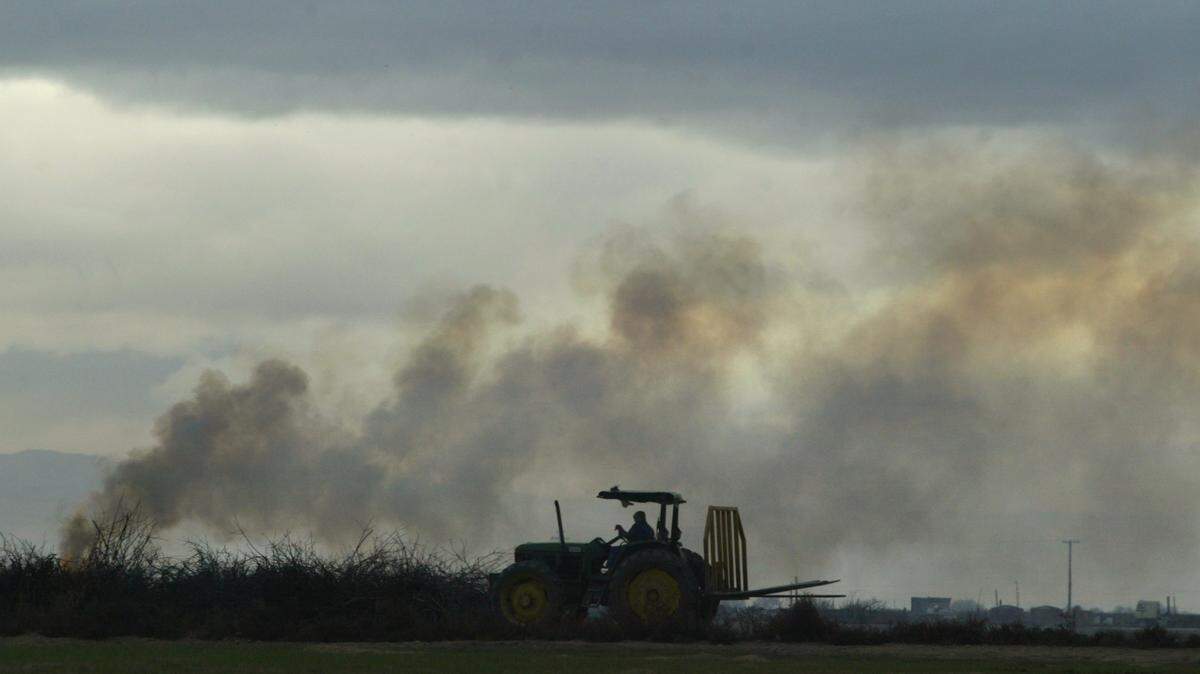
It was a brisk winter morning in 2003 when I stood before my colleagues in the California State Senate, armed with a vision: to eliminate agricultural burning in the San Joaquin Valley, a practice that dated back to 1859.
For generations, this archaic method of disposing of agricultural waste had blanketed cities with plumes of smoke, worsening air quality in a region already struggling with some of the nation’s highest asthma rates. That day, I introduced Senate Bill 705, the first step in what would become a 20-year battle for cleaner air and healthier communities.
As a son of the Central Valley, this wasn’t just legislative work, it was personal. I grew up watching friends and family struggle with respiratory issues, seeing school days lost and hospital visits spike after burn days. Yet, despite the mounting evidence of harm, the agricultural industry resisted change, arguing that the cost of alternatives was too high.
My job was to challenge that narrative while ensuring the livelihoods of farmers were not sacrificed in the process.
The passage of SB 705 should have marked the beginning of the end for agricultural burning. The bill set 2010 as the deadline for a phased prohibition. But political resistance and a loophole — burning could continue if “economically infeasible alternatives” were unavailable — allowed the practice to persist. I underestimated how deeply entrenched the status quo was.
Year after year, I watched with frustration as local air districts postponed the ban, issuing hundreds of thousands of permits that sent millions of tons of organic matter up in smoke.
In 2010, as I prepared to leave the Legislature, I worried that the momentum for ending this harmful practice would fade without constant pressure. I had seen too many hard-fought battles unravel because of delays and compromises. That’s when I resolved to continue the fight from a new vantage point.
A few years later, I joined the California Air Resources Board (CARB), knowing it was the key regulatory body that could bring this issue to a definitive close. My transition from legislator to regulator allowed me to refocus the fight and ensure that agricultural burning would not remain an unresolved chapter of my career.
At CARB, I carried the lessons of my legislative battles and the voices of my constituents with me. By 2021, after nearly two decades of delays, CARB finally set a hard deadline: agricultural burning in the San Joaquin Valley would end by Jan. 1, 2025. It was a moment of vindication, but it was not without compromise. I had pushed for an immediate ban, but I understood the need to give farmers time to adopt new technologies and practices.
This time, however, there would be no delays, no loopholes and no turning back.
Even as the deadline was set, arguments from opponents persisted. First, it was about the lack of alternatives. Then, it was about the closure of biomass facilities, which had been a cornerstone of waste disposal. Finally, it became about funding — how smaller growers could afford the chippers and air-curtain burners needed to replace burning. The state stepped up, allocating $180 million to support this transition, but challenges remained.
Throughout this fight, I leaned on the voices of those most affected: parents who had to pull their children from school on smoky days; farm workers who toiled in fields cloaked in ash; and environmental justice advocates who reminded me that this wasn’t just about air quality, it was about equity. For too long, the health of predominantly Latino, low-income communities in the Valley had been treated as collateral damage.
The San Joaquin Valley, home to some of the hardest-working farmers and farm workers, also bore the brunt of the state’s worst air quality. This was a moral issue as much as it was a policy one.
Finally, a unanimous CARB vote marked the culmination of this journey just a few months ago. When Jan. 1, 2025, arrives, it will mark the end of over 150 years of agricultural burning in the Valley.
Even as we celebrate this historic milestone, it’s important to acknowledge the work that remains: Enforcement must be robust to ensure compliance. The state must continue to support farmers, especially smaller growers, to transition to cleaner alternatives. Education campaigns will be essential, as will incentives for emerging technologies like air-curtain burners, chippers and soil incorporation techniques.
I recognize that not everyone sees this as a victory. Many in the agricultural community still feel burdened by this mandate. I have met with farmers who worry about the financial implications and the logistical challenges of managing waste without burning. Their concerns are valid. As we move forward, we must ensure that their voices are heard and their needs addressed.
Cleaner air cannot come at the expense of economic devastation for those who feed our state and nation. But I am confident that with the right resources and innovation, we can achieve both.
When the smoke clears for good on January 1, I hope the next generation will breathe a little easier.