It is unwise to embrace leaders who promise the moon while standing in the mud | Opinion
I attended a pep talk recently that used the phrase “know thyself” as its guiding motto. I was intrigued. I often discuss that commandment in my philosophy lectures. Philosophers see this as an invitation to plumb the depths.
Human beings are opaque. There are mysteries lurking beneath the surface. Motivational speeches don’t usually dwell on that darkness. Inspirational rhetoric skates on the surface without delving into the abyss of self-knowledge.
A pep talk aims to remind us that we are good enough and smart enough, and that we should not give up hope. But is any of that true? Are we really good enough? Are we as wise as we think we are? And is it reasonable to hope that a broken world can be repaired? These questions expose our limitations, leaving us humbled.
The humility of philosophical self-reflection differs from religious zeal and political enthusiasm. Zealous believers affirm dogmas with pious faith. Political passion fires up movements. But are these dogmas true? And is it wise to embrace leaders who promise the moon while standing in the mud?
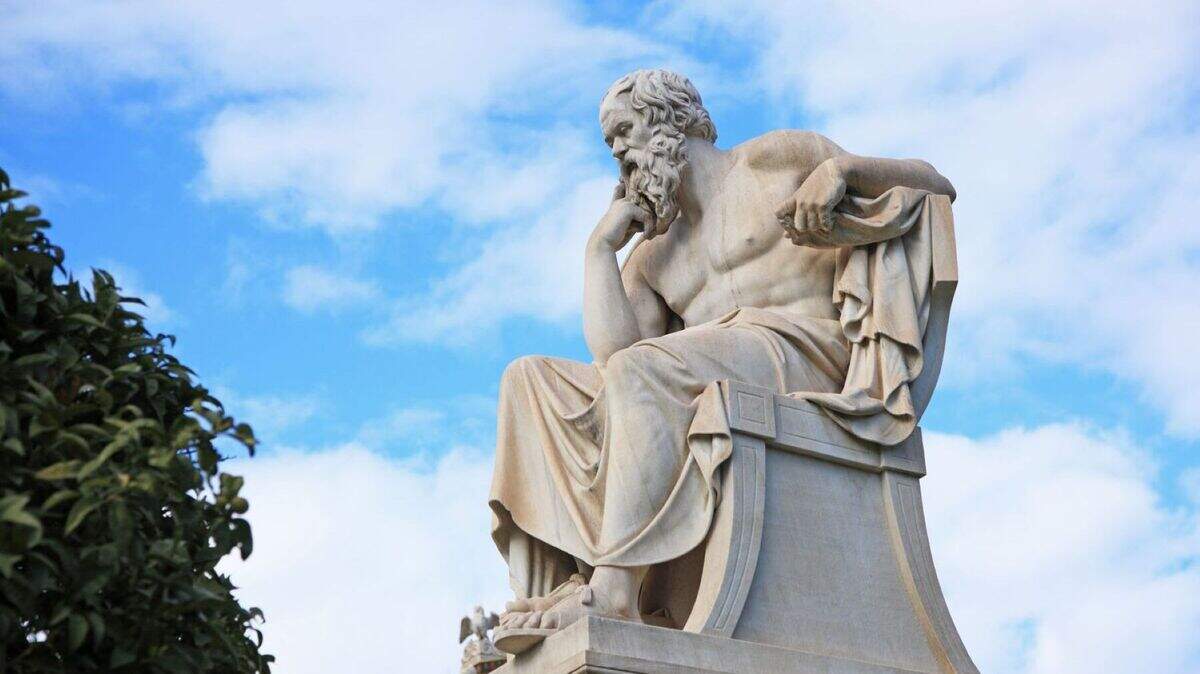
The ancient philosophers assumed that none of us really know who we are. Socrates described human existence as a lifelong quest after self-knowledge. He famously said, “The unexamined life is not worth living.” In his encounters with pious believers and political enthusiasts, Socrates pointed out that they were lacking in wisdom and self-awareness.
Those who claim to be virtuous and wise are often deluding themselves. Sometimes they are also picking our pockets. And sometimes they break our hearts.
Understanding this common human failing points to the importance of the study of humanity, or as we say in academia, “the humanities.” The study of the humanities shows us the best and worst of the human experience. We witness great art, music, and literature. We also learn that the villains of history, politics, and literature typically lack self-knowledge. And we discover that even beloved heroes have feet of clay.
The study of humanity also reminds us that things fall apart and fail to make sense. Or as Shakespeare put it in Hamlet, “The time is out of joint.” This sense that things are broken and disjointed applies today, just as it did centuries ago, when something was rotten in Denmark.
Shakespeare is also the author of the widely-used motto “To thine own self be true.” Self-help speakers employ this quote as banal encouragement to follow your dreams. But the phrase is ironic and puzzling. Ethics require us to be true to others, and to the moral law—not to ourselves. And if we are lacking in self-knowledge, how can we be true to ourselves? Which dreams should we follow? Which version of the self is the one we should be loyal to?
Shakespeare also reminds us that there are “more things in heaven and earth” than we dream of, as Hamlet put it. There are ghosts and apparitions, illusions and wishful thinking. The uncanny nature of human existence provides another remedy for arrogance.
There are no easy answers for deeply human problems. But we desire shortcuts and saviors. Some of us want a diet pill to control our appetites. Others fall for get-rich-quick schemes. And some long for a messiah who will heal the country, the world, and the soul.
There are no quick fixes for the problems of human existence. The mantras of self-help falsely suggest that our dreams are easily and permanently satisfied. The study of humanity reminds us that “all men are mortal,” and that dreams can become nightmares. Wicked people cause terrible suffering. Hearts are easily broken. And gullible people give themselves, their fortunes, and their countries away to gurus and dictators.
The root of many human problems is a failure to study humanity. The tyrants of history are, after all, human beings like us. But the study of humanity can also inspire greatness. Shakespeare and Socrates are also humans, just like us.
And in the end, we learn that it is exceedingly difficult to lead a good life. The pursuit of wisdom begins with humble recognition of that fact. We mostly don’t know who we are, or what is good for us. But we can learn, if we study humanity and take seriously the commandment to “know thyself.”