Young people are inquisitive & intelligent. But some parents fear their critical thinking | Opinion
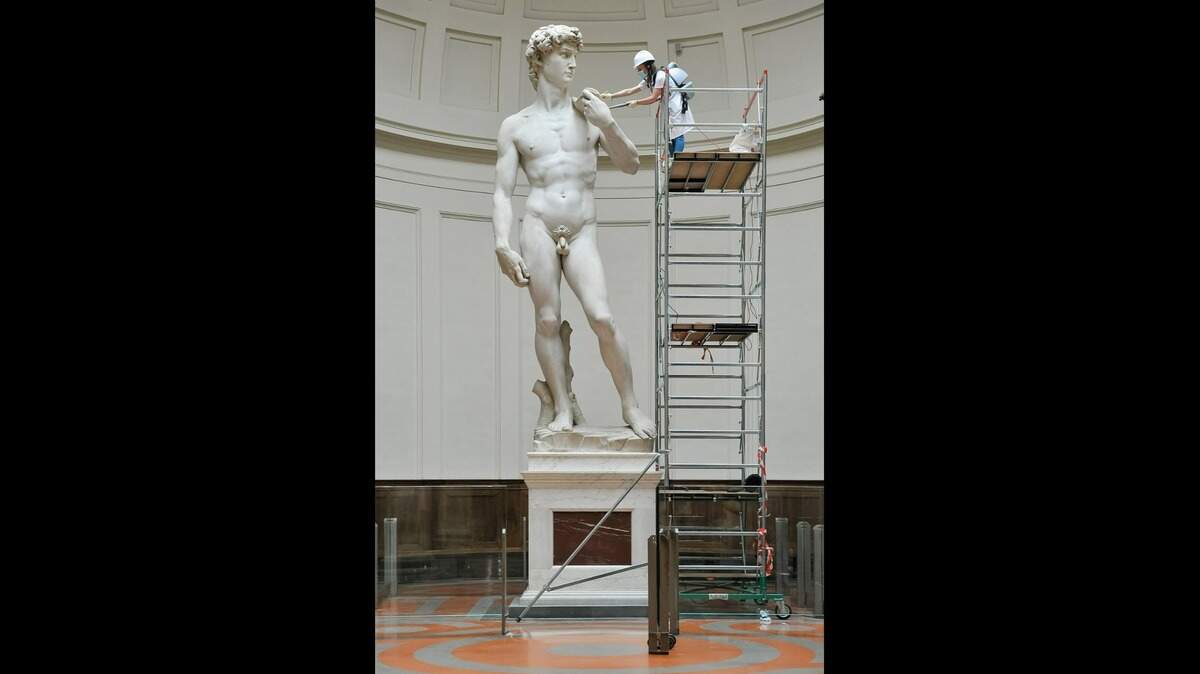
Book bans and prohibitions on art and images continue across the country. A Florida principal was forced to resign after an art teacher at her school showed Michelangelo’s David to sixth graders without notifying parents. A graphic novel about Anne Frank was recently banned in Florida. And in one Texas county, they are considering closing public libraries in response to a federal court order to return banned books to the shelves.
This is often described as a matter of parental control. In the Michelangelo case, parents complained that the David sculpture was “pornographic.” And those parents appear to have veto power.
I’m sympathetic to the idea that there should be age-appropriate content. But what worries me is that we seem to misunderstand the difference between pornography and art. And we generally don’t think carefully enough about the power and value of art, literature, and an education in the humanities.
There is a special irony in the ruckus about Michelangelo’s David. This nude sculpture is a portrait of a character from the Bible. David is a rebellious youth who refuses to comply with the stodgy concerns of his elders. David’s nudity is symbolic. He fights Goliath without armor since the armor loaned to him by his elders was too big.
The nakedness of Michelangelo’s statue is a symbol of David’s youthful courage and his resourcefulness. He defeated Goliath with only a stone and sling. And this young hero managed to offend the ruling elders of his tribe.
The statue is a fitting representation of the Renaissance, which was a youthful turn away from the stuffy Middle Ages. Renaissance artists celebrated the creative energy of the human spirit. The nakedness of the statue can open a whole world of inquiry. It is only naughty if we make it so.
Among the things that education in the arts and humanities can teach us is to understand the difference between pornography and art. Pornography is literally pictures of prostitutes. It sells sex and stimulates what Plato called the lower part of the soul. But art aims higher. It is intended to open our minds, and make us think.
Of course, the line separating the naughty from the noble is fuzzy. But bans and prohibitions direct our attention to the naughty side of that line. This is a natural feature of human curiosity. If something is hidden, we want to see it. Taboos attract our attention.
Those who advocate bans and prohibitions think they can control the culture and the minds of the youth. But in the smartphone era, the dream of control is a delusion. Banned images show up instantly on websites. And in many cases, an official prohibition will drive people to seek out the taboo object.
Rather than simply banning words and images, we need more and better education in critical thinking, art, and the humanities. Human beings are curious and intelligent beings. We respond better to arguments than to coercion and manipulation.
And in our era, when degrading and ridiculous images of sex are a click away, we desperately need better education about pornography. We also need more and better art, and images and ideas that appeal to our better angels.
When I was in high school, I took a humanities course that included lots of Renaissance art. This was at a public high school in Northern California. Our teacher — I still remember his name, Mr. Pierstorff — had the courage to show 16- and 17-year-olds nudity.
Maybe we giggled at first. But I don’t remember anything naughty going on in that class. Rather, the class opened a world of ideas. It encouraged us to ask critical questions. We learned how words and images can change the world and uplift the human spirit.
Our world is awash in violence and sex. We need better images. And we need to empower people to understand the difference between the naughty and the noble.
In teaching this to the youth, we should assume that young people are like David himself: inquisitive, courageous, and intelligent. We can provide them with the armor of critical thinking. But again, it is worth noting that David rejected the armor of his elders, preferring to fight Goliath naked and on his own terms.