A tax hike to increase Clovis PD staffing? Conservative writer says it will fall short
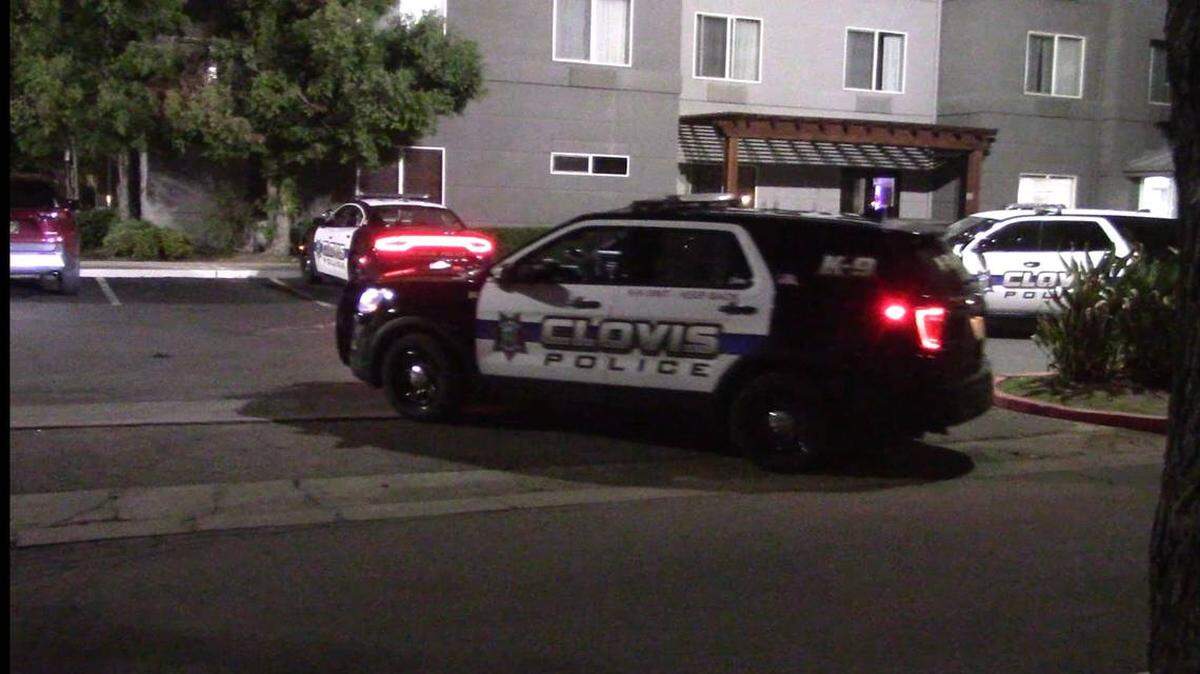
Part of the “Clovis Way of Life,” and a major factor behind our population growth, has been our designation as the “safest city in the Valley.” That is why alarm bells went off when Clovis Police Chief Curt Fleming made a presentation to the City Council in early November 2021 exposing a staffing shortage and related department concerns. Councilmembers and other city leaders were shocked at the severity of the situation. Some felt the need to dig deeper to see if the issue was simply a lack of funding or if there were other contributing factors.
Enter the Citizens Advisory Commission, made up of 25 community members selected by the council, tasked with hearing from the chief and city staff to lay bare the police department budget and staffing trends as well as getting a crash course in city government and finance.
I was asked to be on the commission and was anxious for the opportunity to study the situation and look for realistic, effective solutions — preferably ones that did not involve increasing taxes, but, to be fair, everything had to be on the table.
After six meetings, facilitated by an extremely competent and helpful city staff, the commission found that the police department was in fact significantly understaffed and the funding required to bring the department up to current needs — an additional $9.2 million annually — could not be found in the city’s General Fund (the discretionary portion of the budget). For perspective, the general fund comes in at $86.2 million, and $64.4 million of that already goes to public safety. So, reallocating $10 million a year is not a realistic option.
That concluded what I assumed was just phase one and I was ready for the commission to investigate the nitty gritty of it all. But, instead, the commission’s work was ended with meetings still on the calendar. We wrapped up and, based on a survey of the commissioners, submitted findings that only a new tax would create the revenue needed to seriously tackle the problem with the immediacy it required.
Ultimately, the “work” of the commission boiled down to nothing more than sitting through a class and passing the two-question quiz at the end: “Do we need more police staffing?” and “Do we need a new tax to fund that?”
I wanted to explore solutions that would also take into consideration how we got in this jam to ensure we do not wind up back here again. Clovis has been growing for the last couple of decades through residential development approved by the City Council. The population growth has not caught anyone off guard, but somehow the growth plans did not include adequately increasing the police department to serve the expanding population. If Clovis voters agree we should tax ourselves to help fund public safety, how do we know we will not be right back in the same understaffed debacle down the road? Questions about these things were raised in the commission, but we never got to the point of addressing them.
From someone who was there, let me give you the bottom line: property and sales taxes are the only options that even come close to raising the amount needed. Instead, on June 6, the City Council voted to put a tax proposal on the November ballot titled “City of Clovis Public Safety Improvement Measure.” What is this measure? A general tax that increases the transient occupancy tax (known as the hotel tax) from 10% to 12% and would increase revenues by $500,000 annually – only about $9 million short of the need.
Adding another monkey wrench in all of this, next month begins contract negotiations between the city and the Clovis Police Officers Association. That means Chief Fleming’s figure of $9.2 million more needed per year is likely to be outdated and understated in mere weeks.
The situation with Clovis police is years in the making and deserves thoughtful, long-term solutions. The current plan is to address this for the price of one single-family home. Does that make sense to anyone? I fully expect the City will be back looking to get another, heftier and more serious, tax measure on the ballot within two years. It is hard to imagine the voters welcoming a second round of tax talk almost as soon as the ballots from this measure are counted.
Kicking the can down the road is a common practice in politics, but this time, we just may find out what happens when you run out of road.