Civics 101: The right to vote in America wasn’t always equal, says Fresno State professor
When the Constitution was ratified in 1788, no right to vote was included. The only mention of citizen voting was in reference to voting for members of the House of Representatives. If citizens had the right to vote in for the largest house in the state legislature, they were also eligible to vote for members of the House of Representatives for their state.
This means that the Constitution left determination of the right to vote up to the states, and in most states, voting was limited to white, land-owning males who were over 21. Some states even included religious requirements. Turnout in the earliest elections was low. In 1789, turnout was only 11.6 percent. If you limit it to only the voting eligible population, it was still only just over 21 percent.
In the early 19th century, the country began to move towards a more democratic society, one where governors and state legislators were directly elected, rather than appointed. This shift led state legislatures to expand suffrage to non-landowning white men, even if they were poor. (States such New Jersey even expanded the franchise to poor white men, while taking the right to vote away from women and free Black men, who had previously had the right to vote in the state.) By 1840, nearly 90 percent of white men had the right to vote, and turnout was nearly 80 percent among those eligible.
This democratic shift led to another change in the 1820s and ‘30s, the rise of the two-party system. From the beginning political parties had significant differences in their positions and approaches to governing. With the expanded electorate and direct elections, politicians needed to court voters. The birth of the party manager or modern-day campaign manager can also be traced back to this time. Political parties held rallies, parades, and barbecues, much as they do today, but parties also provided free alcohol and promised jobs and patronage in exchange for votes. This led to extraordinarily high turnout rates, often around 70 percent in midterm elections and as high as 80 percent in presidential years.
In the late 19th century, a reform movement began in the United States. Reformers saw the party politics, fueled by patronage and party machines, as a betrayal of democratic ideals. They believed that a democratic public must reason together. Beginning in the 1890s, a series of reforms were passed that chipped away at party power.
One was ballot reform. For most of the 19th century, parties had issued ballots, or “tickets,” that only listed their own party members. Voters would take the ticket and drop it in the ballot box, no reading or marking required. Tickets would often be different colors for different parties or have different images at the top. This allowed party watchers to know how an individual was voting, allowing voters to be rewarded for voting with the party.
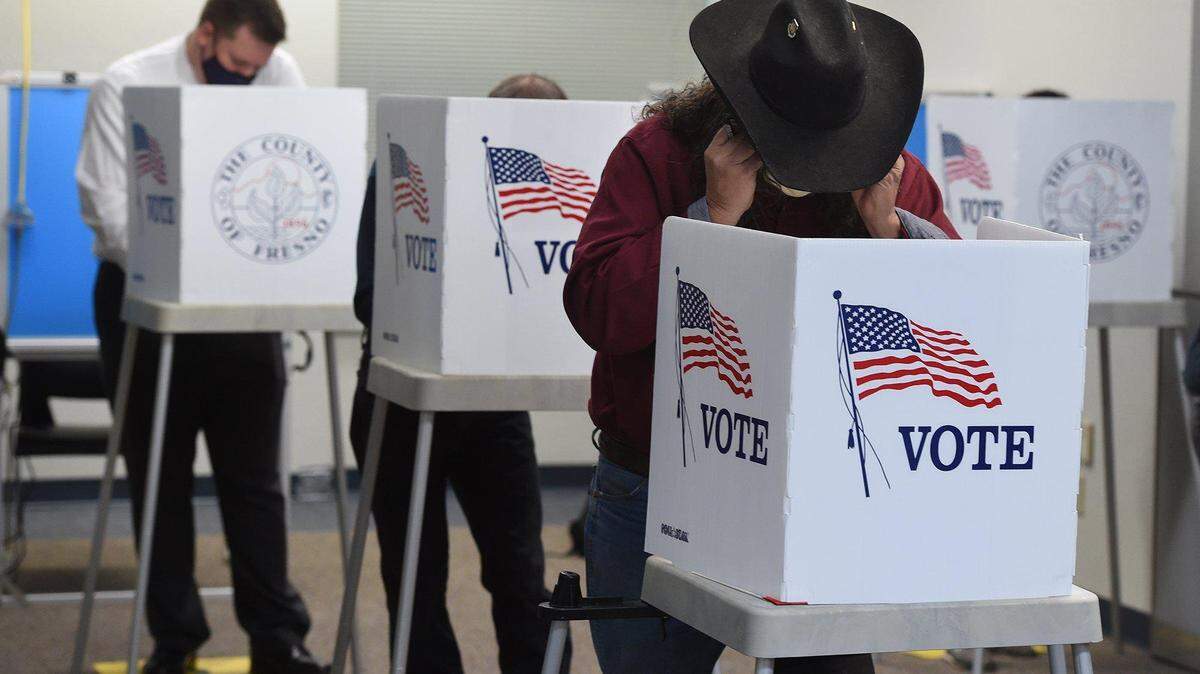
Beginning in 1888, states began to adopt the Australian ballot, which we still use today. The ballot, printed by governments rather than parties, listed all candidates from both parties on one ballot and voters could vote in secret, securing individual choice rather than party loyalty. Though we rely on party cues, votes today are still individual choices, and voters have a right to a secret vote.
Voter registration laws began in the 1890s as a way to keep parties in check. Waves of immigrants arrived from Europe, and political parties promised shelter, jobs, and assistance with legal matters in exchange for party loyalty. Registration rolls were created as a way to ensure non-citizen immigrants were not voting in local elections. Registration was done by city officials going door-to-door during the day, and many poor and working-class citizens were disenfranchised by the process. Lack of registration caused turnout to plummet in the early 1900s and is still one of the leading causes of low turnout. The United States is one of the only OECD countries where citizens are not automatically registered to vote or contacted by government officials upon legal age and encouraged to register, though several states, including California, are making it easier to register or are moving to automatic voter registration policies through DMVs in an effort to change this.
This coming week we have a primary election, and that too is a creation of reformers. Primaries ensured citizens, not party leaders, would select who will be on the ballot in the general election. Primaries have some of the lowest turnout in U.S. elections (turnout was just under 38% in California’s 2020 primary), and while designed to be more democratic in nature, they have not always been in application. In the Jim Crow South, several states created “white primaries” as a form of voter suppression by limiting participation to whites only. If a person cannot or does not vote in a primary, they cannot influence who will be on the ballot come November.
Today, we have nearly full legal suffrage and fairly accessible elections, though it was not without struggle. Black men obtained suffrage in 1870 through the 15th Amendment, women through the 19th Amendment in 1920, Native Americans in 1947, and Asian Americans in 1952. The Voting Rights Act of 1965 was designed to ensure the right to vote was applied equally, but many state legislatures still try to restrict access.
In 2021, 19 states passed laws making it harder to vote by shortening windows to apply for mail ballots, reducing the number of drop boxes, and reducing the number of hours voting locations are open, while 25 states, including California, passed laws expanding voter access.
Regardless if you vote in the privacy of your own home or at a vote center, make sure you exercise your right to vote in the upcoming election, because accessible elections and holding the right to vote as a tenet of democracy certainly haven’t been the norm for the majority of our country’s history.