Cesar Chavez’s impact on San Joaquin Valley to be recalled on March 31, his day of honor
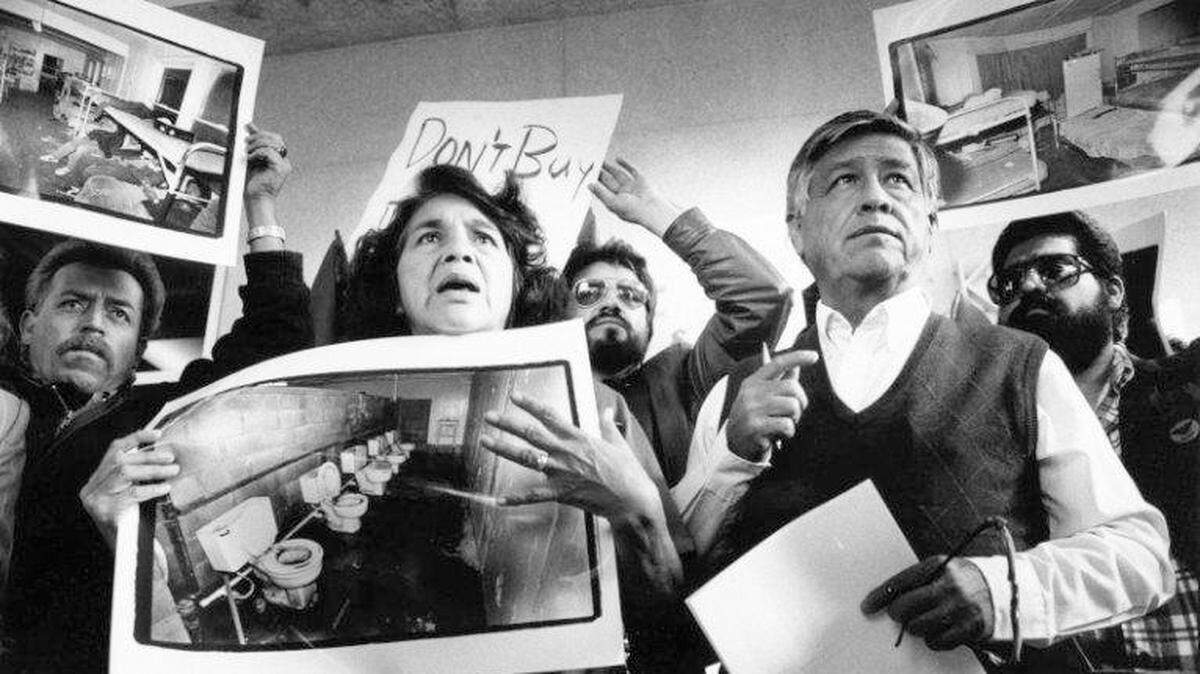
On March 31, California will celebrate Cesar Chavez Day and commemorate a Day of Service and Learning. We should recognize and honor his legacy of fighting for the civil rights of farmworkers. His lifelong efforts won increased wages, improved working conditions, the right to fair union elections, and dignity for California agricultural workers.
It has been almost 30 years since his death. While it is certainly worthy to celebrate his achievements, we should not ignore the myriad episodes of injustices he suffered before leading the national farmworker movement. Chavez experienced racial discrimination in forms that were eventually outlawed, but shaped the tapestry of American history.
Chavez attended racially segregated schools when he was young. As a migrant farmworker, it was common for him to attend multiple schools in one academic year. Segregation practices severely interfered with his schooling and was later found inherently unequal in Brown v. Board of Education in 1954. Prior to that decision, the California Supreme Court in Mendes v. Westmoreland (1947) outlawed Mexican student segregation based on ethnic origin. Ironically, prior to Mendes, the existing perception was that an educated Mexican child would prefer to not be a farm laborer.
Equally disturbing was that Chavez, like many Latino children, was not allowed to speak Spanish in school, denying his culture and preventing meaningful access to instruction. Latino children were often disciplined at school for speaking the only language they knew. It wasn’t until Lau v. Nichols (1974) that schools were required to give meaningful instructional access to children who were not English proficient.
When the 18-year old Chavez joined the U.S. Navy in 1946, he again faced segregation while serving his country. The armed services were not racially integrated until President Truman signed Executive Order 9981 in 1948. The disturbing treatment of WW II Mexican American veterans as second-class citizens led to the establishment of the American GI Forum, dedicated to the rights of Hispanic World War II veterans. Established in 1948, by Dr. Hector P. Garcia, the AGIF corrected the policy of the U.S. Department of Veterans Affairs that denied medical services for World War II veterans of Mexican descent. It also reversed the decision to deny the burial of Felix Longoria, a Mexican-American private killed in the Philippines in the line of duty during World War II. When Longoria’s remains were returned to Texas after the war, his family was denied funeral services by a white-owned funeral home.
Chavez, Delores Huerta and Gilbert Padilla founded the National Farm Workers Association (NFWA) in 1962 in Fresno. It was not easy. The struggle to organize farmworkers was plagued with deliberate efforts by growers to divide workers by race. Growers often formed labor crews by ethnicity and assigned housing in labor camps by ethnic background. Indeed, the Agricultural Workers Organizing Committee (AWOC), under the auspices of the AFL-CIO, was largely composed of Filipino men.
By contrast, Chavez’ NFWA was racially integrated, consisting of Mexican, white, Yemenis and Black farmworkers. Later, in 1966 during the Delano grape strike and boycott, AWOC and NFWA merged to form a racially integrated United Farm Workers Organizing Committee.
It is difficult to comprehend how engrained and deep-seated racism was in American schools, the armed forces, and in agricultural labor. To fully grasp the systemic origins of racism in American institutions, it is instructive to use Critical Race Theory (CRT) as a lens.
CRT stipulates that race permeates American institutions and public policies. The insidious nature of racism and its genesis is rooted in the fabric of American life. When our schools teach about the legacy of Cesar Chavez, they should also introduce students to a framework that fully captures the essence of racism and its pernicious and tenacious existence.
CRT provides the basis for placing race as a chronic source of social inequities that only drastic institutional and structural changes can mitigate. Beyond instructional value, CRT gives direction for revolutionary shifts in legislation, public policy, Supreme Court decisions and constitutional remedies to eliminate racism.
It is imperative that we celebrate what Chavez did, but it is essential American history to recognize what he endured.