
Fresno State professor explains differing verdicts in the Rittenhouse, Arbery cases
In the 1994 film, “True Lies,” Jamie Lee Curtis realized that her longtime and loving husband, played by Arnold Schwarzenegger, was a CIA-type spy/assassin. Aghast, Curtis’ character asked her husband, “You actually kill people?” Her husband calmly responded with, “Yes, but they were all bad people.” The wife accepted this response.
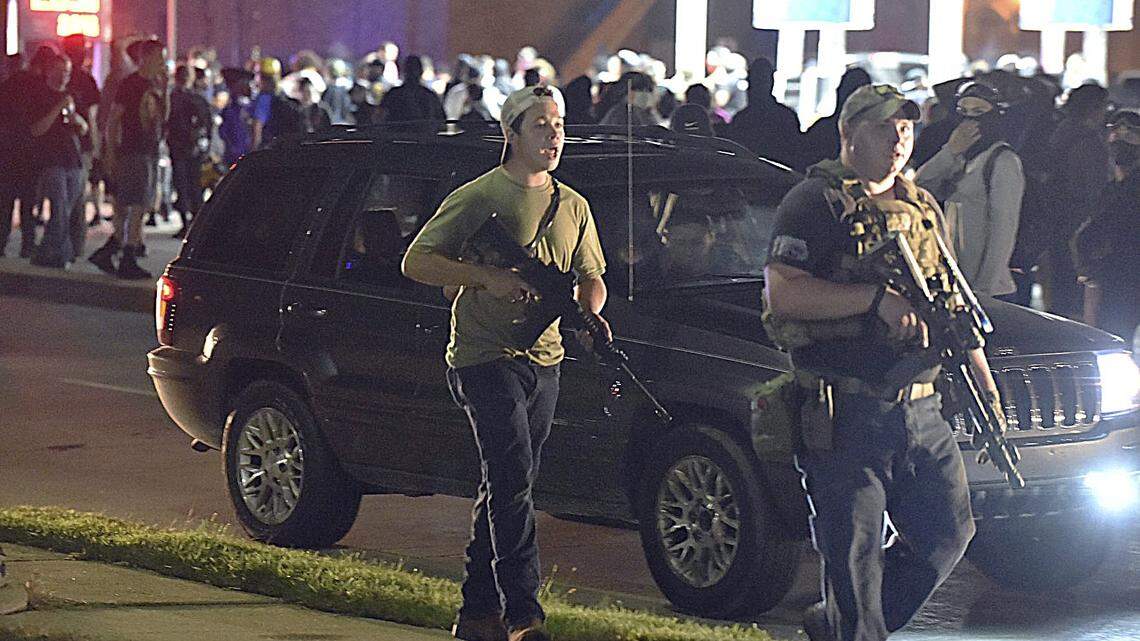
This dialogue reveals, in part, why Kyle Rittenhouse was acquitted. The jury, as did most of the viewing public, and in particular the presiding judge, saw the three men shot, two killed, as “antifa.” Antifa is a GOP-demonized term, which is a synonym for Black Lives Matter or “bad people.”
These terms, as applied by Judge Bruce Schroeder, classified the persons killed by Rittenhouse, Joseph Rosenbaum and Anthony Huber, as “looters and rioters.” This classification was done without any courtroom testimony that either man was involved in such illegal activity. However, the testimony revealed that Rosenbaum was shot merely because he was verbally shouting and threatening Rittenhouse with words. Rittenhouse testified that he feared that Rosenbaum was going to grab his gun and take it from him. The jury should have convicted Rittenhouse of this killing.
One can reasonably defend Rittenhouse, as the jury did, for shooting Huber for hitting him with a skateboard. But that same jury, obviously, set aside any importance of a 17-year-old Rittenhouse, from the adjoining state of Illinois, voluntarily walking into a violent situation, becoming fearful for his life and shooting to kill an unarmed victim, Rosenbaum.
Yes, if Rittenhouse would have stayed home (do you know where your kids are?) watching Tucker Carlson on Fox News, no one would have died, and the victims’ loved ones would not be endlessly grieving. Even Gaige Grosskreutz, who pointed his own gun at the active shooter, Rittenhouse, to end the deadly carnage, and was shot in the arm and leg, was not a victim. Isn’t it strange that Grosskreutz, a paramedic, there to assist the injured, and who chased the active shooter, did not shoot first before being shot by Rittenhouse? Knowing that Rittenhouse was armed, dangerous, and had shot two people, why did not Grosskreutz shoot Rittenhouse first?
One can assess the acquittal in this manner: 1) The jury identified with Rittenhouse as a familiar face such as their own sons or grandsons. 2) The jury disliked what they saw as “antifa” destroying private property. 3) Antifa, supporting Black Lives Matter and protesting the shooting of Jacob Blake was a complex negative in the back of the jury’s mind, since too many white Americans dislike both. 4) The jury saw Rittenhouse doing something noble, attempting to stop the destruction of private property, which was something none of the jurors, feeling guilty, were brave enough to do themselves. 5) The jury decided that they should return an acquittal and not destroy the future of a “brave kid” who killed, in the cinematic words of Arnold Schwarzenegger, “they were all bad people.”
The Ahmaud Arbery jury had a far less complicated task. The facts were not in dispute and a released video of the shooting confirmed those facts. Unlike the so-called looters and rioters, to use Judge Schroeder’s words, Arbery was behaving in a manner familiar with what every individual on the jury either performed in their daily life or wished they performed, which was jogging for exercise to maintain their health.
Arbery’s mistake was jogging in Satilla Shores, an adjacent community of nicer homes with Confederate flags hanging from porches, while Arbery’s mother’s home was across the proverbial tracks. Three white men, hearing that a recent burglary had taken place in the neighborhood by a Black man, falsely assumed the jogger, Arbery was the culprit.
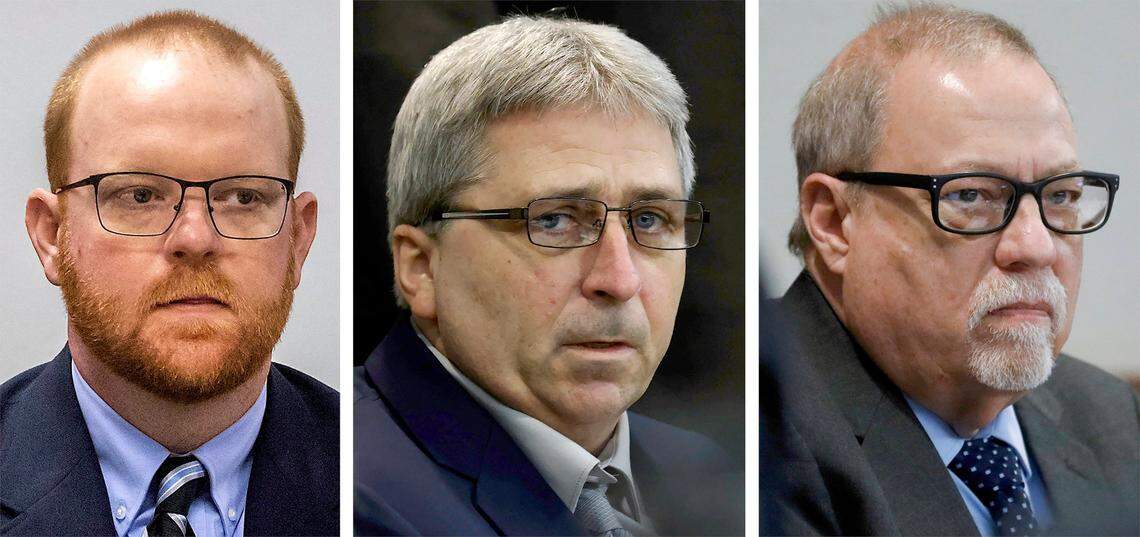
Greg McMichael, his son, Travis McMichael, and a neighbor, William Bryan, chased and cornered Arbery, and the son, using his shotgun, shot him three times, killing him.
Travis McMichael admitted on the stand that Arbery never threatened him nor had a weapon. Thus, it was an easy and uncomplicated call for a jury’s guilty verdict within 11 hours of deliberation, whereas the Rittenhouse jury took three days.
Since the Arbery jury was not sequestered and was aware of Rittenhouse’s acquittal, we will never know if a Georgian jury wanted to show a northern “liberal jury” the meaning of justice.