
Fresno writer: What is the CIA hiding about the assassination of President Kennedy?
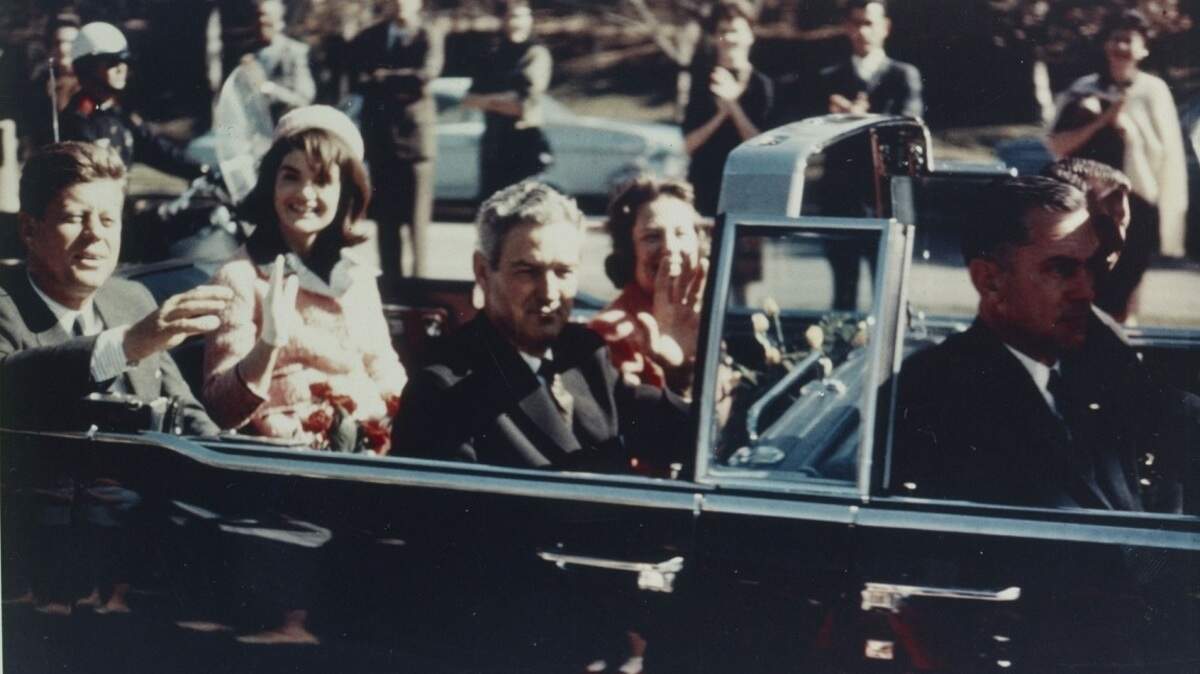
The Central Intelligence Agency doesn’t want you to know the truth about Claude Barnes Capehart. He claimed to have been a CIA asset present at the assassination of President John F. Kennedy in 1963. The CIA has hidden the truth about Capehart for almost 60 years.
Surveys show that most of the public believe the crime is still unsolved, and only 20% believe Lee Harvey Oswald was the lone assassin. This month, with the government’s expected final release of secret JFK assassination documents, the truth about Capehart may finally be known.
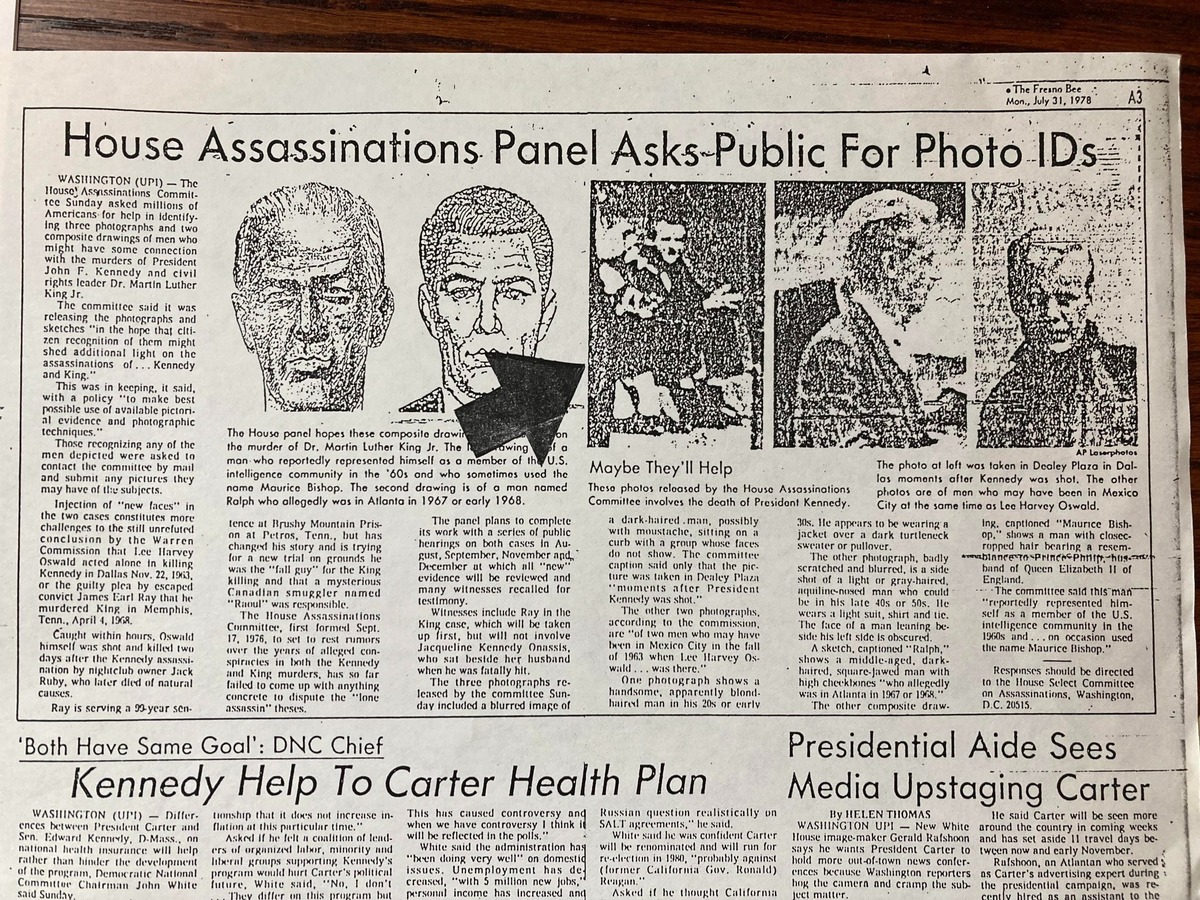
Claude Barnes Capehart was living in Chowchilla in 1978. When The Bee printed a government request for information about three persons of interest in a photograph taken at the assassination scene, Capehart’s girlfriend, Faye Weaver, recognized him as one of them.
Capehart first denied it, then confirmed it was he. He told her he had worked as a “hit man” for the CIA on numerous occasions, retiring in 1975. He told Weaver he was present with Lee Harvey Oswald at the scene of the JFK assassination. He said two others were with Oswald, and it was not Oswald who shot the president.
Weaver related this to Chowchilla’s resident deputy sheriff, Sgt. Dale Fore. She told Fore that Capehart was “paranoid” about his photograph in The Bee, and left Chowchilla a few days later, after threatening her not to talk. Weaver said Capehart had passports bearing his photo but assumed names, and numerous firearms, including a high-power rifle with scope and a silenced handgun. She also saw items taken from the CIA spy ship Glomar Explorer and the Soviet nuclear submarine K-129, which the spy ship had secretly raised from the ocean floor. Capehart carried a pistol both on his person and in his car, Weaver said.
Multiple gunmen
Sgt. Fore had met Capehart on several occasions, and Capehart told him he had retired from the CIA. He operated a well drilling business, and Fore noticed he always had “a bundle of cash.” When Weaver showed Fore The Bee photograph of three persons of interest, Fore found one to be a “dead ringer” for Capehart. Fore recorded several conversations with Weaver. As Madera County’s district attorney at the time, I also interviewed her, as did FBI special agent Tom Walsh. We all found Weaver credible.
Fore took his evidence to Washington, D.C., where he met with Richard Billings, editorial director of the House Select Committee on Assassinations, and FBI agents. The committee never investigated Capehart’s claims about the JFK assassination because their final report was already in preparation. A committee memo suggests Capehart be interviewed by the FBI, but it never happened. The committee’s final report, however, released in 1979, supported Capehart’s statements. The assassination, it concluded, was the result of a conspiracy, with at least one gunman other than Oswald, and with gunshots coming from two different directions.
Later, both Billings and the committee’s special counsel, Robert Blakey, faulted the CIA for lack of cooperation and withholding information.
Suspect found dead
In 1988, district attorney investigator Dan Poole traced Capehart to Parumph, Nevada. Poole and I planned to confront Capehart at home in an attempt to find out his true relationship with the CIA. We arranged for a Nye County sheriff’s sergeant to accompany us, and agreed upon a date in two weeks. A few days later, Capehart was found in his front yard, dead of an apparent heart attack.
Seeking answers, I filed a request with the CIA in 1992 under the Freedom of Information Act. I asked if Capehart had ever been employed by that agency in any capacity. The agency refused to confirm or deny because that information “would reasonably be expected to cause damage to national security.”
I then sued the CIA in federal court for the information; the agency claimed national security. The court ruled for the CIA, and I appealed. In 1994, an appeals court ruled the CIA was exempt from the Freedom of Information Act’s disclosure provisions. But it observed that “concerns about the role the CIA played in the Kennedy assassination have not yet been laid to rest.”
Assassination review
Later, an Assassination Records Review Board was created to collect all relevant JFK records. In 1998, the board issued its final report. It confirmed that Claude Barnes Capehart was employed on the CIA spy ship Glomar Explorer, but only as a crane operator. As for other involvement, the board found “no evidence . . . to suggest that Capehart worked for the CIA on any additional contracts nor in any capacity directly or indirectly.”
The CIA still claims its only connection to Capehart was his employment on the spy ship from 1973 to 1975. That claim is false, and formerly secret documents prove it.
Employment history
Only four days after President Kennedy’s assassination in 1963, the CIA requested a “name check” on Capehart from other federal agencies. Secret government documents about Capehart include, in “one (1) sealed envelope,” information “for the inclusive dates of 1963-1975.” And a 1973 CIA “letter of assignment and investigative transmittal” designates Capehart as “covert,” instead of “field.”
The C.I.A’s secret documents about Capehart end in 1975, the same year he told Sgt. Fore and Kay Weaver he retired from the agency. Ted Gunderson, former special agent in charge of the FBI’s Los Angeles office, told me an informant, Bob Brownell, claimed he knew Capehart when both were employed by the CIA. Brownell said Capehart had retired around 1978 “with a lot of money” and was buying oil well drilling companies.
Last year, I contacted Josh Dean, author of “The Taking of K-129,” an account of the Russian submarine raising by the CIA spy ship on which Capehart was employed. Dean then contacted a crew member who still had a copy of the ship’s “white” manifest, that listed crew members by their true names. Capehart’s name was not on it. There was another manifest, the “black list,” for those aboard under “cover names,” the source said.
If Capehart’s only connection with the CIA was his employment on their spy ship, why was his true name not listed on the ship’s “white” manifest? Why did an informant tell FBI agent Gunderson he knew Capehart as a fellow CIA asset? Why did Capehart have false passports and firearms, including a silenced pistol? Why is there a CIA “letter of assignment” designating Capehart as “covert”?
What is in the “sealed envelope” about Capehart’s activities from 1963 to 1975? Why was Capehart a “dead ringer” for one of the persons of interest in The Bee photograph? And why, just four days after the assassination of President Kennedy, did the CIA ask other agencies for a “name check” on Capehart?
In 1992, Congress passed the JFK Records Collection Act, requiring all unreleased assassination documents to be made public in 25 years. In 2017, President Donald Trump, at the urging of the CIA, withheld from scheduled release thousands of secret documents for another three years. That expires this month.
Will President Joe Biden release those documents? If he does, will the truth about Claude Barnes Capehart finally be revealed?
This story was originally published October 2, 2021 at 5:00 AM.