
Over 100 kids from Fresno went camping in the Sierra, and did more than just have fun
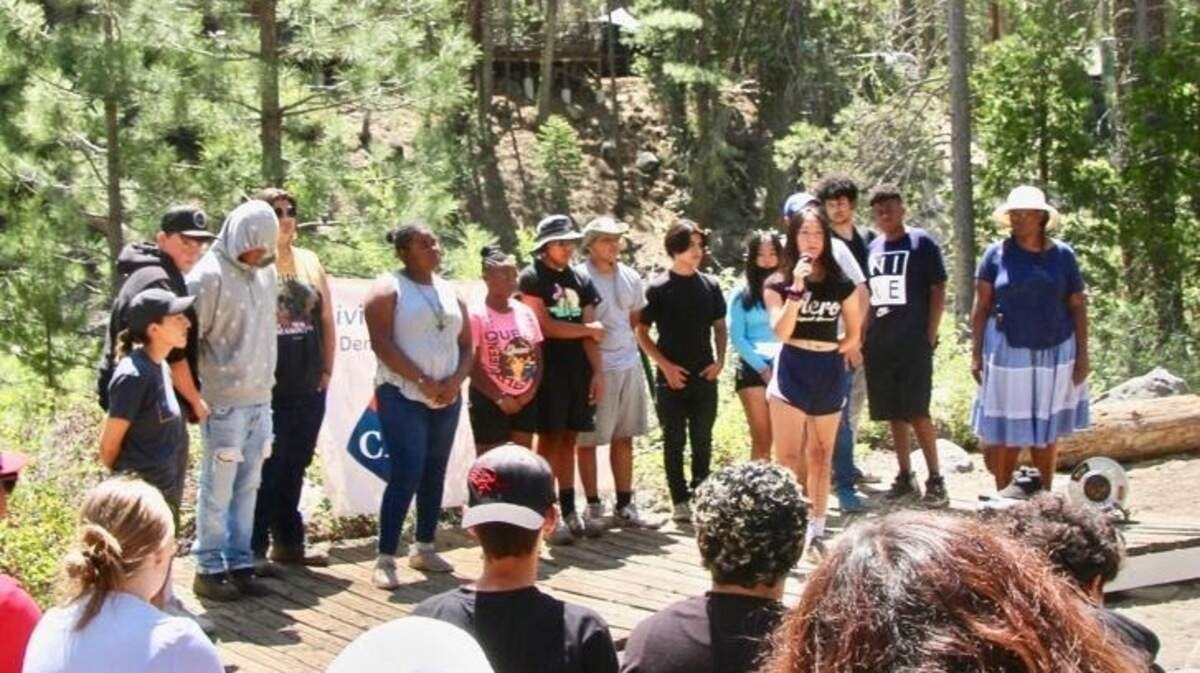
The Civic Education Center took 120 Fresno youth in three groups to Camp Fresno, thanks to Mayor Jerry Dyer and the Fresno Parks and Recreation Department. In addition to recreation and nature study, we invited students to practice leadership skills, discuss civic values and identify what youth need. Groups considered how their city could be improved to serve the needs of youth. They developed these proposals:
Create youth centers where they can meet for discussion, recreation, media and fun.
Provide mental health services and support groups at these centers.
Give youth more opportunities to discuss problems and to propose solutions.
These were diverse youth from Fresno who responded to the invitation for a free three-day camp experience. They created a peaceful community with guidance from staff and developed practical proposals to meet their needs.
Can this civic inquiry be done in K-12 social studies classes?
The Fresno-based Civic Education Center guides students and teachers to integrate academic study, community service and civic values. In the past five years, students in six districts have volunteered more than 60,000 hours in civic service projects. This connects students, school, community, nation and world. Students are seen as contributors, rather than problems. They get a sense of belonging, which comes with a responsibility to participate and support their community.
Students can learn to identify problems in their school or community, research the issue, consider civic values, develop an action plan, and implement their service project. This develops civic skills and values as they experience the successes and failures of their projects and get feedback from teachers and community experts.
Students need a clear understanding of civic values and ideals to guide their activities and decisions. Our American social contract depends on understanding and committing to civic virtues, such as liberty, justice, democracy, trust, and unity. The way to transcend oppositional conflict and gridlock is to identify and honor common civic values that bind us a nation. The founders gave us our national motto, “E Puribus Unum,” (From Many into One) to guide our path. We can honor each world view while finding common ground.
The youth at Camp Fresno understood this motto, let go of negative, disrespectful habits and supported cooperation. They showed that they are eager to experience democracy and create a peaceful community. They identified project proposals relevant to the needs of youth.
Most young people like to volunteer to help others, care for animals, make gardens, solve problems and correct injustice. Community service has a long history, and service learning was a popular and effective teaching method 20 years ago. Now it is rare for social studies teachers to include community service or civic engagement in a class.
Imagine that students learn to understand and solve complex problems and sustain systems and environments. What if they learned to resolve public conflicts with civil dialogue, democratic participation, and legal justice? What if they could plan their own sustainable future beyond what we can predict? By empowering the current younger generation, we sustain our democratic republic.
See www.civicedcenter.org. for information on ways to support this new approach to civic education, including a Civic Education Summer Institute with units from Fresno Pacific University, (https://ce.fresno.edu/educator-workshops/open-enrollment-workshops/civic-education-center/)