
Forest-cleaning fires, not raging infernos, will sustain the Sierra’s giant sequoia
The massive cinnamon trunks of the Sierra Nevada’s giant sequoia tower silently over melting snow. But many of those trunks are newly blackened, a stark reminder of the devastating fires of last fall, and a heartbreaking foreshadowing of the tree mortality that the spring thaw will reveal.
The devastation from the wildfires that swept through the groves last year was unprecedented, killing ancient trees that had lived comfortably with fire for millennia.
With looming drought, it won’t be long before the next fire season is upon us. And while Gov. Newsom, in his State of the State address, rightly commended the heroic work by firefighters in eventually subduing last year’s blazes, depending on their heroics after fires are already upon us is not a sufficient strategy to stem irretrievable losses. We have to get ready now. The U.S. Forest Service and other agencies that manage these groves need the resources to ensure that we don’t suffer this kind of loss again.
For centuries, indigenous peoples lived among the giant sequoia — known as Wawona by some tribes and Toos-pung-ish or Hea-mi-withic by the Tule River Tribe. Indigenous stewardship included fire as a critical element of sustaining balance in the Sierra.
Between natural and Indigenous fires, giant sequoia evolved to thrive with fire every eight to 15 years. The protective bark of a mature tree can be up to two feet thick, and fire helps their cones open and release seeds, fostering reproduction. That’s the way it worked until the early 20th century when, following the removal of tribal stewards, land managers began suppressing fire in the Sierra Nevada.
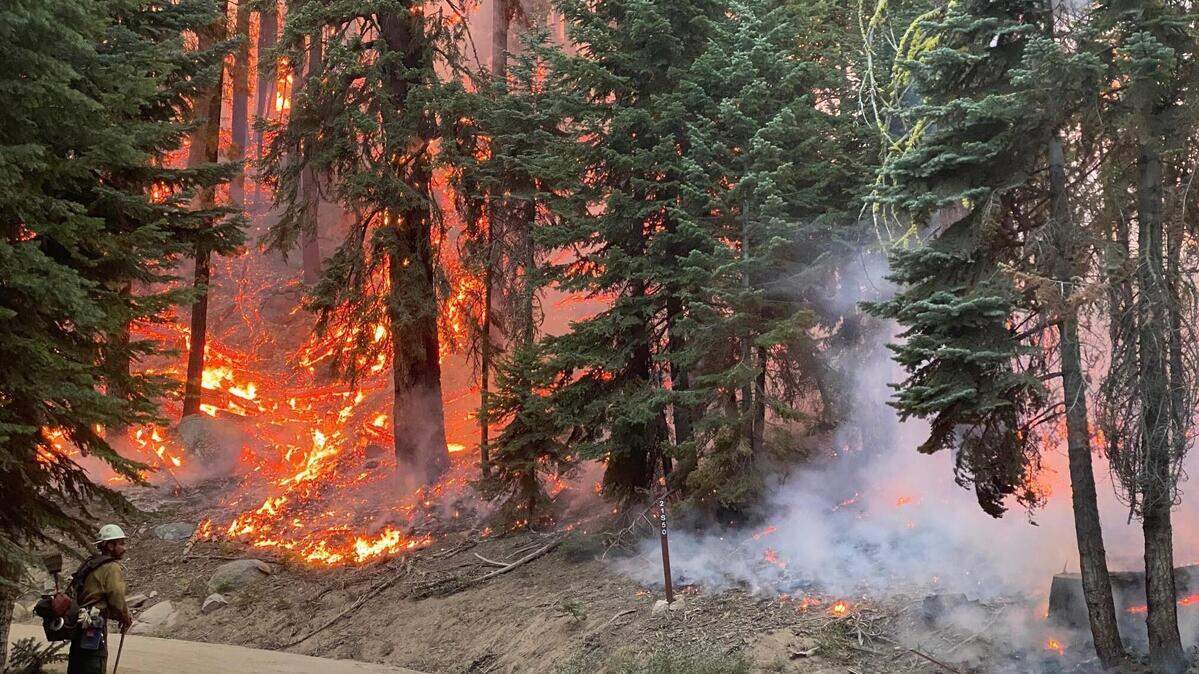
Because of this suppression, today’s wildfires are different. Without frequent low-to-moderate-severity fires to clear out the underbrush and small trees, wildfires burn hotter and move faster. Between 1950 and 2014, only about 9% of giant sequoia groves saw any fire at all. Then suddenly, in the last five years, roughly 65% of the range burned from either human or natural causes, with a level of sequoia mortality never seen before. We created a tinderbox, and now the sequoia are paying for it.
Following the 2017 Pier Fire, Save the Redwoods League researchers were shocked to find an unprecedented 86 monarchs (trunks four feet or wider) killed within the Giant Sequoia National Monument. They were still assessing those losses when the SQF Complex/Castle Fire swept through in 2020, killing potentially thousands more, confirming a horrifying and preventable new normal. That wildfire would eventually burn through roughly one-third of the entire giant sequoia range. Roughly 40% of those acres burned at a high enough severity to kill monarchs.
To put that loss in perspective, giant sequoia only grow naturally in 73 small groves over about 48,000 acres, less than half the size of Bakersfield. Unlike coast redwoods that re-sprout from burnt trunks or roots, when giant sequoia lose their crowns to fire, they don’t come back. And last year’s fires killed many trees that were well over thousands of years of old.
While many factors, including climate change contributed to the devastation, it is the unnatural buildup of vegetation that we must address right now. Prescribed fire and thinning are critical techniques to setting these forests back on a healthy path. Currently the Forest Service can only treat a few hundred acres a year — not nearly enough to save the giant sequoia.
More funding would be money well spent. Taxpayers paid more than $104 million to fight the SQF Complex/Castle Fire. Treating the giant sequoia groves with prescribed fire would cost a fraction of that and with far better outcomes.
Newsom earmarked $1 billion in his proposed budget for forestry and wildfire resilience, and there is hope that some of this money could support a conservation partnership with the Forest Service. The 2020 Great American Outdoors Act includes $9.5 billion for federal parks and public lands. As California legislators and Congress allocate this money, they must prioritize keeping irreplaceable giant sequoia from further loss. Investing in prevention, together with a commitment to workforce development and reduced bureaucratic hurdles, we could both help the trees and create economic opportunity in California’s rural communities.
Given the breadth of the wildfire crisis the federal government faces throughout the West, we could accelerate work in the giant sequoia range with a coalition of federal, state, tribal and NGO partners, mirroring the one currently restoring coast redwood forests in Northern California.
These investments need to be made quickly before tomorrow’s fires take any more of our state’s greatest natural treasures.