
Where did all the farmland go? Better planning is badly needed in the Valley
What happens in California agriculture affects every American. The Central Valley is the bread basket of the nation, and food security is becoming increasingly important. The world population is projected to grow to 10 billion by 2050, but we don’t know how we are going to feed that many people.
The U.S. requires 1 billion meals a day, and depending on foreign countries for our food — like China or Chile — is a scary proposition. That is why Rep. Jim Costa, the Democrat from Fresno, continues to emphasize that agriculture is a national security issue.
When I was at Valley PBS, we started the show “American Grown: My Job Depends on Ag” to tell the Valley’s story to the whole country. We recognized the need to help someone in Maryland understand why an issue like California water matters to them.
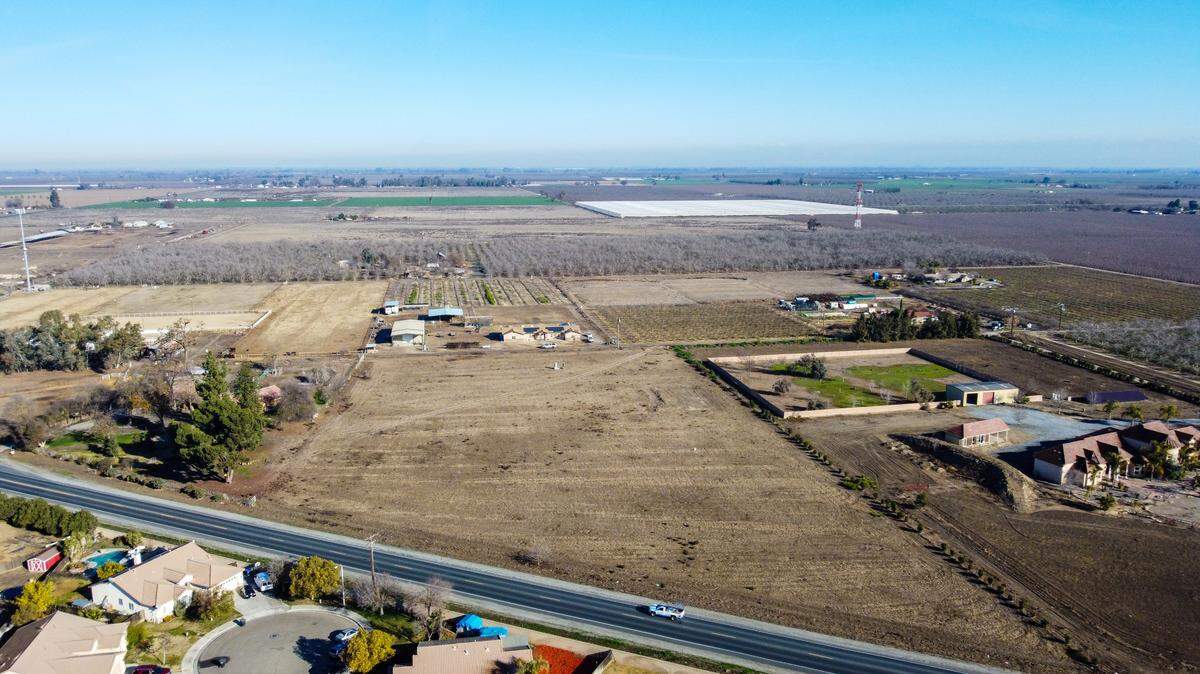
At the same time, we need to make sure there is still farmland left on which to grow that food. I live in the country, and watch as more and more farmland is eaten up by development. The California Department of Food and Agriculture says 40,000 acres of ag land is permanently lost each year to housing and urban sprawl.
I also see the desperate need for more housing and the temptation for farmers to sell for high development prices as crop values drop. All this makes me think, “Who’s master planning the state? Is it really left up to each county individually? Could we actually look up in 30 years and wonder where all our farmland — and food — went?”
Yes. As the state’s population explodes, the CDFA cautions, “The rate of farmland conversion is expected to increase tremendously.” We could lose 2.5 million acres of ag land over the next 20 years, including a full 5% of valuable cropland.
American Farmland Trust says the majority of Valley land developed in the last 30 years was “prime” farmland. Its 2009 report on California agricultural land loss and conservation points to rapid population growth and inefficient use of land as the causes.
The CFDA concludes that we need regional planning to define urban boundaries and preserve prime farmland. That’s something the former planning director for the city of Fresno has been preaching for nearly 50 years — but it hasn’t happened.
Nick Yovino designed the general plan under Mayor Alan Autry in 2000 to limit sprawl and encourage infill development on already-vacant lots. Instead, developers went to nearby towns like Clovis, Madera, and Sanger to more easily convert large plots of farmland into houses. Now, these cities are all haphazardly merging together.
“Fresno can’t have a good infill program if neighboring cities are growing outward,” Yovino says. “You cannot plan by yourself in a vacuum because what you do affects others, and what they do affects you.”
Effectively, though, cities and counties are planning in a vacuum. They are not required to communicate while developing their general plans. Yovino points out that while the state mandates seven elements in general plans — including noise — there’s no requirement for regional planning. He says we need that common framework.
For example, there are 15 cities in Fresno County, yet each city individually negotiates its sphere of influence lines with the county, rather than all coming to the table and developing a comprehensive growth plan together.
“Nobody wants sprawl, but nobody wants higher density housing in their neighborhood,” Yovino explains. “Everybody says they want to cooperate, yet no one will give up local control to make it happen.”
Yovino’s solution is for the state to require regional planning in general plans. The Office of Planning and Research can designate the regions and incentivize local cooperation. The benefits are better-designed cities that require less driving, resulting in better air quality, more affordable housing, more cost-effective public services — and the preservation of farmland.
“We need to get ahead of this issue. We should have gotten ahead of it a long time ago.”