
Black history is about more than slavery, says a Fresno leader in civic education
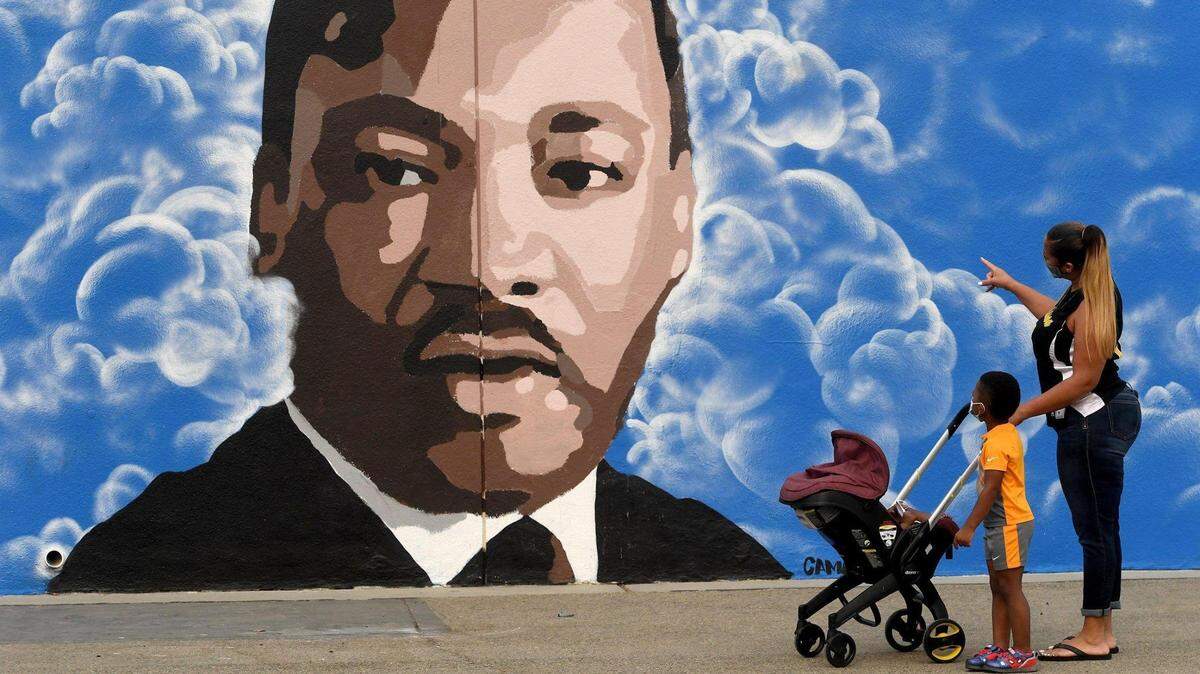
Celebrating Black History is about remembering and rejoicing that African Americans have stood firm against the forces of racism that sought to destroy their humanity. Most will celebrate Black history commencing with chattel slavery and recognize great African Americans such as Frederick Douglass, Malcolm X, Rosa Parks, and Dr. Martin Luther King Jr. Schoolchildren will memorize parts of Dr. King’s “I Have A Dream” speech; elementary schoolchildren will draw pictures of Dr. King; others will have school parades and eat traditional Black food (soul food), then call it a culturally rich experience.
But to do only this denies the struggle and the forces that continue to exist; it denies justice to America’s marginalized.
Black history is not merely about American chattel slavery. Africa had a long and rich history centuries before white Europeans arrived and commenced the forced emigration of 10 million-20 million Africans. I understand why human trafficking of such a vast population can be the starting point for celebrating Black history. But to limit Black history to this tragic moment gives Black students a negative concept of their heritage.
Long before the Greek and Roman empires, large kingdoms flourished on the African continent. In its illustrious and long history, several Egyptian dynasties were ruled by Black pharaohs from Ethiopia and the Sudan region. The African empires of Put, Kush, Carthage, and Aksum rivaled the great realms of China, India, the Greeks, and Romans. While Europe languished in the early Middle Ages (Dark Ages), African kingdoms organized governments, public education, and food supplies to feed large populations of city dwellers. Before Arab invaders conquered large portions of northern and eastern Africa, Christianity thrived in Alexandria and Ethiopia. To leave out Africa’s rich history before the Arabs and Portuguese inaugurated an era of chattel slavery reflects the words of Chief Justice Taney in Scott vs. Stanford (Dred Scott), 1857, “[Africans] were . . . considered as a subordinate and inferior class of beings . . . subjugated by the dominant race.”
Celebrating Black history should also be about the true meaning of the American values defined in the founding documents. Harriet Tubman, Frederick Douglass, and Sojourner Truth took direct action in word and deed to end the horrors of slavery, and challenged America to be the home of the free. Black Americans fought in all wars, from the Revolutionary War to the wars in the Middle East. They fought because they believed in those values stated in the Declaration of Independence and the U.S. Constitution.
Black History should be about a people who fought for American values in the Civil War, that all men are created equal. After the physical act of slavery ended, bias, prejudice, and racism continued with the birth of the KKK. There was the white-initiated riots of the 1920s and the lynching of over 3,000 Black Americans between 1896 to 1968. Black history celebrates Brown vs. Board of Education, 1954, but American schools are very segregated today. Students of color are not achieving at the same rate as white students. Black History should celebrate the history of our nation’s ongoing struggle to be one nation. In 1852, Frederick Douglass said, “In a composite nation like ours . . . there should be no rich, no poor, no high, no low, no white, no black, but common country, common citizenship, equal rights, and a common destiny.”
So, celebrate Black History and the struggle of a people demanding that America live up to the true meaning of these words of Martin Luther King in 1965, “We hold these truths to be self-evident,that all men are created equal, that their Creator endows them with certain unalienable rights, that among these are life, liberty and the pursuit of happiness.”