
Westlands Water District farmers use stringent conservation to face uncertain supplies
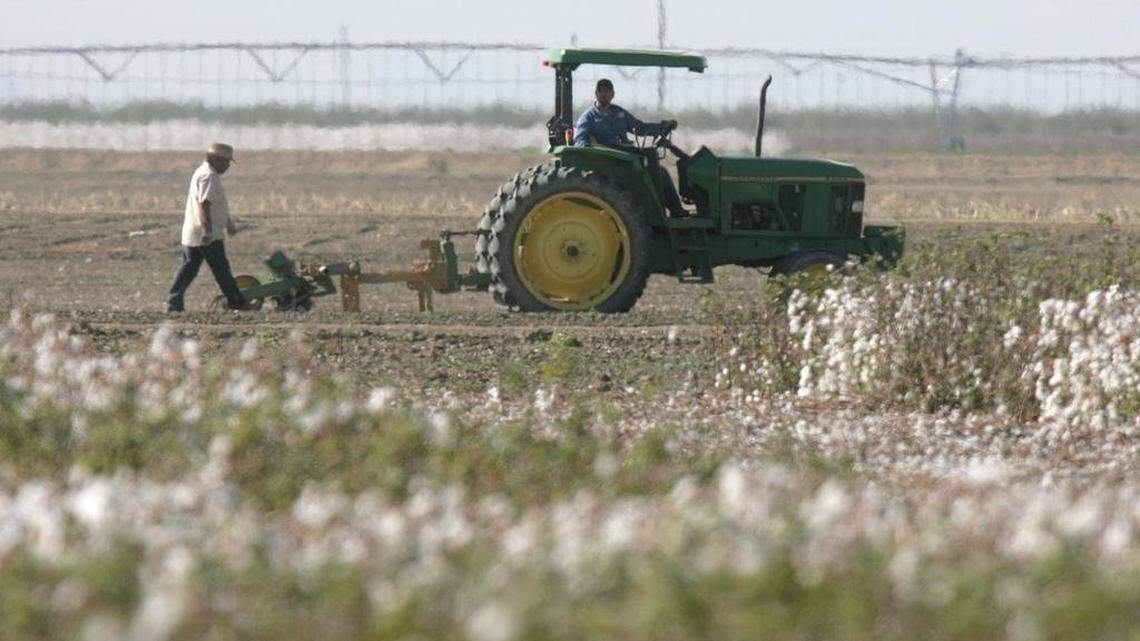
Despite the recent atmospheric river event, experts continue to forecast a dry winter in California, which would mean less surface water for the ecosystem, wildlife, humans, and farms. As a farmer in California’s San Joaquin Valley, not having enough surface water may sound devastating — yet in Westlands Water District this is something we contend with just about every year.
My family has farmed in the Central Valley for generations, bringing tomatoes, grapes, almonds, pistachios, among other crops to market. We’ve experienced firsthand the challenges of extreme swings in surface water supplies, most recently during the historically dry conditions of 2015 to the wettest winter ever recorded in 2017. After many decades, we know to prepare for the unexpected, especially when it comes to water. We are good stewards of this precious natural resource.
Adding to the math of managing water resources, we now have the Sustainable Groundwater Management Act (SGMA). SGMA is a three-bill package that was signed into law in 2014 to help ensure that this important resource remains sustainable. In practice, this bill will limit the amount of groundwater pumped for human and agricultural consumption. Now that we have added SGMA to the equation, farming in the western region of California’s Central Valley will become a bigger challenge.
Experts predict up to 1 million acres, approximately one-fifth of all land currently under cultivation, needs to be fallowed in the San Joaquin Valley over a period of two to three decades, as a result of reduced ground and surface water availability. This prediction disregards the fact that the amount of land devoted to agriculture in California has already shrunk by more than 1 million acres over the last decade, while demand for our products is skyrocketing locally, nationally, and globally.
I support diligent management of our water resources, including groundwater, because all our livelihoods — my family’s, my community’s, and the population of California — depend on it. Farmers in Westlands have already invested significantly over the course of decades by establishing underground pipe distribution throughout the district, employing sophisticated micro-irrigation systems, installing water metering systems to ensure every drop of water is used efficiently, and utilizing satellite technology to measure soil moisture and collect extensive information on temperature, water distribution and crop health.
These efforts put farmers in a position to continue successfully feeding the world. The data gathered through the decades along with investments in some of the most advanced monitoring and metering programs in the state have made it possible for the district to adopt and begin implementation of a robust, data-driven Groundwater Sustainability Plan. Under the GSP, Westlands will be able to ensure the groundwater basin is monitored in real time, every drop of water measured, and to the maximum extent practicable, beneficially used, without causing undesirable effects, including chronic lowering of groundwater levels, land subsidence, and degrading water quality.
In summary, farmers in Westlands have fallowed their land, begun to implement SGMA-related regulations, invested hundreds of millions in water technology, and are constantly thinking about new and innovative conservation methods. However, there must be a more all-encompassing approach, one that also improves California’s aging infrastructure, specifically fixing subsidence along canals, and increasing storage capabilities, and a solution that addresses ecosystem needs more holistically, through reducing non-native species, improving the quality of water, and restoring habitat lost through land reclamation and flood protections.
We, as farmers, want to ensure California’s natural resources will be available in perpetuity. We wake up daily thinking about the environment, the land our families have farmed for generations, and how to preserve it while feeding the world. In Westlands, we are working hard to get closer to a place of balance. Again, without more rigorous steps toward a collaborative solution, sustainable agriculture, fish, and wildlife in California will not survive.