
Shaver Lake’s forests offer lessons for reducing California’s catastrophic wildfires
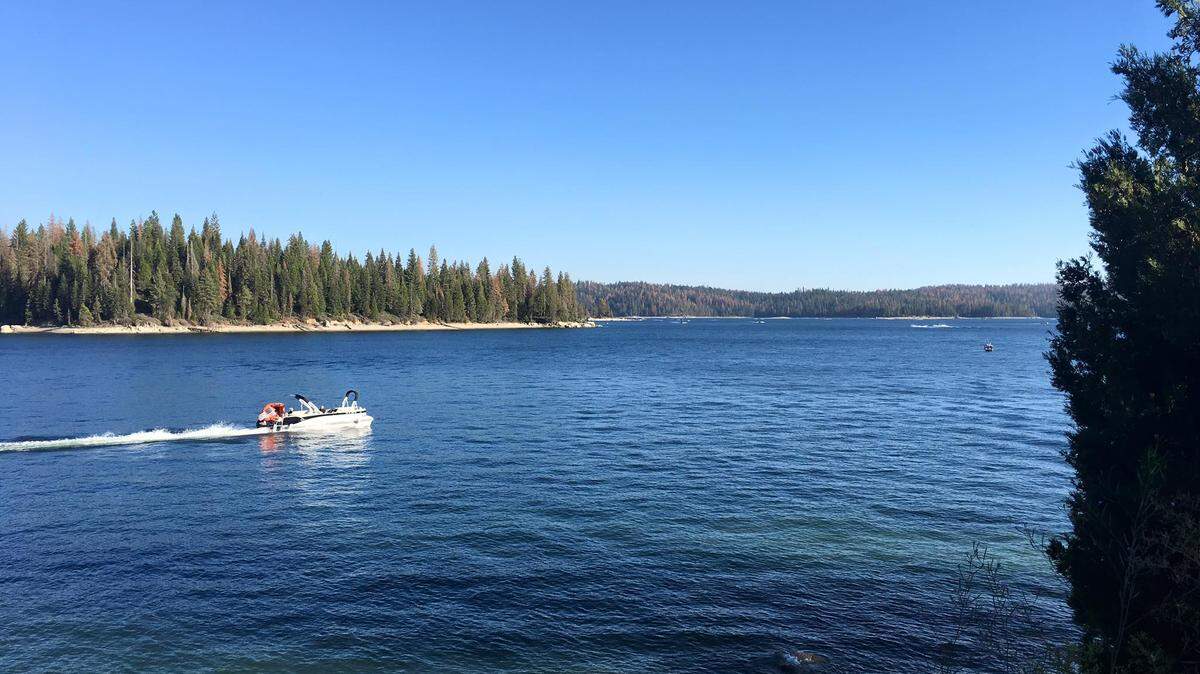
One of the reasons I love Fresno is its proximity to Shaver Lake, which is only an hour away. The mountains are my happy place. While 2020 brought many challenges, it also renewed my gratitude. The Creek Fire reminded us how fortunate we are to have the forest in our backyard and how quickly it could be lost.
There’s a sugar pine near our cabin that’s the matriarch of the woods, overlooking the other trees, soaring hundreds of feet above the ground. When my son was little, he’d run up to the base, stretching his arms around it, measuring until he exclaimed, “It’s six of me around!”
I’d join him, wrapping my arms around it to feel its ancient energy. I laughed at how we looked like a bunch of “tree-huggers,” but there was something special about connecting with these trees that were here before me and would be here after I was gone.
Or would they? Between bark beetles and high-intensity fires, we are losing our tall trees that take generations to replace. I weep going by Cressman’s General Store and seeing the sheer devastation.
Stephen Byrd, who manages the forest for Southern California Edison around Shaver Lake, says catastrophic fires are preventable. He uses prescribed burns and thinning to make the forest look “the way Mother Nature put it together” before Europeans arrived and interfered.
Old photos show a forest that was open, dominated by pines and big trees, thanks to lightning-strike fires that cleared out smaller trees and fuel. A no-burn policy for the past hundred years, though, has left dense stands of trees that lead to hotter, faster-moving fires that kill animals and mature trees.
Forty years ago, however, the utility company hired foresters to manage its land that had become overgrown after clear cutting. Ironically, a lot of work goes into making a forest look natural and diverse, and the managers started thinning the trees from 700 to 100 per acre.
“A football field is about an acre,” Byrd tells me. “Picture 100 trees across a field. That’s a fairly open situation. You could walk through it, ride a horse, maybe even drive a small car.”
As a result, when the Creek Fire hit the Edison land, it dropped from a crown inferno to a low-intensity ground fire stopped by a single-lane road.
Thinning, however, also means selective logging, and the very word “logging” can catch the ire of environmentalists. The irony here is that Byrd is a wildlife biologist who argues it can actually save endangered species.
“My motivating factor has always been wildlife,” he says. “If you want animals, you have to manage the forest. We’ve been thinning and burning since the 1980s, and we have fishers, osprey, spotted owl, proof that this type of management works.”
Fresno County Supervisor Nathan Magsig also advocates for forest management. He points to a fire break in Blue Canyon as the reason Shaver Lake was spared when the fire approached a fifth time.
Right now, though, fire and logging roads aren’t allowed to be maintained in California. Magsig says we’ll need them to protect our trees, and points out that if you’re worried about air quality and greenhouse gases, you should be concerned with supporting a healthy forest.
“Looking at what the Creek Fire has done, the Republicans and Democrats have no choice but to come together to make sure fires like that don’t happen again.”
So often the wildfire debate comes down to climate change or management, but Magsig counters, “Our climate is changing, but at the same time, this doesn’t mean we turn a blind eye to the management of our forest.”
In fact, if our forests are indeed becoming hotter and drier, isn’t that all the more reason to use prescribed burns and thinning to prevent high-intensity fires?
Just as the foresters had to work so hard to make the SCE land “natural” again after clear cutting, the Creek Fire acreage is an opportunity to find common ground in demonstrating practices that cultivate healthy forests and save the environment we all care so much about.