
New overtime law would put key firefighters out of work: Sheep, goats and their herders
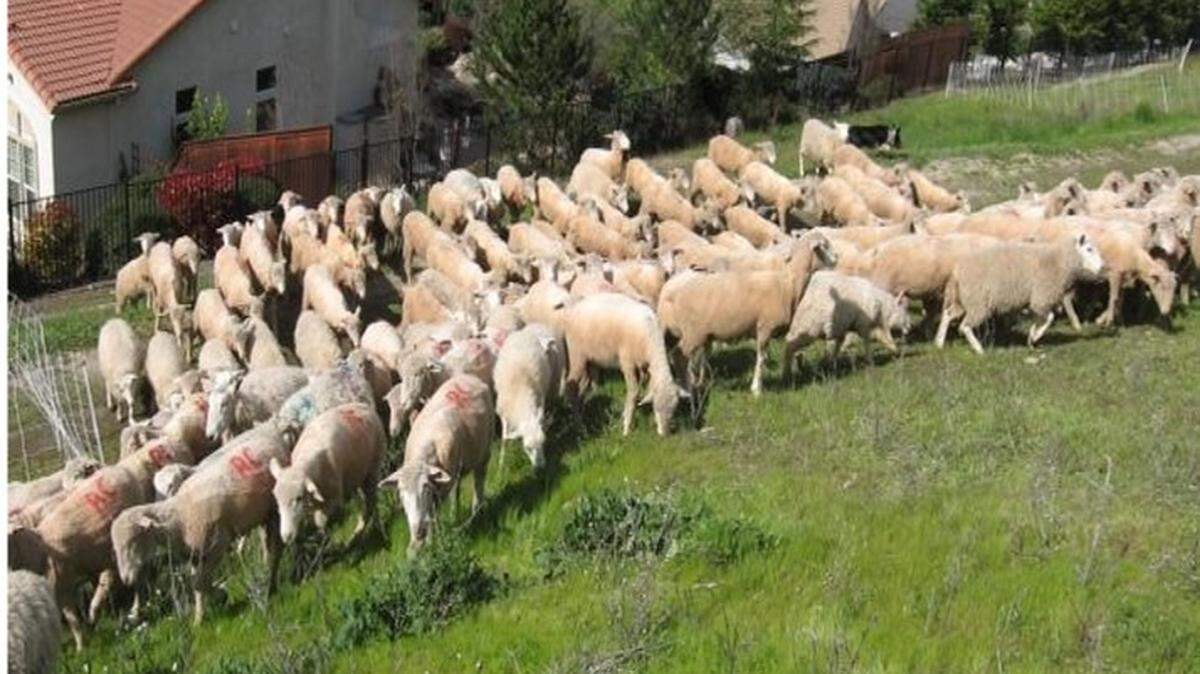
As wildfires ravage the state more frequently, firefighting professionals on the front-line risk their lives to put down the flames that threaten lives, homes and forests. But before that fire ever ignites, four-legged firefighters — sheep and goats — reduce wildfire-feeding vegetation in our communities and forests.
Cities and counties, government agencies, homeowner associations, solar projects and private landowners increasingly hire grazing contractors to manage vegetation in areas that cannot otherwise be managed. It is common now to see urban and suburban neighborhoods housing goats and sheep, as they chew down brush, one bite at a time, which typically would have been ignition fuel. Ironically, as the importance of this fire management practice grows, because of a California agriculture overtime law, the economic viability of continuing the age-old practice of tending to a herd will soon cease to exist in California at a time when we need them the most to battle climate change.
The new law requires that all agricultural employees, including sheepherders who care around-the-clock for their herds, receive overtime pay when working beyond specified hours per week. Sheep and goat herders work a normal workweek just like other employees in other businesses, albeit at irregular times. However, the state requires sheep and goat grazing employers to pay employees for hours they do not work, creating a truly unintended consequence from a reasonable overtime law. California sheep and goat herders already have the highest industry compensation in the U.S., but this new law would pass on an unaffordable 50 percent increase in monthly compensation. This financial burden cannot be sustained by employers.
Historically, California recognizes that sheepherder duties are unique in agriculture due to the nomadic nature of the work. Herders are typically housed near the animals on a continuous basis, though the workday can vary widely. Instead of hourly wage regulations and overtime requirements, an employee earns a monthly wage-and-benefits package, including room and board. The new law reverses these industry standard business models by requiring hourly-based compensation, whether worked or not. This means employees earn wages for 168 hours of work each week, with 48 hours paid at a standard rate, and 120 hours as overtime.
In 2015, President Obama’s Department of Labor rejected California’s approach, concluding that sheep and goat herders work 48 hours each week, not 168 hours, and should be compensated accordingly. This was later affirmed in federal court. While California is not required to adhere to the U.S. Department of Labor’s standard, it’s failure to do so through requested administrative action leaves this vital wildfire management tool on the verge of being run out of business. The governor can correct this, without impacting California’s new agricultural overtime law. This makes sense for a natural fire prevention resource that is vitally important to the climate future of the state.
In addition to the wildfire prevention benefits, California ranks No. 1 in wool production in the U.S. and No. 2 in lamb meat production, with well over half-a-million head ranched by over 3,500 small family operations in all 58 counties. California’s sheep and goat operations consume approximately 500,000 tons of vegetative matter annually, while grazing hundreds of thousands of acres of public and private land. Losing California sheep and goat herders risk leaving this land unmanaged from wildfire, or forces management practices that rely on machinery to do the same work as climate friendly practices, like herding.
Recent examples of grazing successes include goats hired by the Ventura County Fire Department that helped save the Ronald Reagan Presidential Library in Simi Valley last year; a project taking place at Cuyamaca College in Rancho San Diego where goats are targeting the fuel loads on that site to provide defensible space; a winery in Napa that escaped complete devastation from flames after grazing reduced a wildfire’s intensity; and countless other areas throughout the state that are much better prepared for the next fire because of these animals.
Our request to Gov. Newsom is simple: For these sheep and goat herders, direct the California Department of Industrial Relations to adopt the 48-hour workweek as defined by the U.S. Department of Labor. Governor, you are correct that climate change has exploded our fire risks and the intensity of the fire season. Take action to implement this reasonable change, which not only maintains California’s lead as the highest paid state for herders, but keeps these livestock operations viable, and keeps these four-legged firefighters clearing fuel as part of smart climate management strategies.
Without action, the business of herder in California breaks down, and wildfire risk across communities grows.