
Here is how voters should consider Trump’s inability to denounce white supremacists
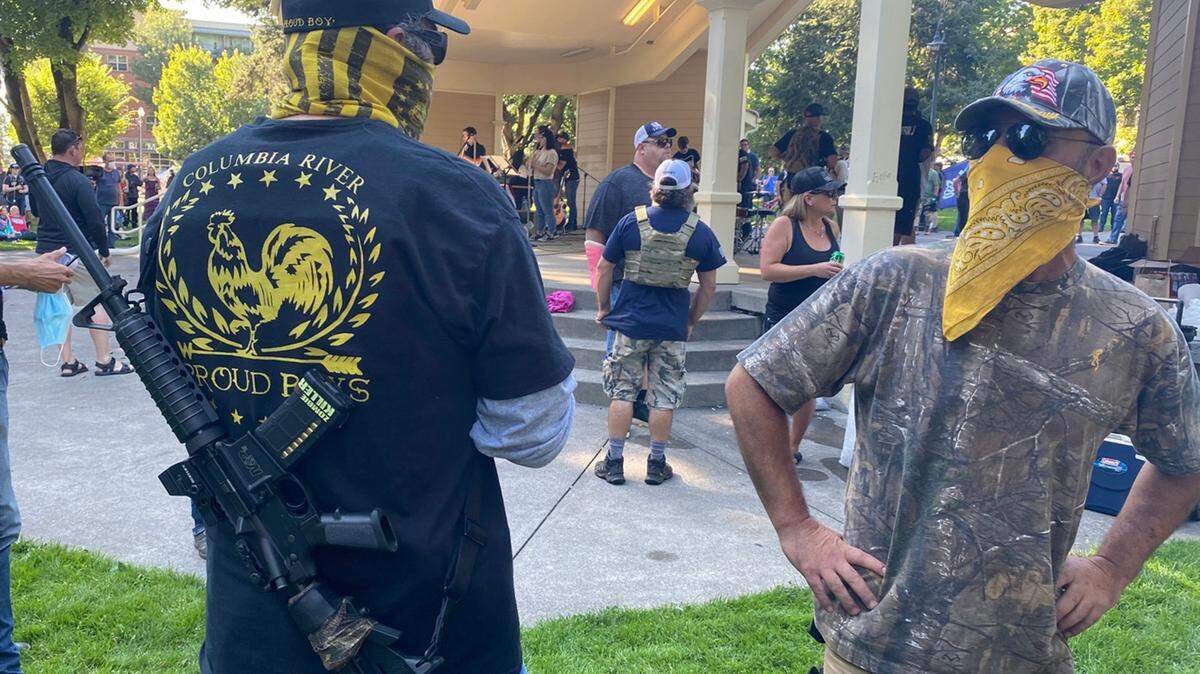
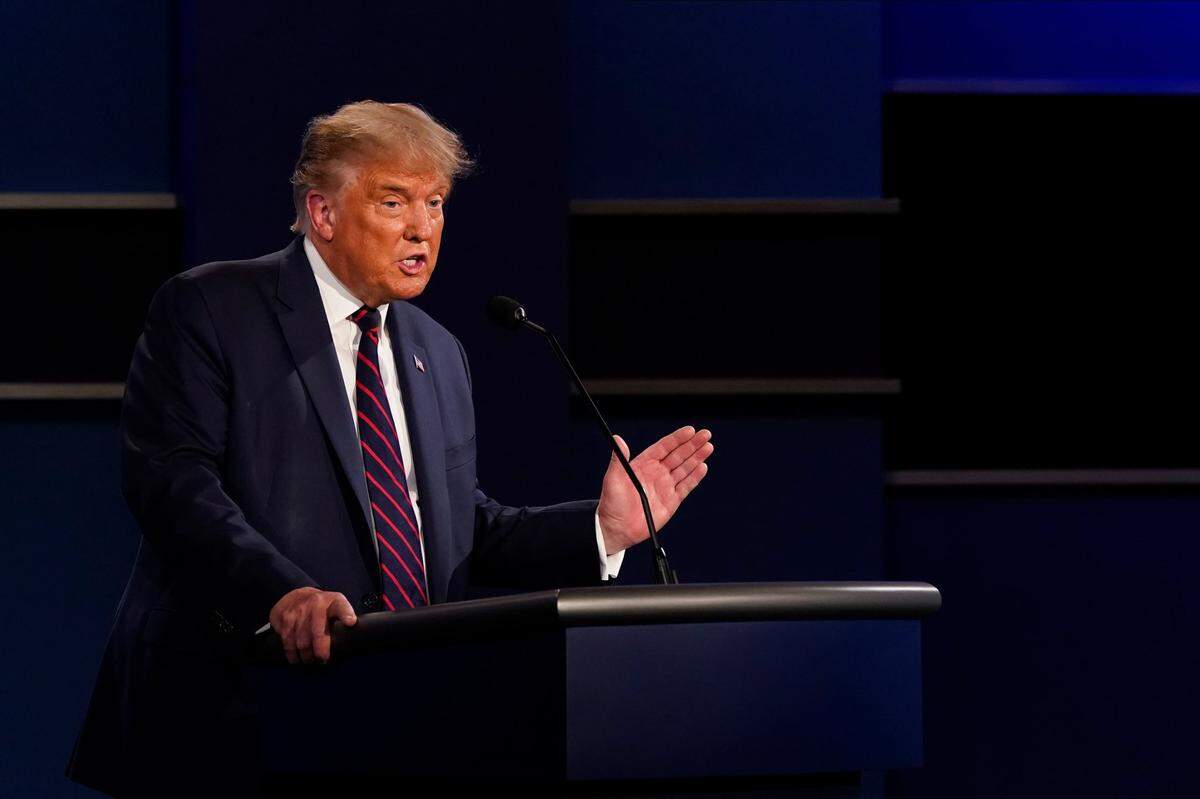
The most memorable moment from Tuesday night’s presidential debate was when Republican President Donald Trump was asked a question that he could not bring himself to answer. Pressed multiple times, by both moderator Chris Wallace and Democratic candidate Joe Biden, to denounce white supremacist groups, Trump refused to do so explicitly. The most he could manage was to tell the violent, far-right group the Proud Boys “to stand back and stand by” — which seemed to many viewers to be a call for its members to ready themselves for armed conflict — and then pivot to denouncing Antifa.
Almost four years ago, about a month after the 2016 presidential election, we wrote an op-ed in this paper arguing that Trump’s win was a victory for white nationalists and other right-wing extremists. The evidence from his campaign proved it. The evidence from the weeks after the election proved it. And yet many of his defenders — including several who emailed us directly — denied that Trump emboldened white supremacists.
Now, three years and nine months into the Trump presidency, the evidence that white nationalism has a home in the White House is even more compelling.
Trump has sought to ban Muslims from entering the country and decried immigrants from Haiti, El Salvador, and African nations, which he dismissed with a vulgarity. At the same time, he has expressed a desire to bring in more people from European countries, such as Norway. His policy of separating migrant children from their parents at the southern border — pushed by Trump’s white nationalist Svengali, Stephen Miller — represents the most repugnant manifestation of this racist hostility.
The Trump Justice Department, meanwhile, has cut Civil Rights Division staffing and pursued fewer civil rights cases than the two previous administrations. It has also stopped Obama-era efforts to halt the purge of voter rolls and other voter suppression tactics that disproportionately impact people of color.
This spring and summer, in the face of nationwide and overwhelmingly peaceful protests against police brutality and racial injustice, Trump added new racist dog whistles to his “Make America Great Again” campaign slogan, including calls for “law and order” and to protect “the Suburban Housewives of America” and their “Suburban Lifestyle Dream.” In June, Trump retweeted a video of a Florida man driving a golf cart with a “Trump 2020” sign and yelling “white power” at protesters before deleting the tweet a few hours later in the face of outrage.
Perhaps even more revealing is Trump’s reluctance to forcefully condemn white supremacist violence or accept how his rhetoric encourages it.
Just last week, the heads of both the FBI and the Department of Homeland Security characterized white supremacist extremists as the most significant domestic terrorism threat in the U.S. But just as he did in the debate on Tuesday night, Trump continues to focuses his ire on Antifa and other left-wing groups.
In 2017, after the terrifying white supremacist Unite the Right rally in Charlottesville, Virginia — which ended in the death of a peaceful protester and which Biden cites as the reason he decided to run for president — Trump criticized the “hatred, bigotry and violence on many sides, on many sides.” Pressured to issue a less equivocal denunciation, he did so a few days later, only to revert to his earlier sentiments the next day. There were “very fine people on both sides,” he observed as he stood in the lobby of Trump Tower.
Similar calls to repudiate extremist violence rang out after the 2019 El Paso shooting at a Walmart that took the lives of 23 people. Again Trump relented, yet according to Elizabeth Neumann, former assistant secretary of counterterrorism at the Department of Homeland Security, the president was unwilling to connect the dots. An online manifesto attributed to the El Paso shooter invoked some of Trump’s comments about immigrants, framing the attack as a response to “the Hispanic invasion of Texas.” Tweeted Neumann: “I concluded after the attacks in El Paso that POTUS was complicit in the deaths of Americans for his refusal to recognize his language was in the shooter’s manifesto.”
The day after the presidential debate, reporters asked Trump to clarify his remarks about the Proud Boys, self-described “western chauvinists” who regularly traffic in anti-Semitism, Islamophobia, and misogyny. “I don’t know who the Proud Boys are,” he responded, echoing an earlier statement about former KKK grand wizard David Duke. Pushed in 2016 by a CNN journalist to reject Duke’s endorsement of his presidential bid, Trump—who in 2000 had in fact called Duke a racist—stated, “I don’t know anything about David Duke. OK? I don’t know anything about what you’re even talking about with white supremacy or white supremacists. So, I don’t know.”
Half-hearted condemnations, rhetorical evasions, amnesiac episodes — these are Trump’s stock-in-trade. He simply cannot bring himself to explicitly and consistently disavow right-wing extremists and their ideologies. And what little he is willing to say is always the result of pressure.
Even if Trump issues a clearer denunciation of white supremacy in the days or weeks ahead, it will be too little, too late. Some Proud Boys have started making T-shirts emblazoned with the president’s words. The founder of the Daily Stormer, a neo-Nazi website, was thrilled by Trump’s Proud Boys comment. “I got shivers,” he said. “He is telling the people to stand by. As in: get ready for war.”
As you prepare to vote cast your ballot in the presidential election this fall, ask yourself whether you would have had any difficulty answering Chris Wallace’s question about white supremacy. If not, then your choice should be clear, if it wasn’t already.