
He fought fires as an inmate. Now Fresno man hopes to start career, thanks to new law
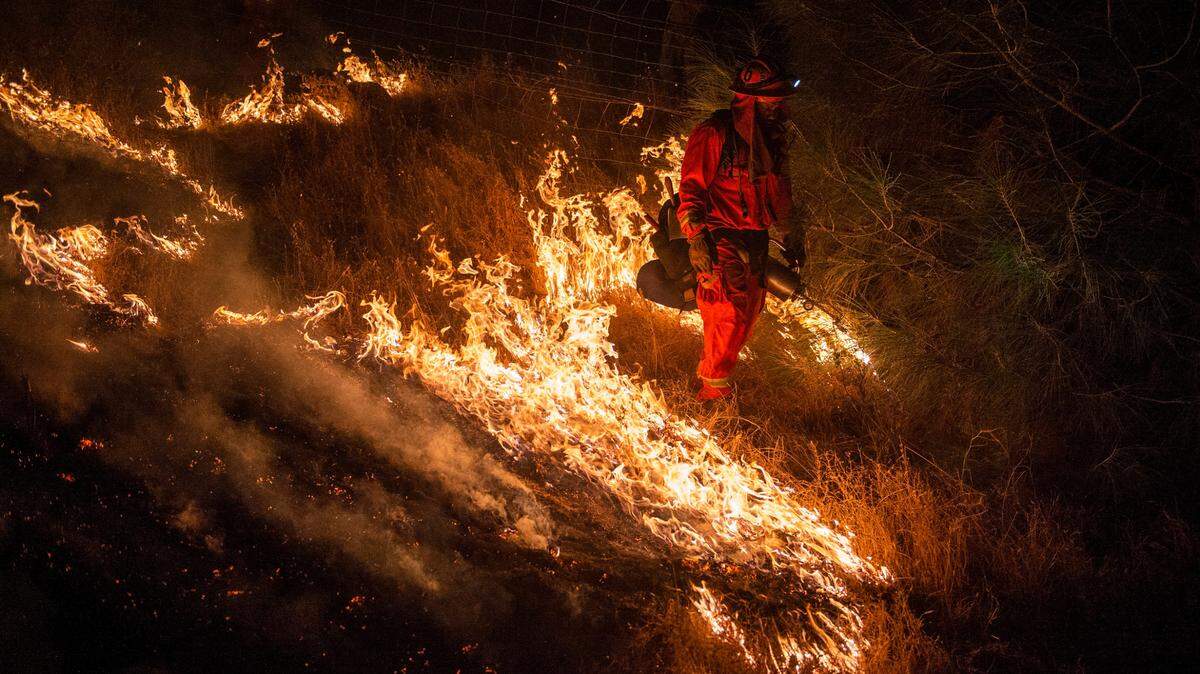
Growing up in Richmond, positive role models were practically non-existent. Violence and poverty reigned and I found myself immersed in a world that I never imagined being a part of. I was introduced to the corrections system at the age of 15 when I served time in a juvenile hall. From there, my life only spiraled more out of control.
In 2015 at 23 years old, I found myself in a cell at San Quentin State Prison. Even though I was incarcerated, I decided I would fight to make a positive impact in the world. I wanted to save myself.
In early 2016, a correctional officer handed me a transfer paper and told me I was being shipped 300 miles up north to Susanville State Prison. I was told I was a candidate for fire camp. At the time, I knew nothing about this program. I was placed on a bus and sent off to Susanville. My wrists and ankles were handcuffed and waist shackled by chains through the four-and-a-half-hour drive. We arrived at a steel structure with barbed-wire fences and a gun tower. My first thought was, “This is where they train firefighters?”
I sat on Susanville’s main yard for four months before I was sent to Arnold Unit, the unit for the Cal Fire inmate program. The training on Arnold Unit was broken down into two different classes: Physical Field Training (PFT) and Full Field Training (FFT).
PFT was a two-week boot camp designed to get the inmates in shape. We had a series of physical benchmarks that included: running a mile in under 8 minutes, doing 15 pull-ups sequentially, 20 push-ups sequentially, passing a pacer test, and completing hikes under the allotted time. I passed this and advanced to FFT.
The first half of my FFT training was spent in a classroom studying a fire safety course that was the equivalent to a college unit. We learned fire and safety protocol and climatology. For the second part of my training, I was introduced to the firefighting tools and learned how to use each one along with going through mock trials on how to load and unload the bus.
After a month of training and studying, I was sent to Konocti Conservation Camp in Lower Lake, California. I became the sawyer on my firefighting crew. My role was to cut down brush, trees, and anything in the way to create a fuel break for the fires. I worked on the 2016 and 2017 wildfires in Northern California. The conditions on the fires, though poor, were better than prison. I was paid $1/day when I was not on an active fire and $1/hour when I was. However, the judge placed a $50,000 restitution on my sentence, so 50% of my pay as an inmate firefighter went toward that.
We were often on fire missions for weeks at a time, not returning to base camp. This meant I ate and slept on a dirt floor. I had no access to phone calls or letter supplies to communicate with my family while on missions. We were fed Meals Ready-to-Eat (MRE’s). MRE’s are commonly given to combat soldiers when food is not available. Still, being a part of the work that helped save homes and entire communities from blazing destruction made me feel proud … worthy.
I was released in late July of 2017. My daughter was living in Fresno. I transferred my parole and started a new life as an Afro-Latino man in southeast Fresno, with a criminal record. Suddenly, my work and honor as an inmate firefighter had disintegrated along with the flames. I was accepted into Fresno State with help of the Project Rebound. I looked into becoming a city firefighter, but quickly learned that my criminal record outshined my experience, so I landed a job within the bartending industry, where I work now. I also work as a California Justice Leader with Impact Justice and as a Resource Specialist with Focus Forward, helping local families, individuals, and youth impacted by the criminal justice system.
When I heard about AB 2147, it all seemed too unlikely to pass. (The bill would allow inmate firefighters to have their records expunged, clearing the path for them to be eligible for firefighting jobs upon release.) The idea of expunging my record and not dealing with the anxiety of background checks is something I have come to accept. Since my release, I have been denied employment after successful rounds of interviews when my background check comes back.
On Sept. 11, Gov. Gavin Newsom made the social media announcement that he had signed the bill. I found out when I was tagged by many friends and colleagues who have supported my rehabilitation journey. I didn’t know how to feel. I still don’t know how to feel. I don’t know where to start with the expungement process and considering a career as a Fresno city firefighter, but the future is feeling hopeful.