
Can Valley farms be sustainable water users? People worldwide depend on the answer
I grew up back east reading about “The Promised Land” in the Bible. I tried to imagine a land literally flowing with rivers of milk and honey, and my mouth watered thinking about all the exotic, delectable fruits growing in the Garden of Eden.
Now I live in the closest thing to Eden we have on Earth. Over 300 crops are grown in Fresno County, and my own backyard bursts with cherries, berries, melons and figs, grapes and nuts, every type of peach and plum possible, and yes, even honey.
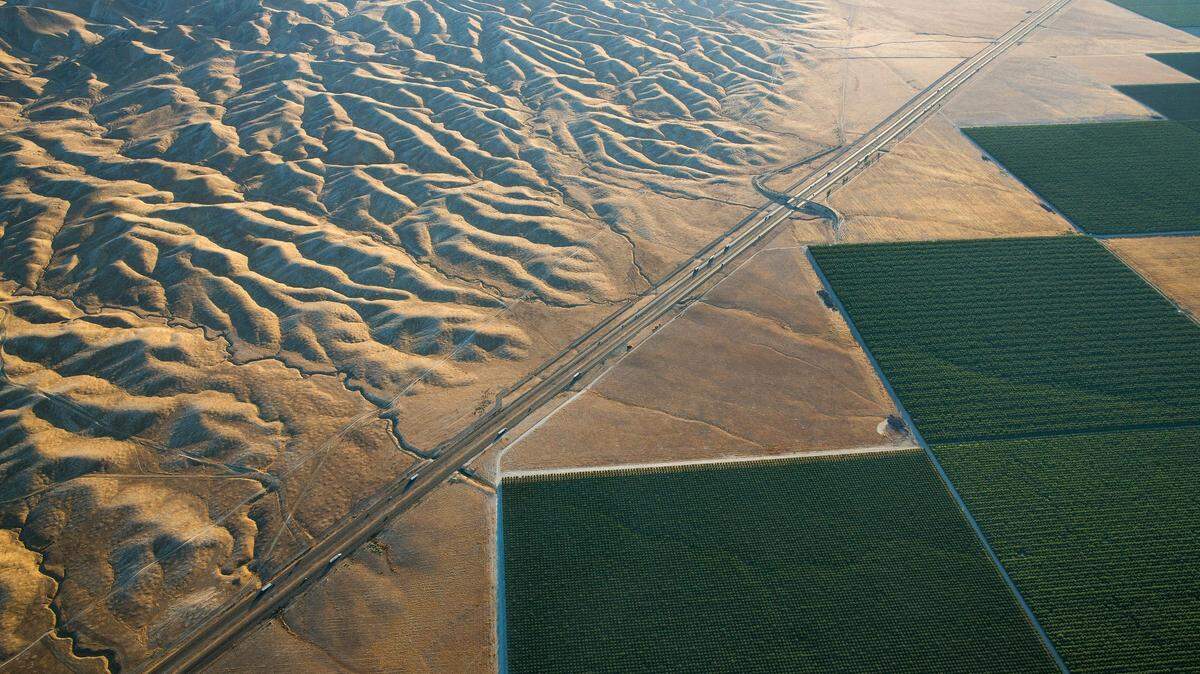
We are in danger of losing this farming paradise, however, and right when the world is trying to figure out how we’ll feed 10 billion people in 2050. We’ll need more farm land to be able to do that, but a new state regulation is threatening to fallow up to 1 million acres in the Valley.
After five years of initial planning, the Sustainable Groundwater Management Act is now being implemented. Local agencies have until 2040 to find a way to replace the amount of water that is taken out of the ground by wells for agriculture, cities, towns, school districts, and rural homes.
SGMA affects us all, though, because it primarily means regulations on pumping. That could result in up to a fifth of our farmland taken out of production, and our Valley economy depends on ag. The University of California puts agriculture’s total annual economic value at more than $85 billion in the San Joaquin Valley, so we must find a way to make ag sustainable.
Fresno author Mark Arax says stopping ag’s overreach is the key. In his new book, “The Dreamt Land: Chasing Water and Dust Across California,” Arax traces the expansion of Valley farmland. He points to sinking land, dropping water tables, collapsing aquifers — even the almond glut — as signs we are planting land that shouldn’t be planted.
“We have to save this damn thing,” Arax tells me. “Agriculture has to be a part of this place. If God intended it to be anything, he intended it to be ag land. To save that, ag has to get smaller.”
He says 300,000 low-lying acres have to be fallowed in Westlands, the huge west-side district that relies heavily on pumping. Farmers and environmentalists whom he met on his book tour have agreed with that number, he says. The other 700,000 acres would come from “white areas,” meaning land reliant solely on groundwater, since it isn’t in an irrigation district.

Fresno County Farm Bureau CEO Ryan Jacobsen agrees farming needs to be sustainable. He says the signs Arax points to, though, show that growers aren’t getting enough surface water and have been forced to pump; river water has been diverted away from ag for environmental uses while ag is asked to be more sustainable. He says we need an approach that addresses both sources of water together.
Jacobsen is working to keep as much land cultivated as possible because we are one of only five Mediterranean-type regions in the world. Our long, dry growing season allows us to produce specialty crops that can’t be grown elsewhere — and with incredibly efficient production.
“You can’t replicate our climate,” Jacobsen says. “We truly have something special here that most of the country won’t recognize its importance until it’s gone. The Valley needs to kick and scream until everyone understands the impact of a reliable water source.”
The impact is clear. As the world’s population heads toward 10 billion people, Jacobsen says we’ll have to produce more food in the 30 years leading up to 2050 than we’ve produced in our entire history. Fresno Rep. Jim Costa has said growing our own food is a national security issue, since the U.S. will need a billion meals a day.
An economic impact analysis by UC Berkeley also projects that fallowing a million acres would cost the Valley’s economy $10 billion in revenue and wages, affecting tax revenue in a region already struggling to provide clean drinking water and services for those in extreme poverty in rural areas.
Whether you agree with fallowing a million acres or providing more surface water for farmers, the bottom line is that we have to make ag sustainable. While the battle continues over how much land SGMA will take out of production, our common ground has to be preparing for its impact.
That means allocating resources to retrain farm workers for new industries, finding ways to reuse fallowed land, and investing in water infrastructure our state desperately needs. We must come together to support everyone who will be affected in our community and ensure food production for our future.
This story was originally published September 4, 2020 at 5:00 AM.