
Latino workers are being overwhelmed by the COVID-19 pandemic. What will be done?
During mid-May President Trump announced the reopening of the economy after closure due to the rapid spread of the COVID infections in the country. This coincided with the announcement that the vast majority of positive infections and deaths were in communities of color, including a rapidly increasing number of Latinos.
To announce the new policy, the president and vice president met with the governor of Iowa to promote the state’s reopening and to offer the support of the administration. This was despite the industry having thousands of new positive cases in meat plants and 100 deaths directly attributed to contamination at the worksite. Nearly 40% all workers in the industry are Latino.
When Iowan residents were asked regarding the opening of local economies, many expressed support for the policy since it primarily effects “those” people, referring to the large number of people of color working in the local meat plants. This same indifference regarding the reopening in the midst of the pandemic surfaced in states such as Florida, Texas, Georgia, North Carolina, Arizona, all red states. Although these states also experienced major increases in infections, it was primarily among farm workers, food processing plant workers and others in the food processing industry, the vast majority being Latinos.
In Florida, the largest increase in infections is also among Latinos, similar to that occurring in the nation’s convalescent homes that have lost more than 54,000 residents and staff. Disturbingly, a coalition of 50 organizations serving farm workers requested assistance from Gov. Ron DeSantis several weeks prior to the surge, but the state failed to respond in a timely way, resulting in widespread infections in farm worker communities. DeSantis eventually ordered a million doses of hydroxychloroquine to appease President Trump, although the CDC eventually determined that the drug was ineffective in treating COVID 19.
Similarly, in Texas and Arizona, aggressive reopening policies caused similar proliferation in positive infections and deaths. In midst of the surge, President Trump held a campaign rally in Phoenix with more than 3,000 young people attending, with only Donald Trump practicing social distancing. Each of the participants became a vector for the disease. In states such as Georgia, Tennessee and Alabama, where Latinos represent a small percentage of the population, infection rates for Latinos are as high as 50%. Medical professionals have complained about the increase in Spanish-speaking patients since there no interpreters available.
Overall, there are over 34,500 food processing and juice plants in the U.S. Five states with the greatest number of plants include 35% of the nation’s population. These are states where the majority of workers are Latino, including California, with more than 5,000 plants. These employees are extremely vulnerable to an increase in infections, especially since employers under the Trump administration seldom undergo inspections, and OHSA offices accord considerable discretion to employers in executing worksite infection control policies. President Trump earlier issued an executive order mandating that all food processing plants remain open regardless of the level of infection, while guidelines issued by CDC are unenforceable, and OHSA has failed to issue a single citation to an employer.
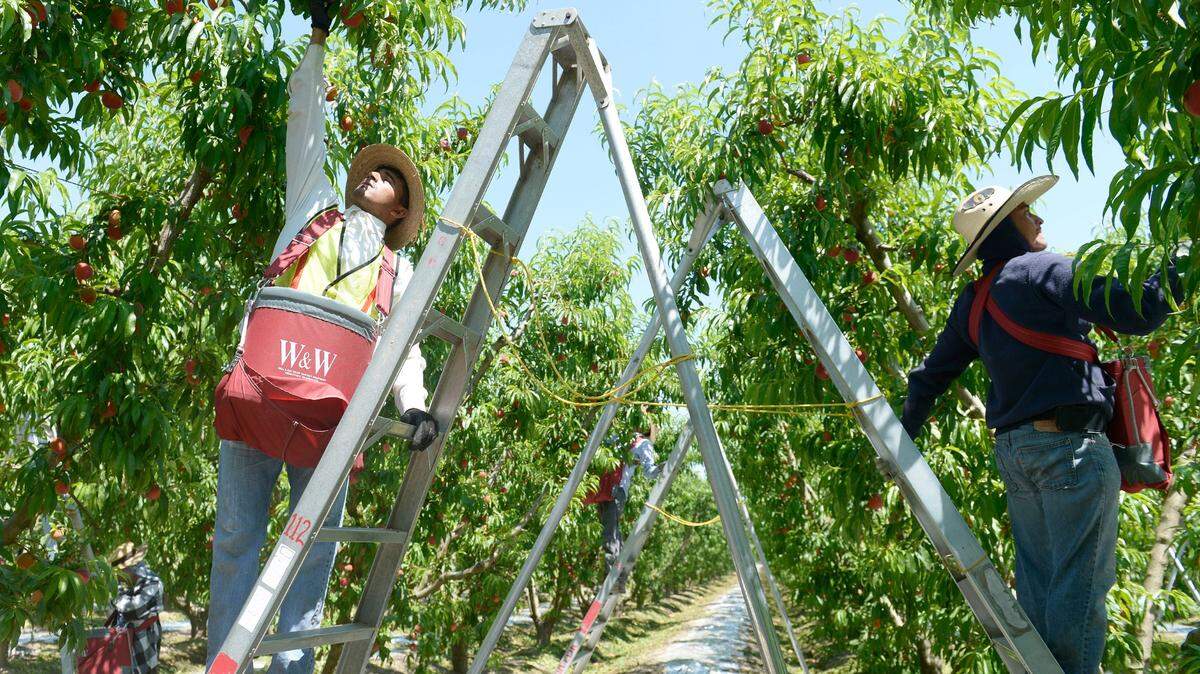
We are now in “peak” picking season and in the height of packing throughout in California with thousands of employees working around the clock in dense and production-intense working conditions, inherently susceptible to infection. This is repeated throughout our country with employers demonstrating various degrees of commitment for the safety of their employees.
Given that Latinos represent the vast majority of the essential workers in agriculture, this is the makings of a “perfect storm” that potentially can ravage local communities and eventually the entire state. The current surge in infections is a clear indication that the Latino community will continue to be adversely impacted. It’s becoming increasingly clear that engrained structural racism manifests itself most during times of crisis. If our community is to be held to a different standard and expected to work under hazardous conditions, we must demand immediate assurance that their safety and well-being are being given the highest priority.
The lack of national leadership, and the failure of the administration to develop a centralized, cohesive national policy, has triggered a proliferation of COVID infections across key states where significant number of Latinos live in poverty and are employed as essential workers. To our detriment, the U.S. now has more than 25% of the world’s infections with only 4% of the population and a similar rate of deaths. In our own state, Latinos represent nearly 60% of the total deaths and 75% of the deaths of those in the category 18 to 45 years of age.
As essential workers, Latinos assure that the community is well feed and served, their children and elderly cared for, their homes and facilities cleaned and maintained, crops cultivated and harvested, livestock properly managed, restaurant meals prepared, served and delivered, and hotels cleaned. While many continue to thrive in the current recession, most Latinos are paid low wages, and kept in poverty, and often forced into unemployment, without food and basic health care.
It must be emphatically stressed that there is great distress within the Mexican American community that the pandemic is increasingly having a major adverse impact on them, and there are no signs that a centralized, cohesive and enforceable statewide infection control strategy is being implemented at the worksite level. Our deepest fears are now being confirmed with the majority of the deaths from COVID infections continuing to multiply among Latinos.
This story was originally published July 10, 2020 at 8:00 AM.