
‘Greatest generation’ would be ashamed of America’s uneven response to COVID-19
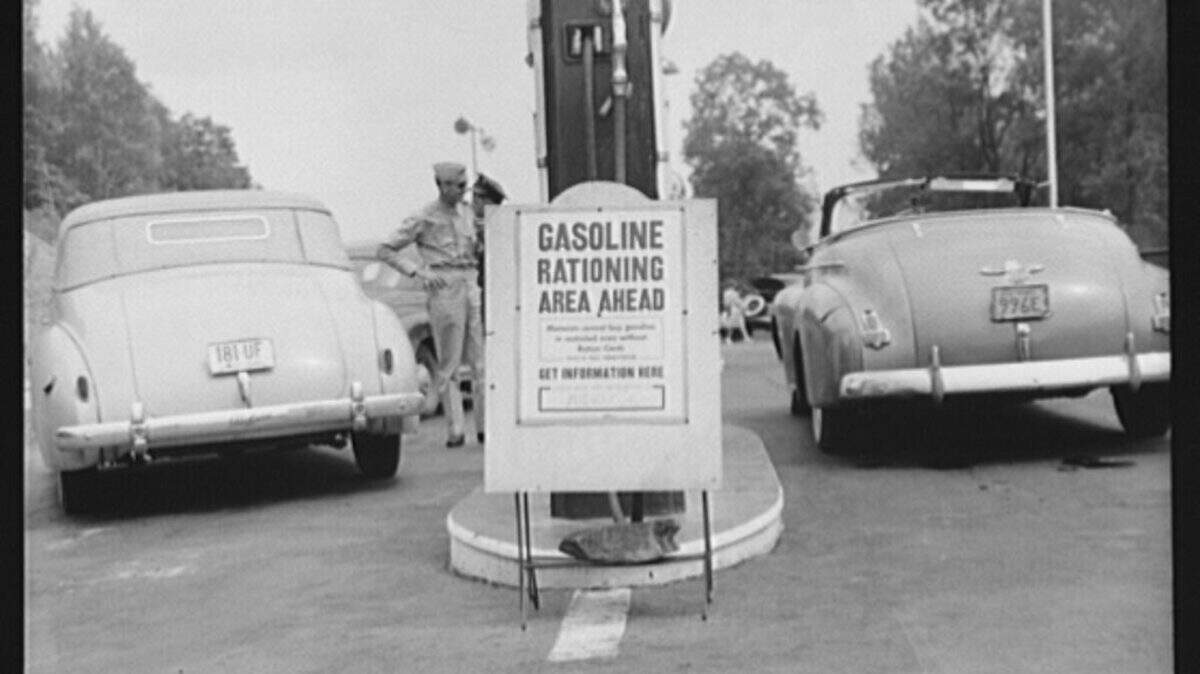
As a lecturer in the History department at Fresno State, I teach some of our general education survey courses on American history and usually show my students video clips on World War II rationing when we get to that period. As they look over the video in class, I ask them to note some of the specifics mentioned like how much meat or gas was allowed for individuals during rationing. They are often surprised that cash was not really used to purchase goods, but rather coupons out of ration books, and that the average gas ration was about 5 gallons per week (at a time when most vehicles had a fuel efficiency of less than 10 mpg), which meant that roads and highways were often deserted.
Next, I ask them if they think that we could do something like rationing again in this country if we had a national state of emergency. Over the years, their answer has invariably been a consistent no. They did not believe people would give up their creature comforts or do without in order to achieve a greater national goal. As this pandemic has shown, they are probably correct.
Take the events happening in Milton, Florida as proof for that pessimism. There, the mayor of Milton decided that in the interest of public safety she would issue an order mandating the wearing of face masks to slow the spread of disease in the municipality. In response, members of the public and the entire city council rose in opposition to the order and struck it down.
In other parts of the country, sheriffs and other elected officials — all the way to the president — have come out against the wearing of face masks in public. Protesters are out in public across the nation and social media decrying the direction that they should wear face masks, which medical experts tell us is an effective way to mitigate the spread of the disease and allow our nation to return to some semblance of normality.
Instead, these protesters argue that putting on face masks is an infringement on their rights and their refusal is a patriotic defense of liberty. If we lack the authority to make the overwhelming majority of the nation do something that is patently in the interests of the nation, then we have lost the ability to complete great national projects like winning a war or stopping the spread of a debilitating disease.
This turn of events would be a surprise to the generation of Americans who were asked to give up using meat in their meals on Tuesdays. “Meatless Tuesdays,” as it became known, started as a policy proscribed by New York Mayor Fiorello Henry La Guardia, who sought to lessen meat consumption in restaurants, hotels and in homes. Even with resistance from some quarters, the practice that began in New York City in October 1942 was so successful that the federal government made it a national program in 1943.
We asked Americans in coastal communities during the war to darken their windows at night (along with seaside businesses) so enemy ships and planes could not use the lights as navigational aids to attack our nation. Members of the community themselves enforced the regulations for these blackouts by issuing citations to their own neighbors and local businesses.
Also during the war, the federal government spent more on the war effort than the entire size of the economy had been prior to the Great Depression. As a result, it raised tax rates as high as 90% on the highest earners to pay down that debt. No one wanted to pay these rates, yet Americans recognized that the government needed income to fund the war effort, so they paid those rates into the 1950s.
Many opposed these restrictions, but the majority of the country recognized their usefulness and supported the government’s policies and mandates in all these areas and more. That generation of Americans understood that massive endeavors like fighting a war required real sacrifice, for a long period — not just a few weeks or months.
We are now asked to do something akin to fighting a war (our president has even declared himself to be a “wartime president”), and we are failing to answer the call to arms. If we continue down this road, the repercussions will be devastating to our nation’s economy and population. Our government needs to provide leadership, and the public needs to be willing to sacrifice when asked, or the chances for victory will be slim.
Vernon Creviston is a lecturer in history at Fresno State.