
With or without COVID-19, we need to care about homeless people and their health
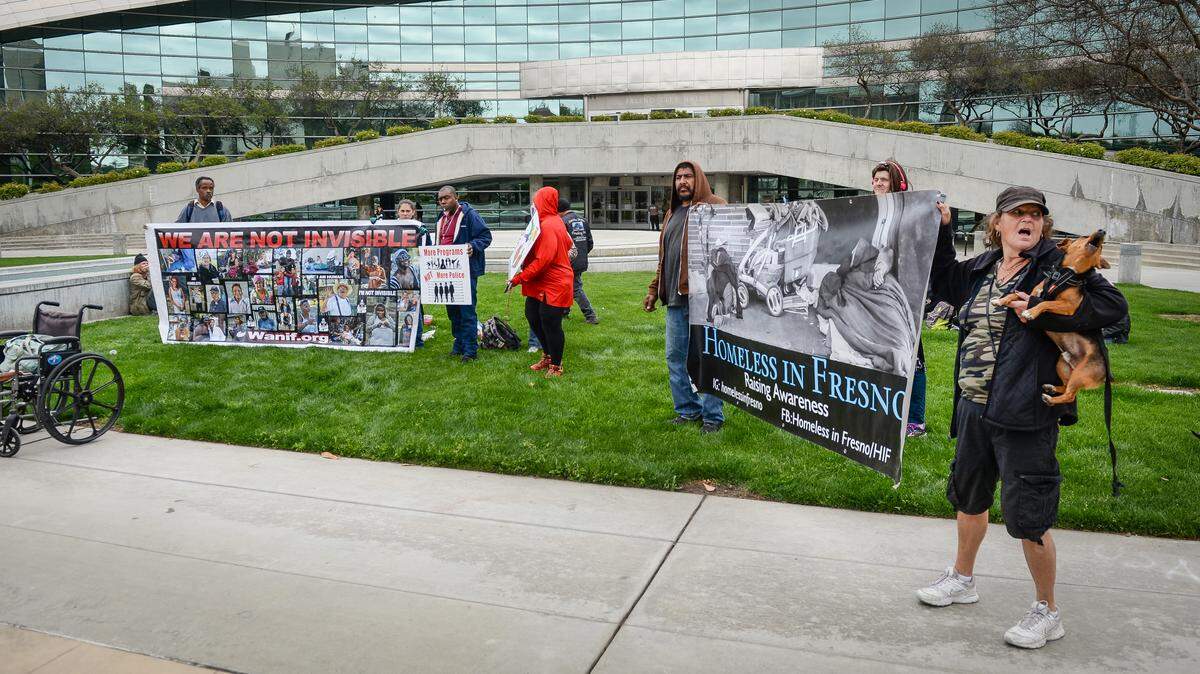
Pandemic or no pandemic, we need to care for the homeless citizens of Fresno County.
The Bee featured an article on May 8, which stated that in mid-March the “goal of city leaders was to bring inside “every single person” experiencing homelessness — about 2,000 people in Fresno — to curb the spread of the coronavirus.” Immediately, 300 beds became available. Two months later only 319 beds are taken of the total 446 beds now available. Fifty beds are reserved for those awaiting COVID-19 tests.
Fresno city and county have been given $5 million in funds for the homeless. The article states that officials planned to house hundreds of more people in a Fresno City hotel or series of motels. This plan fell through; instead the money will be spent to continue funding the 446 beds into September. The county is also funding 60 beds in Selma and 24 beds in west Fresno. Where does that leave the other 1,470 homeless people?
Sonia De La Rosa, principal administrative analyst with Fresno County, shared her thoughts on the situation. “I think part of it is, a lot of people are simply not ready to come off the street. Our outreach teams are continuously out there, and they continuously decline services. Those people are not ready to be housed.” Is this a sweeping generalization? What about those who are ready? Additional rooms aren’t available. What qualifies as ready? What is needed to help someone be ready?
I have two homeless friends who have repeatedly requested shelter. One, a woman in her 50s, has stayed in various shelters across the city. She has been waiting over 2 1/2 years for housing. She does not drink or do drugs, and she has no criminal record. She worked as a paralegal in the Bay Area prior to moving to Fresno to attend school. After suffering from a major illness and subsequent hospitalization, she exhausted her savings, became homeless, and now lives in her car. She has not yet been approved for disability. She doesn’t feel safe in shelters downtown; she has been threatened with violence and rape. She has jumped through multiple hoops and is still waiting.
Beyond housing, our homeless citizens have immediate needs for public restrooms, water, hand-washing stations, and places where they can retreat from the elements. The public library, Starbucks, McDonald’s, and other fast food restaurants are safe places for many homeless neighbors to have a break from the cold or heat, use wifi, and have access to restrooms. All of these places have been closed due to the pandemic.
I have reached out to my city council and county supervisor’s offices regarding the urgency to address these needs. The lack of public restrooms is a public health issue and an issue of basic human dignity. It will only get worse in the heat of summer if these needs are not addressed. Austin, Texas, has installed portable bathrooms and hand-washing facilities in multiple locations. Can we do this in Fresno?
I have learned about the number of challenges one faces living on the streets. For example, many services require an address. Some agencies or programs accept General Delivery, some don’t. The only post office in Fresno with General Delivery is on E Street. If walking isn’t an option, one must purchase bus fare or gas to retrieve their mail.
Again, let’s look at Austin, Texas, which has a comparable population to Fresno County. Organizers have created street teams that go out to meet the homeless. The Homeless Outreach Street Team (HOST) consists of two police officers, two behavioral health specialists, one paramedic, and one outreach social worker. The program, operating since 2016, proactively addresses peoples’ needs using appropriate resources before they reach a state of crisis, necessitating hospitalization or arrest.
Homeless men, women, and children need safe housing, food, and water. They require supportive services that address the need for showers, washing and drying clothes, haircuts, shaves, basic medical and dental care, drug and alcohol treatment, and mental health treatment. I would like to encourage members of Fresno’s city government, religious organizations, and academic settings to reach out to Austin, Texas.
For more information go to: http://www.austintexas.gov/department/homeless-outreach-street-team. And lastly, I encourage every citizen to ask themselves this question: Is there something that I can be doing right now, in my own small way, to be part of the solution to help our homeless citizens of Fresno, California?