
George Washington’s warning against excessive partisanship rings true today
Is America poised to go the way of the Roman Republic?
In the first century B.C., the Roman statesman, Cicero, fought long to preserve and improve the Constitution of the Roman Republic, with its stifling excessive checks and balances. But Rome descended into chaos, extreme political violence and a despotism that took his life.
America’s founders knew this history and sought to create three co-equal branches of the national government —legislative, executive, and judicial, with enough checks and balances to prevent any one branch or person from becoming a tyrant, but still able to govern effectively.
This diffusion of power requires our leaders to compromise to govern effectively. Despite the founders’ efforts, extreme partisanship nearly tore the new nation apart in the 1790s. In words intended for his time and ours, President Washington warned in his 1796 Farewell Address:
“Let me now ... warn you in the most solemn manner against the baneful effects of the spirit of party generally.… The alternate domination of one faction over another, sharpened by the spirit of revenge, … which in different ages and countries has perpetrated the most horrid enormities, is itself a frightful despotism. But this leads at length to a more formal and permanent despotism. The disorders and miseries which result gradually incline the minds of men to seek security and repose in the absolute power of an individual; and sooner or later the chief of some prevailing faction, … turns this disposition to the purposes of his own elevation, on the ruins of public liberty…. [T]he common and continual mischiefs of the spirit of party … opens the door to foreign influence and corruption, which finds a facilitated access to the government itself through the channels of party passions.”
In his first Inaugural Address in 1801, President Jefferson calmed the disputing parties, stating, “We all are Republicans. We are all Federalists.” Today, Washington’s warning goes unheeded. Is a modern Jefferson possible? Washington’s “horrid enormities” are not far-fetched.
The founders’ checks and balances contemplate effective congressional oversight of the executive. House managers in the Senate trial of the Trump impeachment contended that the president unlawfully obstructed Congress by ordering all administration officials not to comply with House subpoenas. The Senate accepted the president’s argument that impeachment was unwarranted because the House had not sought court enforcement of the subpoenas. House managers asserted that because the House must go first to the District Court, then the Court of Appeals, and then the Supreme Court, the courts cannot timely enable Congress to investigate and remove a rogue president bent on undermining the next election.
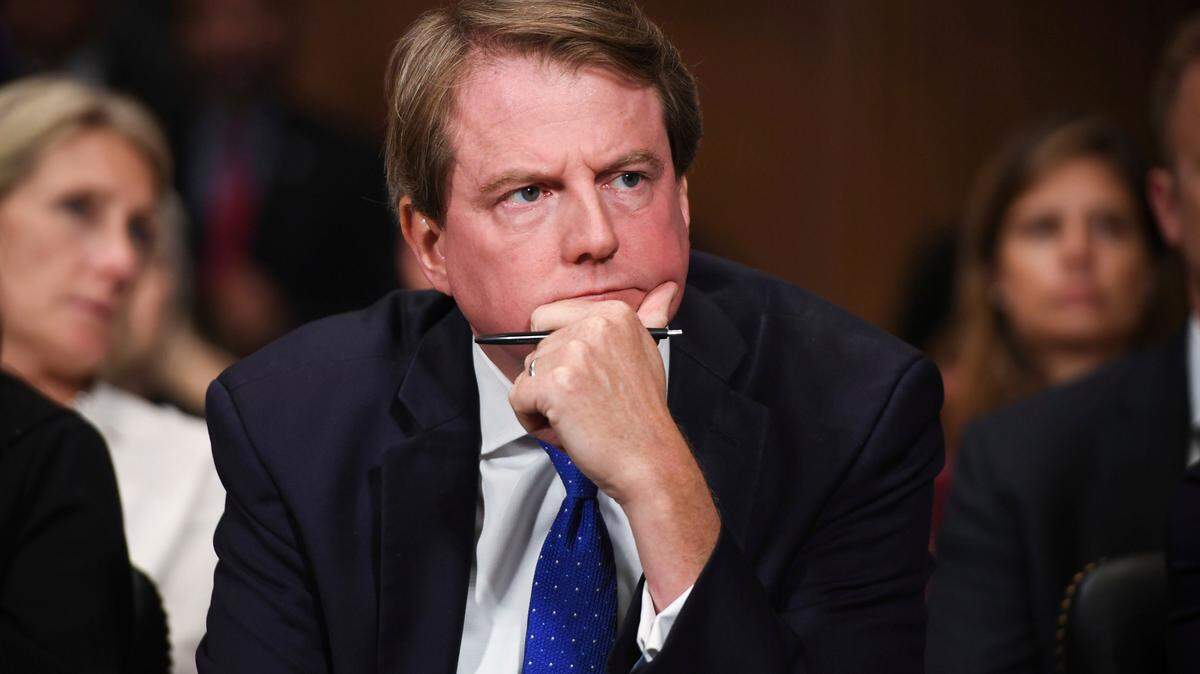
Initiated last August, the House Judiciary Committee’s lawsuit to enforce its subpoena of White House Counsel Donald McGahn is illustrative. Contrary to his impeachment argument, the president recently convinced a panel of the D.C. Court of Appeals not to enforce the subpoena because, among other steps, Congress itself can hold McGahn in contempt and jail him in the Capitol basement. Presumably recognizing the potential for a violent constitutional crisis were the Capitol Police to attempt an arrest, the entire D.C. Court of Appeals is reconsidering the panel’s decision. Their decision is expected to go to the Supreme Court.
For unclear reasons, Congress apparently has not sought to expedite Supreme Court review of its subpoenas. Under the All Writs Act, the Supreme Court can issue orders in extraordinary cases to bypass the Court of Appeals and bring the case promptly before the Supreme Court. The order could bypass months of delay. Instead of a year or more, enforcement might be obtained within perhaps four to six months. Supreme Court rules allow the Supreme Court to issue the order “sparingly.” Congress must show that the order “will be in aid of the Court’s appellate jurisdiction that exceptional circumstances warrant the exercise of the Court’s discretionary powers, and that adequate relief cannot be obtained in any other form or from any other Court.” What the House Managers alleged seemed to fit these criteria.
To preserve the founders’ balance between the branches, all parties in Congress should support prompt Supreme Court review of congressional subpoenas. If the All Writs Act needs amendment to allow for that review, Congress should observe Washington’s warning and enact a veto-proof amendment.