
Commentary: Foster Farms puts workers at risk of getting COVID-19 at poultry plants
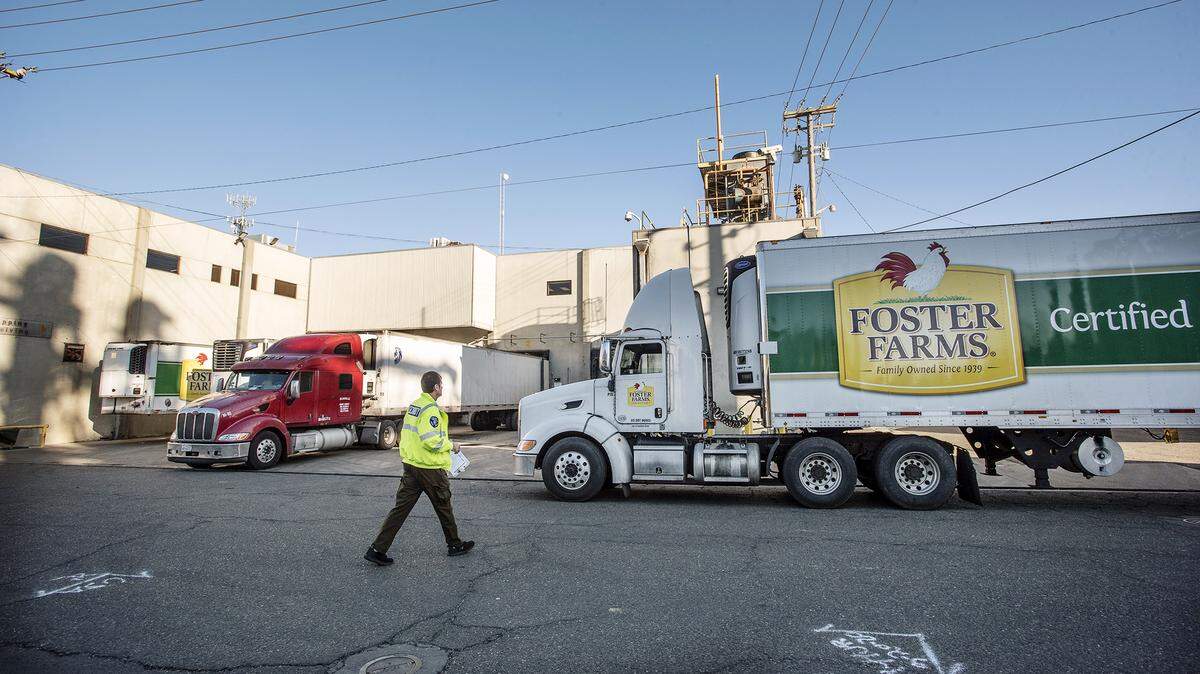
Cramped working conditions, insufficient breaks to allow for hand-washing and sanitation, and a culture that does not prioritize worker safety: What once described the plight of Lithuanian immigrants in Upton Sinclair’s “The Jungle” now reflects how America’s poultry and other meat-packing employees are being treated in the midst of a pandemic.
And as children of these employees — and members of the Punjabi and Latino communities, which make up a large percentage of that workforce — we cannot stand by while these essential workers are treated as expendable.
Since the pandemic was declared in America, meat processing workers have been among the most affected. The problem is national in scope, but also critically important to California. With plants in Livingston, Turlock, and Fresno, thousands in the Central Valley are employed by or depend on the employees of Foster Farms. Our moms, dads, tías, thaayaas, and other relatives face dangerous conditions every day.
Unfortunately, they also face a company that suppresses news of infected workers and fails to implement better safety protections or paid leave.
Inste
The good-faith attempts of community groups to engage Foster Farms have been written off and our safety suggestions ignored; employees, meanwhile, have little choice but to keep their heads down while they continue working at risk — all for fear of losing their livelihoods. This is why California’s state government and the unions that represent these works must act now.
Specifically, we must accomplish — through legislation, negotiation, or public pressure — transparency with workers and their families in writing about infections and deaths about their plants and their lines, a reduction in output until full safety measures and protections for worker can be implemented, and paid leave for those with pre-existing conditions or those above 60 who are most prone to serious illness.
In his executive order, President Trump referred to the nation’s meat supply as “critical infrastructure.” It is not just the meat nor the machinery that are essential, but rather the men and women who labor with knowledge and expertise in this field. If we seek to ensure our nation’s supply lines and retain our sovereignty, it will not be through crony capitalism or cutting corners, but rather by honoring those who feed the nation, celebrating their contributions by giving dignity to their skills, and prioritizing their safety.
Every evening when their family members return home, Central Valley residents like us see weariness, suspicion, and anger. Weariness from a full day of back-breaking work. Suspicion of themselves and their colleagues being asymptomatic, and thus a risk to those they love. And anger at a company that creates these conditions and forces these bargains. It is far past time for outside accountability. Our families — and the families of Americans across the country who enjoy the products of the meat industry — are depending on it.
This story was originally published May 22, 2020 at 11:13 AM.