
It’s time for state leaders to take over contentious groundwater debate in California
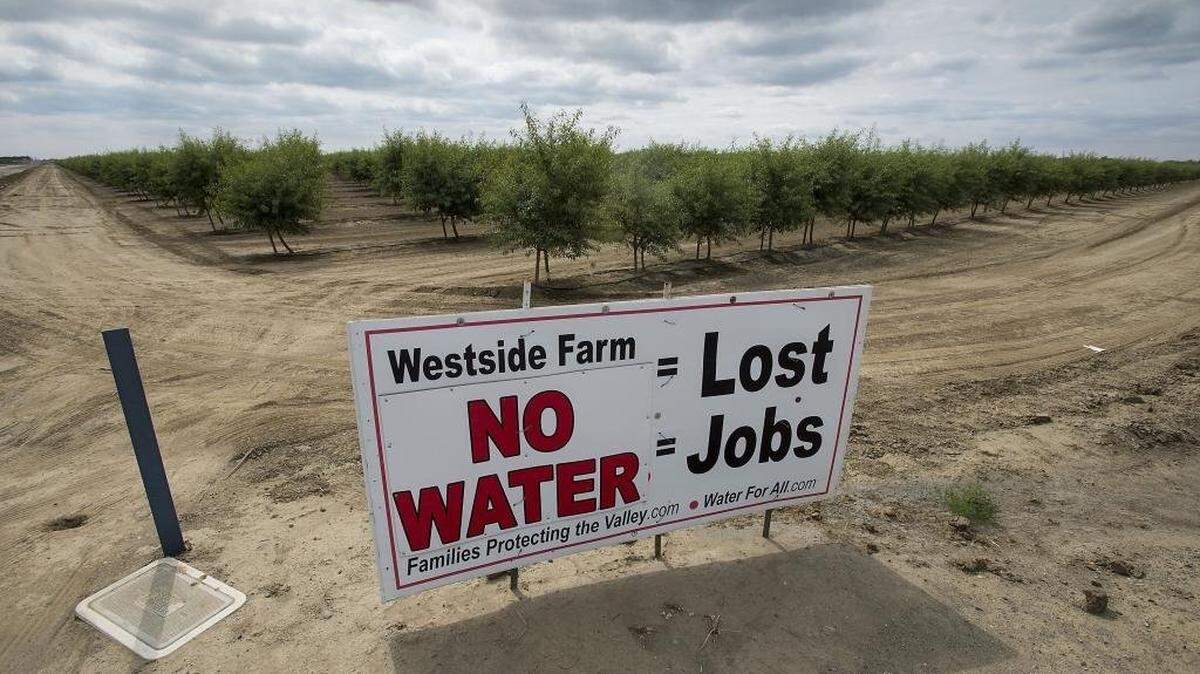
On Sept. 16, 2014, former California Gov. Jerry Brown signed into law the Sustainable Groundwater Management Act. In the press release announcing the new policy, it was proclaimed that “for the first time in its history, California has a framework for sustainable, groundwater management.” But more than five years later, many around the state still believe the framework remains a hollow shell.
Jan. 31, 2020 marked the next milestone, as submissions of groundwater sustainability plans for critically overdrafted basins were due to the Department of Water Resources. At the moment, many of those million-dollar GSPs are not worth the paper they’re printed on.
It’s impossible to manage something you don’t measure. For years, California has not adequately or consistently measured groundwater levels or groundwater extractions. Part of the inconsistency relates to the philosophy surrounding SGMA. At the announcement in 2014, Brown emphasized that “groundwater management in California is best accomplished locally.”
While a noble thought, our state government leaders should lean into this substantial challenge and provide much-needed leadership to gather all interested and concerned parties. The five-year buffer period has been marred by shouting matches between the groups, rather than cooperative dialogue to work together. And a path forward to sustainable water management for California remains as disjointed as it’s ever been. Local control has degraded to parochial control.
The San Joaquin Valley has eight counties with 21 identified groundwater basins. Each water basin should be preparing one sustainability plan, but instead, 108 groundwater agencies have been formed, each having independent goals and priorities. This division has fostered and intensified a crippling mentality that “If I lose, they win.” And, “I have to protect ‘my water.’” Not ‘our water.’
This mindset cannot continue. Sustainable groundwater in the basin benefits us all. We can only accomplish this working toward a shared-vision versus 108 visions. In order for SGMA to stand any chance of success, two things must change, and quickly.
First, local and state elected officials must assert themselves back into leading this initiative. We’ve asked numerous groups, across dozens of industries, to come up with a collective and cohesive plan to a multi-billion-dollar problem that has loomed in our state for decades. Without the leadership required to help us collectively develop a new paradigm, we have come to accept that more regulation is a suitable replacement for vision and leadership. It is not!
Different plans have been submitted, and all have been subject to public comment. But the only unifying factor amongst them is they’re all wildly unpopular. It’s long overdue for our leaders to lead again. The hands-off, figure-it-out-for-yourselves approach is clearly not working. Our Legislature and sdministration must leverage their clout and authority to gather groups together and foster meaningful dialogue with the vision and leadership that’s needed when competing interests must identify a common solution.
Secondly, everyone must recognize we’re all in this together. Not solving the crisis that’s looming is not an option. In that scenario, we all lose.
We all want the same thing. A safe and reliable source of water that benefits all users. The toxicity with which dialogue thus far has been mired prevents any sort of progress toward our unifying goal.
But there is reason for hope. The California Water Institute at Fresno State hosted stakeholder listening sessions last fall. Everyone was heard and input was considered, and suddenly the shouting matches transformed into a true conversation. No single stakeholder group can accomplish water resilience independently — it must be accomplished collaboratively.
We’re entering a critical juncture for the Sustainable Groundwater Management Act. Without a change of mindset across the state, what was once hailed as a milestone in preserving California’s future may soon morph into another example for future generations of multitude of groups unable or unwilling to land on a common vision.
Everyone acknowledges that California’s groundwater depletion is unsustainable without serious changes. It’s a finite resource that can, and will, run out.
It is through this lens that we must remain focused and realize that we have to change the culture of leadership on water issues at all levels.
This story was originally published February 28, 2020 at 5:00 AM.