Revitalization of downtown Fresno stuck in second gear. What’s the hold up? | Opinion
AI-generated summary reviewed by our newsroom.
- Fulton Street reopened in 2017, aiming to revive Fresno's core commercial area.
- Downtown sales tax revenue increased tenfold since 2015, signaling growth.
- High construction costs and financing gaps stall housing and commercial builds.
Eight years ago this week, I exited The Bee’s former building on E Street on foot, ignored a “Road Closed” sign in front of the newly built Tuolumne Street bridge and delved into the mystery and possibility of downtown Fresno.
Fulton Street was a maze of chain-link fences as construction crews made final preparations for the return of car traffic to downtown’s main commercial row following the removal of the decayed pedestrian mall. That October, more than 10,000 attended the dedication ceremony – at the time a monumental turnout. There were speeches, a parade, live music and pop-up businesses occupying many of the vacant storefronts.
While no one believed the reopening of Fulton Street would by itself revitalize downtown, there was optimism the $20 million project (25% went to restoring and relocating public art) could serve as a catalyst.
“When Fulton Street starts functioning like it should, then every other part of downtown starts functioning and the world starts spinning on its proper axis,” the city’s subject-matter expert told me in July 2017.
How much downtown revitalization has actually occurred during the last eight years? The answer to that question depends on your perspective on and connection to Fresno’s urban core.
For out-of-towners and north Fresno/Clovis types who seldom venture downtown, it would be pretty easy to conclude from all the empty high rises and shuttered storefronts that not much has changed. On most evenings, once the 9-to-5 crowd heads for the freeway on-ramps, there is very little activity outside the Mural District.
Despite Mayor Jerry Dyer’s stated goal to triple the number of downtown residents to 10,000, a handful of permitted apartment projects that would help the city achieve that aim remain on hold because developers can’t make the finances pencil out.
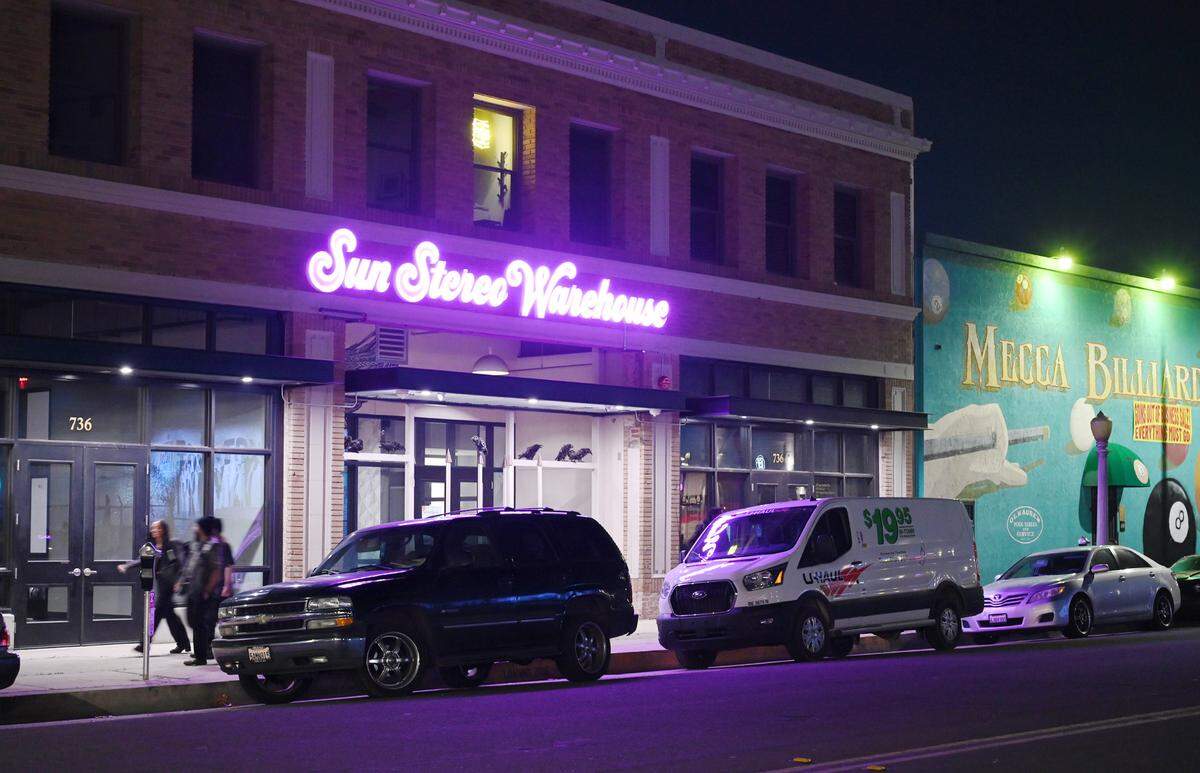
“I’ve got a 37-unit on Broadway across from Kepler School that would be under construction right now if the numbers worked,” said Reza Assemi, who has developed several downtown properties including Iron Bird Lofts and Sun Stereo Warehouse. “We do need more housing downtown, but the cost of construction right now is incredibly high.”
However, unoccupied spaces and stalled builds are only part of the story. To those invested in downtown, be it professionally, emotionally or both, revitalization is occurring in ways that may not be evident to casual or cynical observers.
Brewery District and big crowds
One often cited example is the Brewery District, which aside from stalwart Tioga-Sequoia didn’t truly emerge as party central until after Fulton reopened and whose success can largely be credited to three individuals: Tioga-Sequoia president Michael Cruz, events promoter Mike “Oz” Osegueda and property owner Nora Monaco.
Another is the eagerness of more people to venture downtown. In 2017, the only five-figure crowds were for occasional Mexican professional fútbol friendlies and Grizzlies games on July 4th. Today, annual events like FresYes Fest regularly eclipse 10,000 including an estimated 21,000 in 2022. As did monthly ArtHop, whose attendance should return to previous levels now that the proven first-Thursday format has been reinstated in full.
“Twenty years ago we’d be happy if we got 100 or 200 people for something downtown,” said Elliott Balch, executive director of the Downtown Fresno Partnership and a former mayoral staffer. “Now we’re getting 10,000 or more. You’re talking about real progress that’s brought foot traffic, that’s brought customers to businesses.”
To back that up, Balch cited not only foot-traffic data from cell phones but also sales tax data from a proprietary source that showed a ten-fold increase in tax revenues generated from Fulton Street businesses since 2015.
“Which is, I’ll be the first to say, hard to believe,” Balch added. “But it tells me there’s a definite increase in people visiting restaurants and other businesses that didn’t exist in the mall days.”
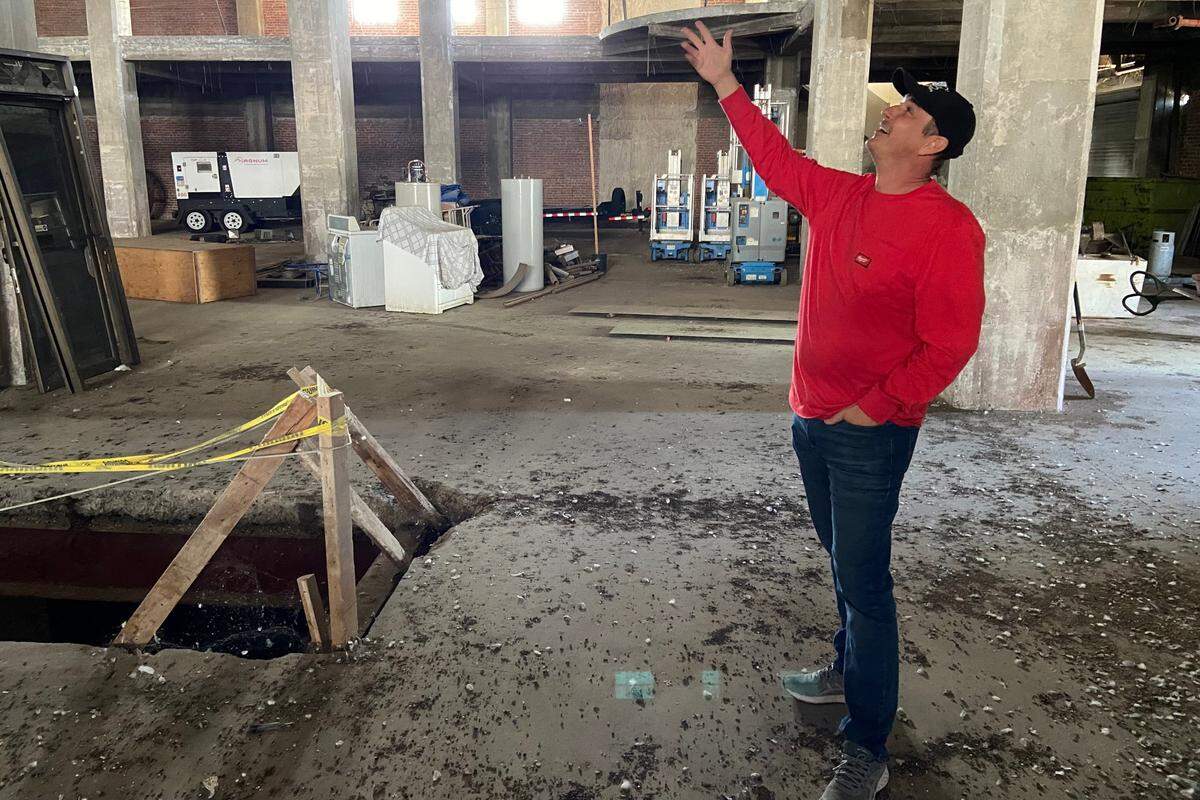
One of those businesses is Frida Café, whose owner has been waiting 5 years to permanently occupy the historic Old Fresno Water Tower and made do with temporary digs including its current location next to The Modernist.
Despite numerous delays – mainly of the supply chain variety, including a 3½-year stall on electric transformer components from Japan and South Korea – Albee Sanchez remains optimistic about downtown.
“We’re absolutely on track,” Sanchez said while pouring a custom coffee drink. “If you compare downtown to how it was when I moved back here (in 2016), things have definitely changed. And for the better.”
If new businesses are popping up and more people are going downtown and spending more of their money, what’s holding up large-scale, undeniable revitalization? In other words, why are there still so many empty storefronts and buildings with multiple floors and zero occupants?
As I discovered from asking those questions to several people in the know, there are no easy answers. But let’s give it a try.
What’s missing? ‘Anchor tenants’
First, we should probably separate housing from retail (i.e. shops, restaurants, cafes and bars). Which needs to happen first? Some believe that rooftops come first, then retail will follow. Others believe the opposite is true.
Regardless, downtown lacks enough of both.
Balch, who heads the improvement district of downtown property owners, believes the biggest obstacle is a lack of “anchor tenants” to draw customers from throughout the region.
“If I’m a small business, I don’t have the ability to attract every customer to the area. I need to be able to draw people in from the sidewalk,” Balch said. “I would say our biggest small business killer is the lack of anchors, which could be a large store, something with a lot of stores in it, or a large apartment building.”
Although Balch didn’t say so specifically, the term “anchor tenants” implies national chains – and likely the same chains that anchor nearly every shopping center in Fresno and Clovis. Others believe the city’s chase for a name brand (remember Bass Pro Shops?) is misguided and should be redirected to assisting small, local entrepreneurs.
“I don’t think national chains are the answer,” said Assemi, who is completing a second commercial building in the Brewery District. “I think the answer is focusing on all the local mom and pops that are opening up, because there’s a lot of them. There could be a lot more, but they’ve got financial constraints.
“If we put more resources into helping small business owners open, it could go a lot farther than we think.”
Fresno City Councilmember Miguel Arias, who represents downtown and until recently lived there, described revitalization as having reached the third “and most crucial stage” of a three-stage process.
Step one was to get the community reinvested in downtown, which Arias said started with former Mayor Ashley Swearengin for initiating. Step two was to get government reinvested, which began with Fulton Street and has continued with the nearly $300 million in state funding for infrastructure upgrades and two new parking structures (one on the footprint of the former CVS, the other on H Street).
Step three, in Arias’ view, is to get the many absentee downtown property owners to invest in their buildings so they are attractive to tenants. Either that, or sell to someone who will.
“We’ve had a handful of people who’ve demonstrated it can be done,” Arias said. “But we have a lot more who are still waiting for the speculative buyer to come in and cash them out. They only see huge upside on a property that they invest very little time, effort and resources on.”
Funding ‘gap’ halts housing projects
Downtown’s current housing quagmire is less about people willing to invest money and sweat equity and more about skyrocketing construction costs coupled with high interest rates.
When a developer seeks financing to build market-rate apartments, the amount of money the bank is willing to lend depends on the project’s expected rental revenue. In Fresno, where you can’t charge $3,000 for a studio, the loan amount typically doesn’t cover the total construction cost. This leaves a financing “gap” that must be plugged – either through a secondary loan, from the developer’s own pocket or elsewhere.
“I run a pretty lean operation; it’s pretty much a one-man band because I like being hands on,” Assemi said. “And if I can’t make these numbers work, I can’t even imagine how difficult it is for other people to make them work.”
Remember the “handful” of shovel-ready housing projects mentioned above? Specifically, that refers to two major renovations (the JC Penney and Helm buildings on Fulton) and four ground-up builds.
In each case, according to Arias, the financing “gap” runs well into seven figures. What is the solution? Now that downtown’s infrastructure issues and parking requirements for new housing are being addressed with state funding, Arias believes it is time for City Hall to step up.
“To this day, there has not been $1 in general fund money allocated to a housing project in downtown Fresno,” Arias said. “We put $3 million into gap financing for the housing project at Blackstone and Clinton that just opened, and we’ve put money into apartment complexes in north Fresno.
“We had better start investing money into downtown apartments, or the community is going to see two empty parking garages for years after they’re built because the housing didn’t come to fruition.”
The revitalization of downtown Fresno is never simple and always a challenge.
This story was originally published July 25, 2025 at 11:00 AM.